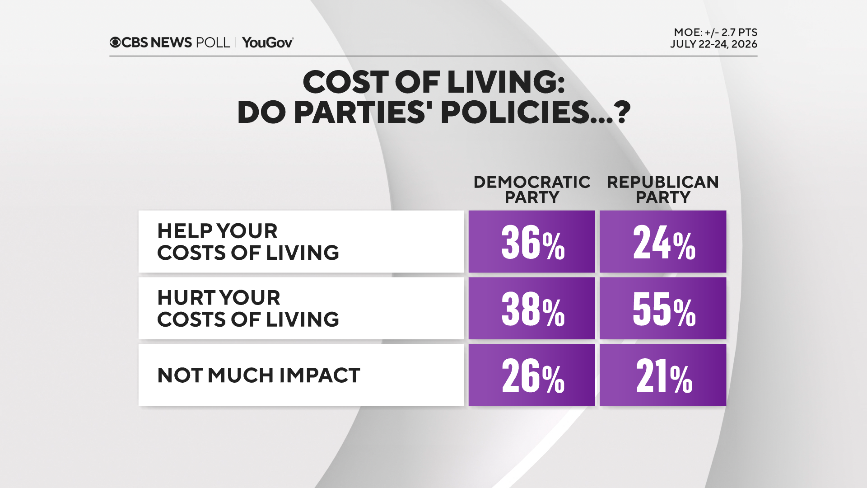
In recent times, a significant majority of Americans feel their incomes are not keeping up with inflation. They express concern over President Trump’s perceived focus on the matter. Many don’t see substantial relief from either political side, as both parties are under scrutiny regarding their policies and their impact on the cost of living.
Republicans face more criticism compared to Democrats, with many believing GOP policies are detrimental. There’s a notable overlap between those who feel this way and those who see presidential policies as worsening their financial situation. While Democrats perform relatively better, only about one-third of people see their policies as helpful. Overall, Democrats present a slightly negative balance compared to their ‘hurt’ metric.
On broader economic policy, the competition remains tight. Republicans, along with Trump, have a marginal advantage over Democrats on immigration issues. Both parties face challenges. The administration’s deportation program approval has declined, impacting views. Positive impressions are mainly within the GOP base, which rates President Trump higher on immigration than inflation. Democrats are often criticized for not prioritizing the interests of long-term citizens over recent immigrants.
Regarding U.S. voting and election procedures, public opinion has remained steady despite President Trump’s recent address. A strong bipartisan consensus supports requiring a photo ID for voting. However, most Americans view election management as a state-level responsibility and prefer states to have the final say, rather than the Trump administration.
Many voters currently favor Democrats to control Congress next year over Republicans. This reflects a common trend for a party not occupying the White House during midterm elections. As the season progresses, clearer insights into voter preferences may emerge.
The findings are from a CBS News/YouGov survey, featuring 2,193 U.S. adults interviewed from July 22-24, 2026. The survey sample was weighted to nationwide adult demographics, including gender, age, race, education, and 2024 presidential vote data, with a margin of error of ±2.7 points.
 Media Outlets Sue After White House Ban
  American Public Opinion on Press Freedom
  Media Lawsuit Against Trump Administration for White House Ban
  The Cost of Challenging Beijing
  Analyzing Midterm Elections and Party Dynamics
  Allan Lichtman’s Framework for Assessing Presidential Greatness