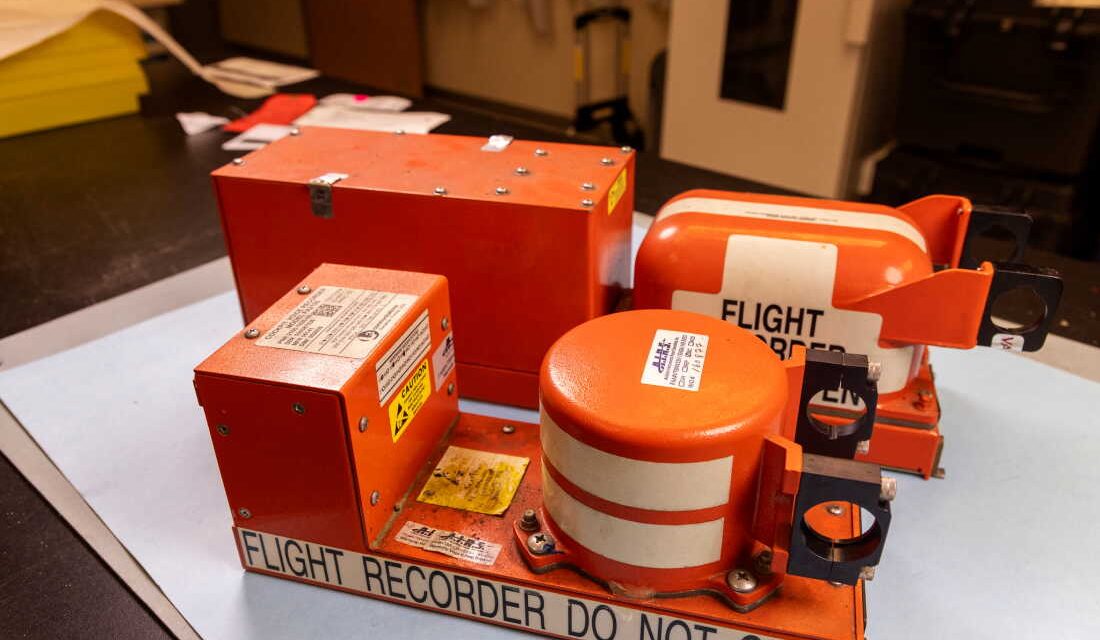
The flight data recorder from an Amazon cargo jet that careened off a runway at Miami International Airport on September 8, 2026, provides crucial information about the tragic incident that killed five people. The National Transportation Safety Board (NTSB) released details showing the pilot repeatedly warned his counterpart about excessive speed during the landing.
A cockpit voice recording summary disclosed that the co-pilot did not provide a consistent verbal response to speed warnings. Upon touchdown, the plane attempted to take off but collided with a van and subsequently with an SUV before catching fire on a public road. The five victims were all in the van, while five others were injured, including two critical cases.
Former FAA official Mike O’Donnell emphasized that the pilots had options to avoid the disaster. They could have reduced speed by deploying spoilers, cutting throttles, extending the landing gear, or aborting the landing to circle back for another attempt. “You have plenty of time to slow down, plenty of time to say, let’s just do a go-around at two minutes out,” O’Donnell stated.
The flight data indicated an unstable approach amid strong winds. The pilots briefly disengaged the brakes and accelerated as if aiming for a take-off, aborting this maneuver seconds after. Automated cockpit warnings about descent speed and terrain underscored stability issues and potential incorrect configuration for landing.
The aircraft touched down halfway along the runway, minimizing stopping distance due to a probable tailwind from approaching storms. Flightradar24 calculated it was roughly halfway down the 9,360-foot runway upon initial contact.
Experts, including former airline pilot Steve Arroyo, critiqued cockpit teamwork. Arroyo highlighted a lack of coordination and leadership in managing flight procedures, questioning adherence to trained guidelines. Mary Schiavo, a former Inspector General of the Transportation Department, speculated about the crew dynamics, pondering whether an inexperienced first officer failed to challenge a senior captain effectively.
The jet’s history will be part of the NTSB’s investigation, including its conversion from passenger use and operation under 21 Air since 2024. Weather conditions and maintenance records are also under scrutiny.
This incident marks the second U.S. cargo jet crash in less than a year, following a UPS plane disaster at Louisville’s Muhammad Ali International Airport resulting in 15 deaths and 23 injuries.
 Search Underway for Missing Aircraft Near Nantucket
  Tennessee Prison Chief Resigns After Failed Execution
  Revelations in Thomas Crooks’ Assassination Attempt on Donald Trump
  Challenges in Prosecuting Assault Cases Involving Alcohol or Drugs
  Extended Heatwave Expected in Los Angeles with Temperatures Approaching 100 Degrees
  Flashback: Significant Events in Chicago on October 3