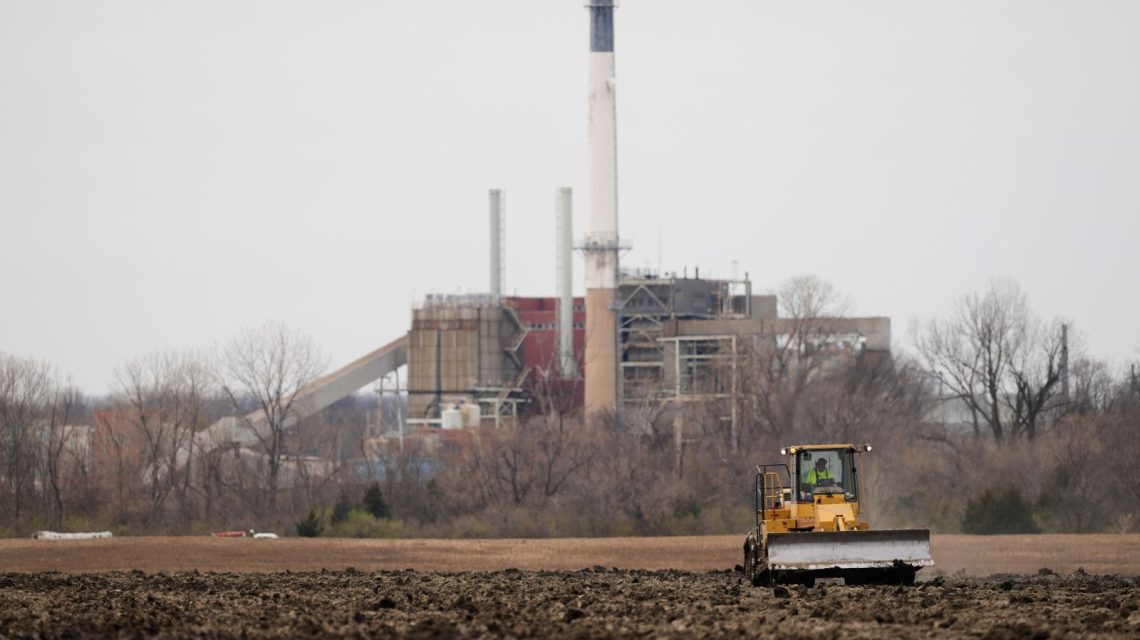
The global race in artificial intelligence has led to a surge in data center construction across the United States. This trend has sparked caution among lawmakers and municipalities. In response, efforts in at least 14 states are underway to establish bans or temporary pauses on new data centers, as reported by the National Conference of State Legislatures (NCSL).
Critics highlight the significant electricity and water demands of data centers. They argue that a cautious approach allows sufficient time for local leaders to evaluate long-term impacts. Supporters, including members of the Trump administration, argue data centers are crucial for maintaining a competitive edge over China in AI.
States and Municipalities Taking Action
Several states are considering measures to regulate data center growth. Notably, proposals in Georgia aim to halt new construction until 2028, while Maine’s moratorium on larger facilities through late 2027 was recently vetoed. Previous attempts to regulate data centers failed in Oklahoma, Minnesota, and New Hampshire.
South Carolina has introduced measures to delay local approvals until a comprehensive oversight framework is adopted. Pennsylvania’s lawmakers propose a three-year pause on new centers, coupled with impact studies, according to NCSL data.
Currently, more than 3,000 data centers operate in the U.S., with over 1,500 more at various construction stages, according to Pew Research Center. Many planned centers are in rural areas, particularly in the South and Midwest. However, a majority of existing facilities are found in urban areas.
Virginia and Texas lead in the number of operating data centers, followed by California, Ohio, and New York, based on findings from Pew researchers.
Environmental Concerns
Some proposed data centers are located near the Ogallala Aquifer, a crucial groundwater system for American agriculture. Significant water depletion has been reported in some areas, with over 27% of water already gone in certain places, according to researchers.
“Unlike surface reservoirs, the aquifer recharges extremely slowly,” said Sudeep Pasricha, an electrical and computer engineering professor at Colorado State University. Recharge rates in parts may be less than an inch per year, much lower than what is used for irrigation.
Projects near the aquifer include a 438-acre site in Texas and Microsoft’s plans to expand in Wyoming. Depletion could take centuries to millennia to rectify.
 Community Colleges in Chicago Prepare for AI’s Role in Workforce
  Air Traffic Communication Breakdown Disrupts Northeast Airports
  AI Fears Impact Trump-Xi Dialogue Amidst Challenges
  Senator Murphy Calls for Internet Regulation to Prevent Influence of Demagogues
  House Breaks Early Amid Concerns Over Unregulated AI
  Expansion of Data Centers Fueled by AI Development