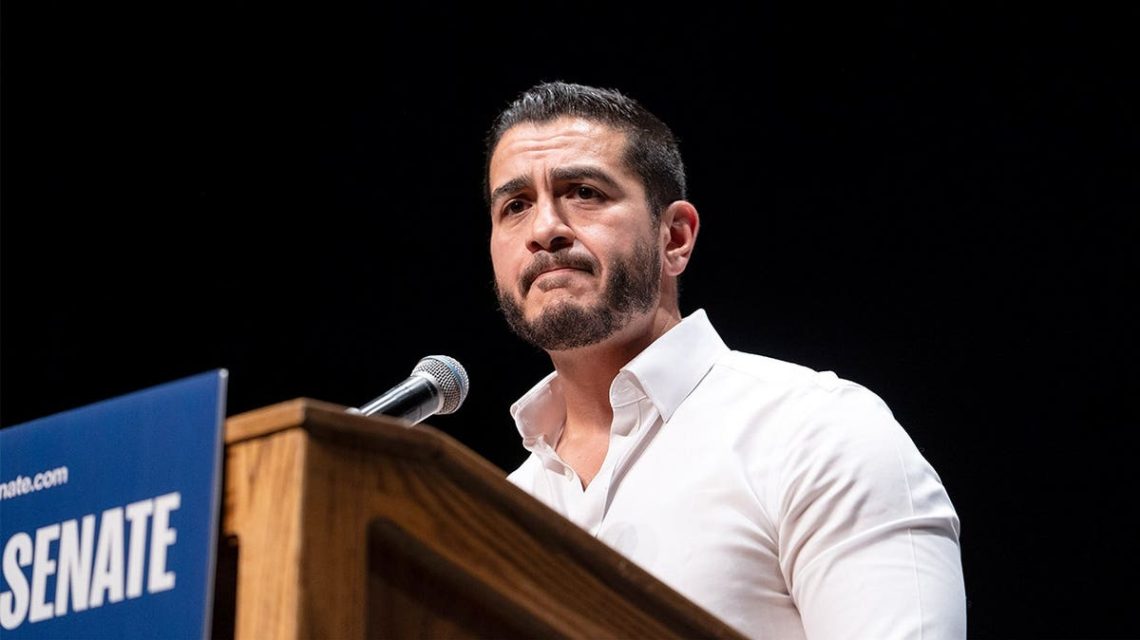
Abdul El-Sayed, a Democratic candidate for the U.S. Senate representing Michigan, once suggested allowing undocumented immigrants to obtain driver’s licenses. He argued that denying them this right was a form of discrimination. “We’ve got to make sure that in this state we are not discriminating against documentation status. Right now, if you’re undocumented, you don’t get access to a driver’s license. You’re stuck,” El-Sayed stated during a 2018 campaign interview, when he ran for governor.
Fast forward eight years, as he seeks a position in the U.S. Senate, this previous viewpoint has come under renewed scrutiny. It questions how local governments might interact with illegal aliens and whether granting them state identification could validate their presence in the U.S.
Hans von Spakovsky, an elections expert at Advancing American Freedom, noted that a driver’s license serves as a de facto national ID card in the U.S. Issuing such licenses to undocumented immigrants can open doors to numerous government benefits and services. “Because America does not have a national ID card like the Europeans and other nations, state driver’s licenses are a stand-in for that ID card. Issuing driver’s licenses to aliens will help them in all the instances where a license is needed, from opening bank accounts to all types of other transactions,” said Spakovsky.
He pointed out that I-9 forms, used for employment eligibility, typically require little more than a license. “The key to getting aliens to self-deport would be to ensure that they cannot rent apartments, open bank accounts, and take all of the other steps necessary to live and work in the U.S.,” Spakovsky commented. “Providing them driver’s licenses is a huge step in allowing them to easily live and work in the United States,” he added.
In the 2018 interview, El-Sayed expressed concerns that undocumented immigrants were being denied basic state privileges. “You don’t get access to a lot of the basic things that the state offers everybody else, and I think that’s ridiculous and so we’ve got to stop discriminating that way,” he said.
While El-Sayed distances himself from labels like “progressive” or “far-left,” he advocates a government-first approach in areas such as affordability, infrastructure, and public services. He supports Medicare for all, opposes corporate tax incentives, and endorses tuition-free higher education. Discussing government provisions, El-Sayed believes Democrats are headed in a more equitable direction. “You’re seeing that kind of resonance here in Michigan for sure. And I’m not surprised that you’re seeing that in New York, too. Government ought to be available to set an equal playing field for everybody and to offer those basic things that everybody needs and deserves,” he conveyed in an interview with Fox News Digital.
El-Sayed’s campaign did not respond to inquiries about the extent to which the government should provide these services to non-residents. Questions on whether granting licenses to undocumented immigrants signals approval of their presence in the country also went unanswered. El-Sayed is competing against Rep. Haley Stevens in an upcoming primary, with the winner advancing to the general election on November 3. Leo Briceno reports on politics for Fox News Digital’s congressional team and previously wrote for World Magazine.
 A Mother’s Tragic Journey Under Abortion Ban
  U.S. Strategic Goals Remain Unmet Amid Prolonged Conflict
  The Impact of Arts and Closure on Democracy
 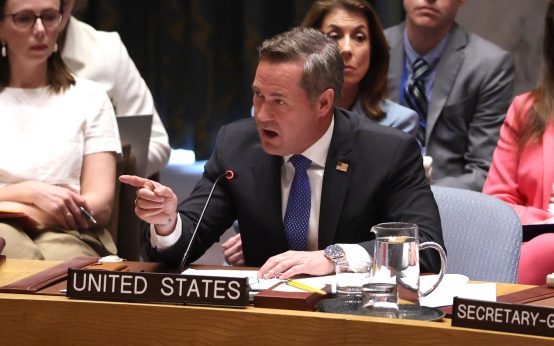 U.S. Ambassador Comments on Iran War Duration Amid Political Concerns
  US-China Relations Under Scrutiny: Expert Warns of Escalating Tensions
  No Timeline for End of Iran Conflict