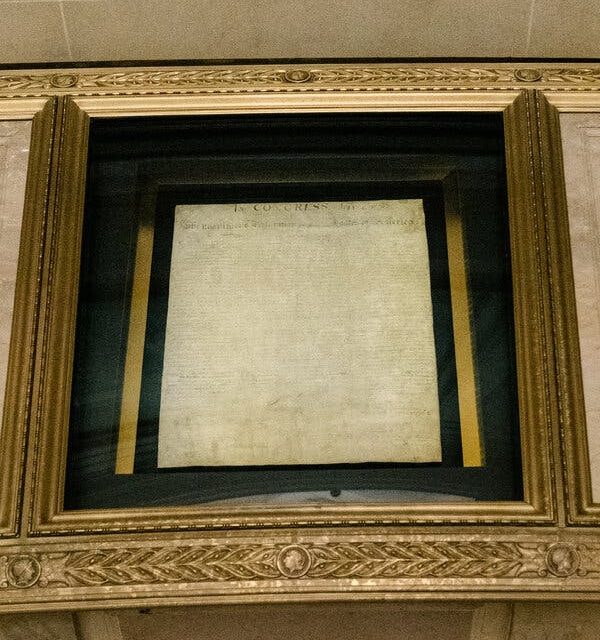
A Fading Icon of History
When the United States celebrated its centennial in 1876, the Declaration of Independence was the star attraction. It traveled from Washington to Philadelphia, acting as the centerpiece of the Centennial Exhibition, the country’s first official World’s Fair. An impressive nine million people attended, noteworthy given the nation’s population of only about 46 million at the time.
During the 250th anniversary, however, the Declaration remains in Washington, D.C., at the National Archives. Encased in bulletproof glass and surrounded by inert gases, it seems less central to current festivities. This year’s celebrations started with an Ultimate Fighting Championship event on the White House lawn and will feature the Freedom 250 Grand Prix near the Archives.
Lack of Emphasis on the Document
Colleen J. Shogan, a former U.S. archivist, remarked, “I think it is fair to say that the official activities haven’t put much emphasis on it.” Her tenure ended abruptly at the start of the Trump administration. Although the White House did not provide a reason for her dismissal, many assume it involved requests for Mr. Trump to return documents taken to his Mar-a-Lago residence.
On Monday, marking exactly 250 years since Thomas Jefferson finalized the Declaration’s text with cross-outs and substitutions, there was surprisingly no line to enter the rotunda of the Archives. Visitors could easily gaze at the document through the protective glass, reading the opening words “When in the course of human events …” and frequently identifying notable signatures.
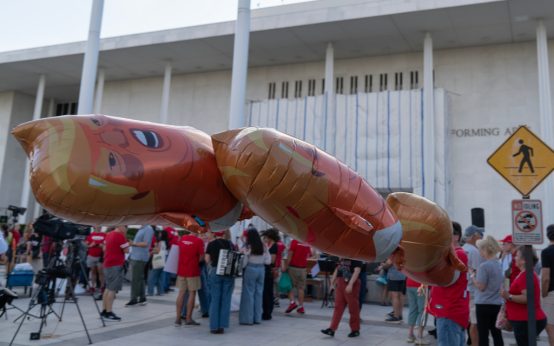 Trump Administration Sparks Outrage by Threatening Kennedy Center Closure
 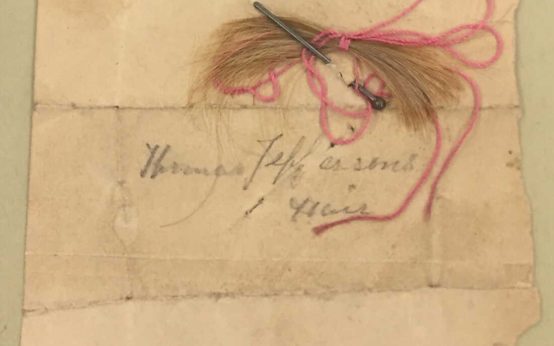 DNA Investigation Confirms Thomas Jefferson’s Lineage
 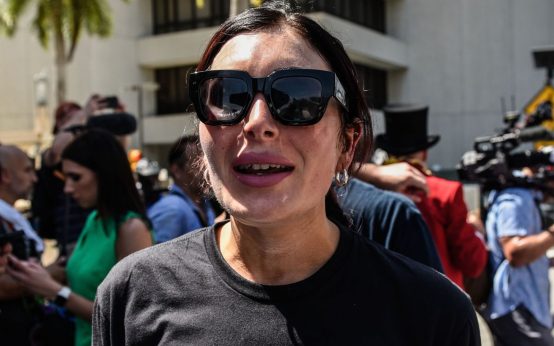 Laura Loomer’s Predictions and Poll Insights on Midterm Elections
  Voter Sentiment Against President Rises in Recent Poll
  Media Backlash Against Trump’s Press Exclusions
  U.S. Considers Belarus for Potash Purchases to Cut Fertilizer Costs