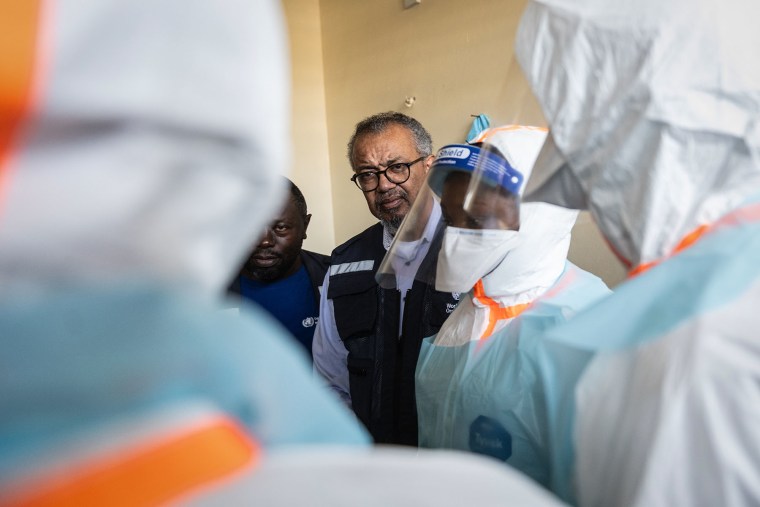
The World Health Organization’s Director-General, Tedros Adhanom Ghebreyesus, has visited the core region of the Ebola crisis to address the escalating situation. The outbreak of a severe strain of Ebola has resulted in over 1,100 suspected cases.
In Brazil, health officials are investigating two possible cases of Ebola. The Director-General traveled to the Democratic Republic of Congo’s Ituri province, the epicenter of the outbreak. He highlighted that with timely healthcare, survival from the Bundibugyo virus strain is possible. This was reiterated after his visit to a recently established Ebola treatment facility in Bunia.
“Even without vaccines or specific therapeutics, people can survive Ebola disease caused by the Bundibugyo virus if they receive timely healthcare and seek treatment as soon as symptoms appear,” Ghebreyesus stated in a post on X.
Recent strides in treatment were marked by the discharge of four nurses and a laboratory worker from a Bunia hospital, successfully recovering from the virus. These recoveries bring the total to five in the DRC.
In an op-ed for the Financial Times, Dr. Jean Kaseya, Director-General of The Africa Centres for Disease Control and Prevention, reported over 1,100 suspected cases under investigation in the DRC and Uganda as of May 30. He indicated 263 confirmed cases and 43 confirmed deaths. The WHO confirmed similar death figures, noting 291 confirmed cases between the two nations.
Dr. Kaseya emphasized the urgent need for prompt response due to the regional spread of the virus, stating, “We must move at the speed of the epidemic.” Health workers are battling numerous hurdles in outbreak management, including early case detection, isolation, contact tracing, and dignified burial of the victims.
The outbreak, the third-largest since Ebola’s discovery, has been declared a public health emergency of international concern by the WHO. This declaration underscores the crisis’s seriousness, though it hasn’t escalated to a pandemic emergency. The rapid outbreak has overwhelmed global responses, with local communities expressing fear and anger, occasionally leading to hostility.
Doctors Without Borders (MSF) noted the unprecedented scale of the outbreak. “Never before has an Ebola outbreak recorded so many cases so soon after its declaration,” stated MSF, urging increased medical personnel and testing.
In Goma, Ebola awareness efforts continue amid escalating cases. Meanwhile, far from the outbreak’s origin, Brazil is investigating two suspected Ebola cases. One individual in Sao Paulo, confirmed to have meningitis, and another in Rio de Janeiro, confirmed to have malaria, remain under evaluation for potential Ebola infection.
In Italy, a suspected Ebola case arose in Cagliari, Sardinia, as a man returning from Congo exhibited symptoms. However, on Monday, tests concluded negative results for Ebola.
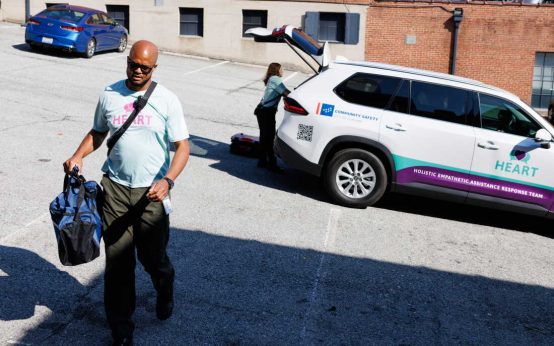 Durham’s HEART Program: A New Approach to Public Safety
  Mindfulness: Manage Stress by Embracing the Present
 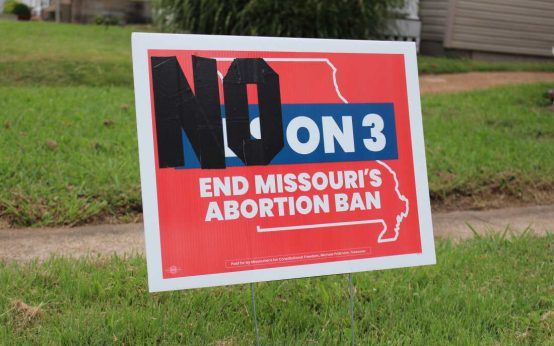 Missouri’s Abortion Policy: Conflicting Amendments and Voter Decisions
  The Impact of Extended Job Searches on Mental Health
  Philanthropic Shift Towards Supporting Women in Midlife
  Remote Work Benefits Students and Societies Alike