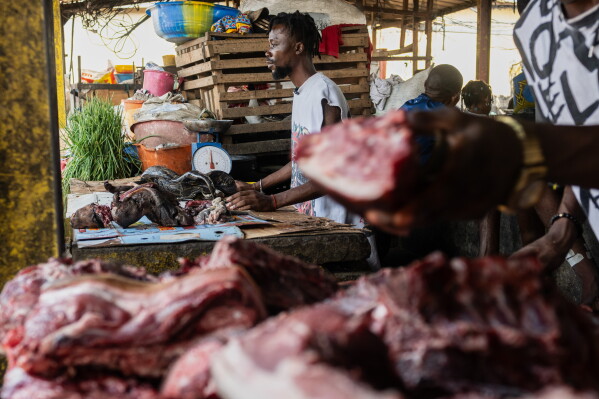
In the Democratic Republic of Congo, the battle against Ebola continues with at least 282 confirmed cases reported. The outbreak is primarily in the eastern Ituri province, where 264 cases have been recorded so far. This ongoing health crisis has also seen over 1,000 suspected cases involving the Bundibugyo strain of the virus, which currently lacks an approved treatment or vaccine.
The Ministry of Health identified several challenges in controlling the outbreak. These include the need for early detection, rapid isolation of cases, effective contact tracing, safe burials, and improved infection control in health facilities. The contact tracing coverage rate is currently at 45%, with 220 suspected cases under investigation.
Amidst these challenges, some former patients have experienced remarkable recoveries, sharing their relief and happiness. Among them is nurse Baraka Bulambulu, who expressed immense joy after testing negative twice for Ebola. Bulambulu was presented with a recovery certificate by World Health Organization Director-General Tedros Adhanom Ghebreyesus during an event marking the opening of a new Ebola treatment center in Bunia, Ituri province’s capital.
The first test was positive for me, but the following two were negative,” said Bulambulu, celebrating his survival with a smile.
Another recovering nurse, Ezo Étienne, shared his experience, recalling initial symptoms such as dizziness and low blood pressure, followed by vomiting. The World Health Organization noted that all five survivors are health workers, a group significantly impacted during the outbreak.
The WHO has emphasized that treatment focuses primarily on alleviating symptoms. “Your courage offers hope that this outbreak can be stopped,” Tedros told the health workers.
Meanwhile, neighboring Uganda has reported nine Ebola cases and has closed its border with Congo to prevent further spread. Although the Bundibugyo virus has been uncommon, the absence of approved vaccines and treatments, coupled with remote locations and armed violence, complicates the response efforts.
Dr. Dieudonne Mwamba Kazadi, director-general of Congo’s National Institute of Public Health, acknowledges the significance of the recoveries. “It demonstrates that recovery from Ebola is possible when seeking timely care in a specialized health facility,” he said.
 Google Fined for Breaching EU Privacy Rules
  South China Sea Tensions Rise after Collision between Chinese and Philippine Ships
  North Korea’s Hypersonic Weapon Test Amid Global Tensions
  Austin Tice: A Search for Answers
  U.S., Denmark, and Greenland Forge New Security Agreement
 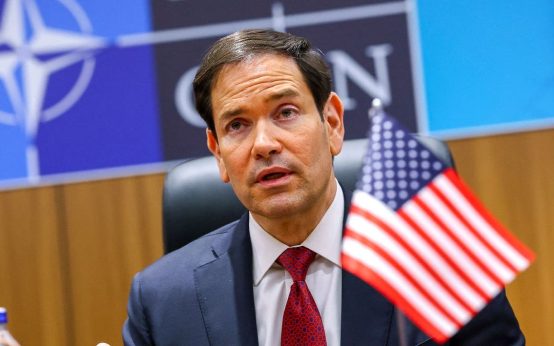 Secretary Rubio Discusses Middle East Conflict and NATO Relations