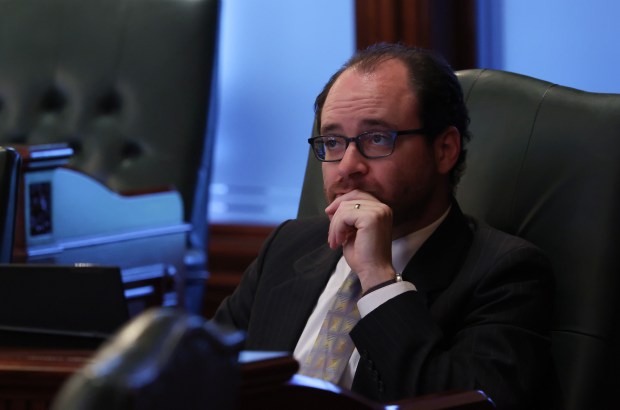
In Springfield, Governor JB Pritzker announced his intention to sign a new bill regulating artificial intelligence (AI) in Illinois after it passed the General Assembly with strong bipartisan support. The legislation, which received a vote of 110-0 in the House and 52-5 in the Senate, positions Illinois as the first state to mandate independent, third-party audits of safety practices for major AI developers.
This initiative is a response by the Democratic-led General Assembly to address what they perceive as a lack of federal action in AI regulation. Democratic state Senator Mary Edly-Allen highlighted the need for regulatory guidance in the AI industry, likening its current state to “the Wild Wild West.” She emphasized the importance of creating a framework for responsible innovation to mitigate catastrophic risks.
State Representative Daniel Didech, a Democrat from Buffalo Grove, sponsored the bill in the House. During legislative discussions, he called AI one of the most significant technological advancements and stressed its potential global benefits, provided it is deployed responsibly. Didech branded the legislation as crucial for moving toward a world where AI enhances quality of life.
The legislation mandates that large AI developers, defined as those earning over $500 million annually, reveal how their products might pose “catastrophic risks” and how such risks will be mitigated. The requirements take effect on January 1, 2028. Companies must also address “critical safety incidents,” reporting them to the state within 72 hours upon reasonable belief one has occurred. Annually, developers must engage third-party experts for compliance audits regarding AI models’ safety.
Additional protections include whistleblower rights, preventing companies from stopping employees from reporting safety risks to authorities. An anonymous internal reporting system for employees’ concerns about public safety risks is also required.
Governor Pritzker expressed his support for the bill, stating on X, a social media platform, that Illinois is taking the lead in holding tech companies accountable and establishing necessary safeguards as AI technologies impact lives.
AI companies like Anthropic have supported the legislation, noting that it formalizes key safety practices already in place, setting a standard for AI developers. OpenAI also praised the measure, recognizing its potential to establish clear safety and accountability expectations.
Senate Republican leader John Curran viewed the bill as a foundational step in developing tech policy, highlighting the ongoing need to balance regulation with fostering AI research and innovation.
The push for AI regulation continues in Illinois amid the federal government’s hesitance under Republican President Donald Trump, who rescinded previous AI oversight efforts established during Democratic President Joe Biden’s term.
Additional AI-related Legislation
Several other AI-related bills are being debated in the legislature as the spring session nears its end. One targets AI-driven rental pricing platforms accused of facilitating rent-fixing by prohibiting price coordination through algorithms, having passed the Senate 34-21.
Another bill would prevent bots from buying event tickets beyond limits and ban resellers from misleading affiliations with artists, passing in the Senate 57-0. A separate proposal, also passing 57-0, would require AI systems to flag and refer users at risk of self-harm to crisis services.
A measure requiring businesses to inform customers when they encounter an automated system on calls passed with a 56-1 Senate vote. Another bill aims to stop the sale of consumers’ sensitive data without opting out, clearing the Senate 54-3.
Specific legislation for schools proposes restrictions on using biometric student data for educational purposes only and bans teachers’ use of AI to grade student work, both passing unanimously in the Senate.
 AI-Powered Malware Raises Concerns Over Security
  Poll Reveals MAGA’s Increasing Popularity Over DSA as Democrats’ Future Debated
  North Korea’s Hypersonic Weapon Test Amid Global Tensions
 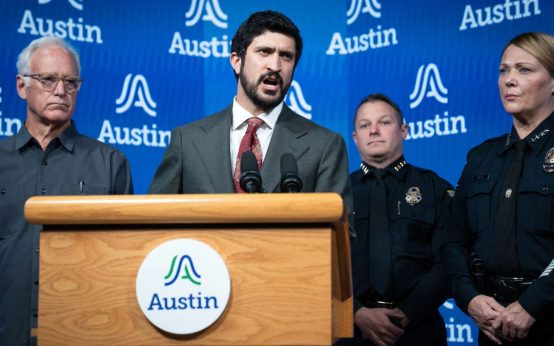 Debate Over ICE Action in Austin Escalates
  President Trump Warns of Escalating War with Iran at UN Assembly
  Tariffs and Their Impact on Everyday Products