Americans are grappling with increasing financial pressure, heavily impacting both their financial and mental health. A key factor here is inflation, which is rapidly rising and causing essentials to become costlier. This situation often leads individuals to turn to credit cards to fill financial gaps.
The downside of relying on credit cards is the heightened interest rates. These rates compound, adding further stress to already tight budgets. Consequently, the strain is evident in financial management as many borrowers experience stress due to debt and monthly expenses.
The Dilemma: Debt Repayment vs. Emergency Savings
Borrowers might assume that aggressively paying down debt is best. However, this approach can neglect the necessity of an emergency fund, which poses another type of financial risk. Without a financial cushion, unexpected expenses can force reliance on credit cards, perpetuating a costly debt cycle.
The strategy usually involves balancing debt repayment with building an emergency fund. But how much should you keep aside while paying off debt?
Recommended Savings Amid Debt
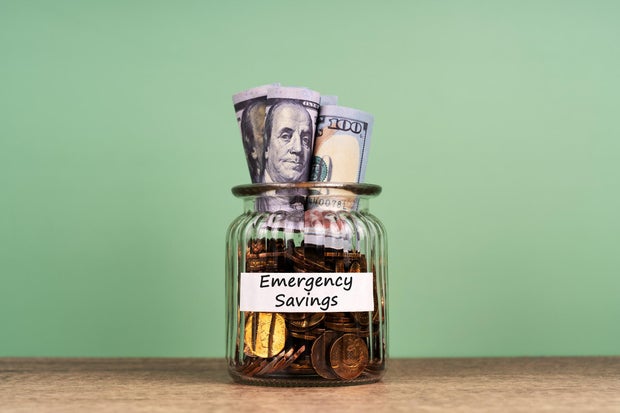
Typically, financial advisors suggest an emergency fund covering three to six months of living expenses. For those actively repaying high-interest debt, starting with a smaller fund of $1,000 to $2,500 is more practical.
This approach provides protection against unexpected disruptions like minor repairs or medical expenses without drawing too much away from debt repayment. Once debts are cleared, focus shifts towards fully building an emergency fund.
Factors Dictating Emergency Fund Size
The ideal emergency savings amount varies depending on individual circumstances. If income is variable or self-employment is involved, aiming for the higher starter range is prudent. This prepares for potential income interruptions.
Homeownership necessitates more savings due to higher expected repair costs, while renters with stable jobs may manage with less.
Furthermore, the type of debt matters. High-rate credit card debt demands minimizing emergency savings to aggressively reduce compound interest charges. Comparatively, federal student loans or low-rate auto loans allow for slower repayment alongside building savings.
Evaluating Debt Relief Options
In cases where debt is overwhelmingly large, traditional repayment strategies can feel insurmountable. Investigating debt relief options may be worthwhile.
Debt consolidation via loans or balance transfer cards could lower interest rates, simplify payments, and free cash for savings. Alternatively, debt management plans from credit counseling agencies offer reduced rates and structured timelines.
Sometimes, negotiating settlements with creditors can create more manageable repayment conditions. Bankruptcy may also be considered but should be approached cautiously due to possible credit impacts.
Consulting a debt relief expert or certified credit counselor helps determine the most suitable path based on income, debt levels, and financial aspirations.
Conclusion
There’s no universal rule for emergency savings while paying off debt. A starter fund of $1,000 to $2,500 often suffices to tackle minor setbacks without deterring debt repayment. If debt remains overwhelming, exploring relief options could be the necessary first step.