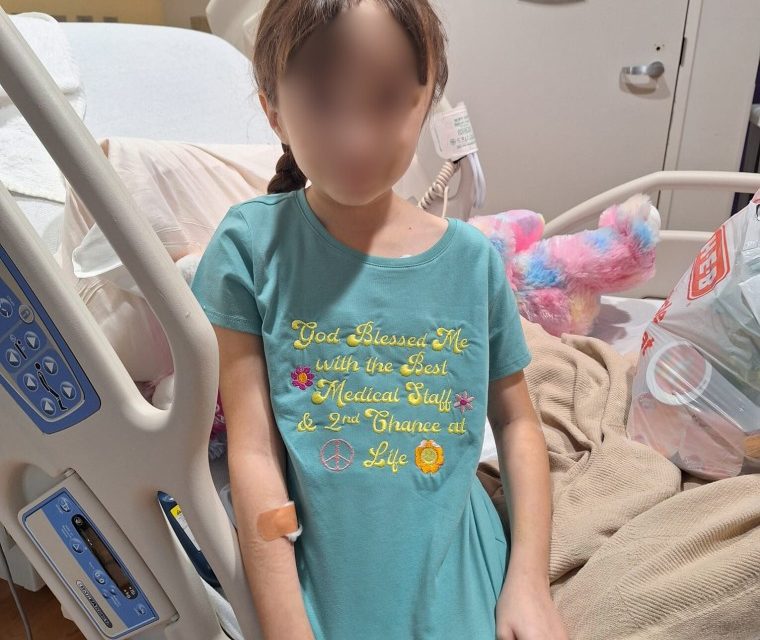
The mother of a child recovering from a rare brain tumor has been denied a humanitarian request to return to the United States, a decision made after a ten-month wait. She expressed her frustration and despair after learning of the rejection while in Mexico, where she currently resides with her family.
The child, a U.S. citizen, was 10 years old when immigration authorities deported her undocumented parents to Mexico over a year ago. She and her four siblings, three of whom are also U.S. citizens, accompanied them. Due to safety concerns, the family has chosen to remain anonymous as they live in a region of Mexico where kidnappings are prevalent.
The girl’s treatment was interrupted by the deportation, which followed her emergency brain tumor surgery in 2024. Since the family’s move to Mexico, the girl’s health has worsened significantly. She recently suffered a severe seizure, followed by abnormal MRI and test results indicating her brain is not regenerating properly. This deterioration has slowed her recovery of motor skills and speech, increased the chance of new tumors, and led to frequent, painful muscle spasms.
The mother’s attempts to find a Mexican medical provider for her daughter have been unsuccessful due to the complex nature of the girl’s medical history. Travel by plane is not an option for her daughter due to her condition. Medical documentation indicates the brain tumor resulted from a novel condition, making it difficult for specialists without context to provide treatment.
The girl was previously reliant on therapists and specialists in the United States. Now, her progress in skills like writing and speaking has regressed. According to her mother, the child’s mental development has halted.
The family’s United States-based attorney and the Texas Civil Rights Project are exploring options to reapply for humanitarian parole, although the process is expensive. Their efforts include reaching out to Congress members to garner more support. Meanwhile, the girl’s older brother, who remained in the U.S., works multiple jobs to help her buy medicine. He also engages in advocacy efforts to help his family return to the U.S.
The saga began when the family tried to rush their daughter to a hospital in Houston from their then-home near the Rio Grande Valley, Texas. Upon being stopped at an immigration checkpoint, they were detained and deported. Officials cited “expedited removal orders” from earlier instances, stating that ignoring such orders results in consequences.
The Department of Homeland Security states it does not deport American children, instead giving parents the option to take their children with them. Humanitarian parole was one of the family’s last viable options for returning to the U.S.
Recent data show a marked increase in the denial of humanitarian parole applications compared to previous years. From January to September 2025, the Trump administration denied about 14,500 applications and approved nearly 1,400. Under Biden’s last year, 5,122 applications were denied, with 3,935 approved.
The deported family has now spent two birthdays in Mexico, bittersweet reminders of the daughter’s life post-surgery and her limited medical treatment options. Advocates remain hopeful that more support for families like theirs can change the outcome for vulnerable children unable to receive needed care without their parents.
 Federal Shooting Sparks Controversy in New York
  Mike Ditka: A Legacy in Football
  Pro Wrestler KJ Orso Showcases Native American Heritage
  Escalating Conflicts and Diplomatic Efforts in the Middle East
  Concerns Over Reimbursement Cuts for Autism Care in Georgia Medicaid
  AI’s Role in Enhancing Human Connection Through Innovative Ventures