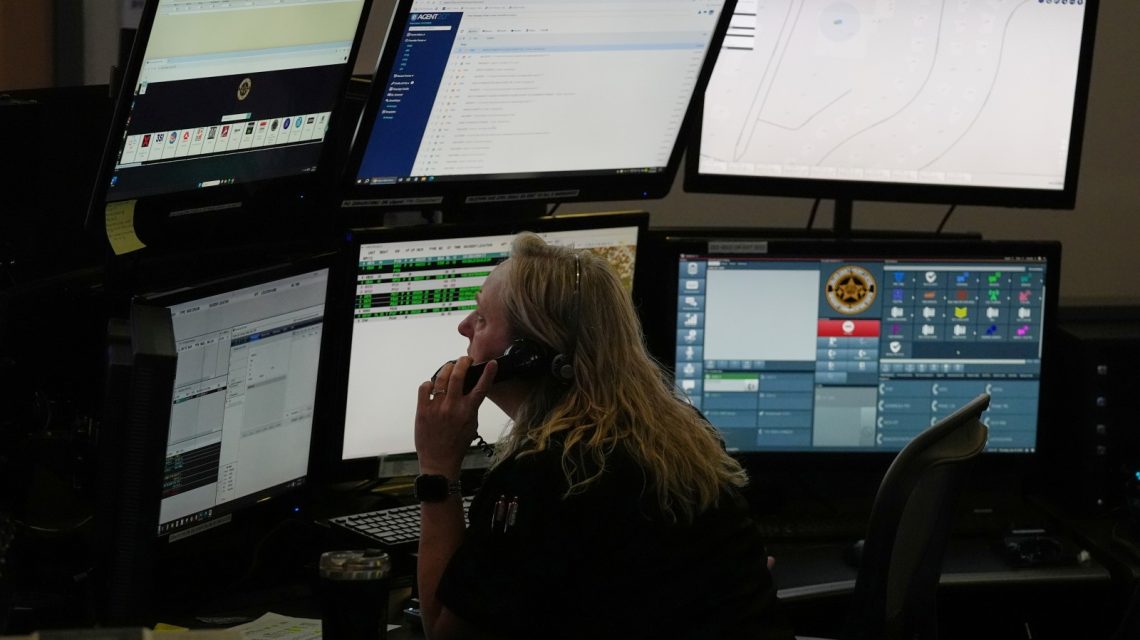
Indian River County Sheriff Eric Flowers addressed the Vero Beach City Council to discuss the possibility of consolidating emergency dispatch services. This proposal follows the recent approval of Amendment 3, raising budgetary concerns.
Flowers expressed, “I ask that with Amendment 3 passing, you consider a unified dispatch system. The offer remains open and aligns with my goals as sheriff.” He noted the previous attempt to consolidate dispatch two years earlier.
Amendment 3 received over 60% support in the recent election. It allows property tax cuts benefiting some homeowners but risks reducing funds for public services.
“One commissioner mentioned it as ‘an option to consider’ during the Vero Beach City Council meeting,”according to a Newsweek report. Vice Mayor John Cotugno inquired about whether the sheriff’s office or the county would handle the proposal. Flowers clarified, “Technically, they run dispatch but many dispatchers work directly for me.”
Flowers highlighted Brevard County as a successful example of unified dispatch. Brevard County’s system operates within their Emergency Operations Center, servicing law enforcement, fire, and medical emergencies.
Financial impacts of the consolidation remain unclear. Council member Tracey Zudans requested specific financial details to present to taxpayers: “I’d like to see some dollar figures alongside response times.” Flowers assured that his team could provide such data.
University of Florida professor Aubrey Jewett noted that counties often merge dispatch centers to save money and improve response times. According to Jewett, initial costs may increase due to infrastructure setup, but savings can emerge over time by reducing duplicative efforts.
Jewett further explained how Amendment 3 will strain local budgets, forcing some governments to either raise alternative taxes or cut services. Though public safety often relies on property taxes, achieving current funding levels without additional revenue could challenge many areas.
Details of Amendment 3
Amendment 3 will expand the non-school homestead tax exemption from $50,000 to $150,000 by 2027, reaching $250,000 in 2028. Critics warn of strains on public services—a financial relief primarily for primary residence owners.
The amendment may lead residents not benefitting directly, including renters, to face alternate costs if local authorities increase fees to recover lost revenue. State economists predict the amendment will cut funding for local services by approximately $5 billion in 2027 and close to $12 billion by 2031.
Jewett pointed out that political consequences are anticipated as Amendment 3 takes hold. The legislature might offer aid to rural counties and small cities, predominantly residential areas may face consolidation for financial survival.
 USS Doris Miller Naming Debate: Navy Maintains Name Amid Political Discussions
 Dan Sullivan Concedes Alaska Senate Race to Mary Peltola
 Call for Action Against ICE Involvement at Seattle-Tacoma International Airport
 Trump’s Approval Rating Declines Post-Midterms
 Political Tensions Rise Over National Security Concerns
 Call to Close Dilley Detention Center Gains Momentum