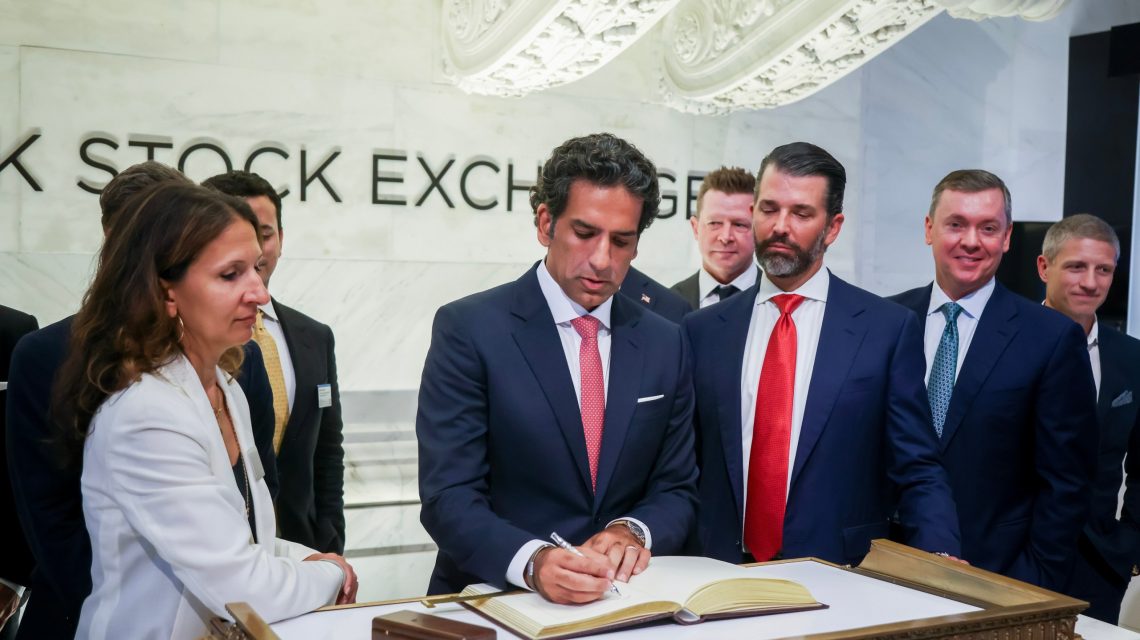
The Pentagon is evaluating a massive $15 billion loan to Hadrian Automation, a startup linked to Donald Trump Jr. This loan would rank among the largest government loans in U.S. history. Interviews and documents reviewed by ProPublica reveal that the federal government has not extended such significant financial aid to companies connected to the Trump family previously.
Hadrian Automation, based in California, has attracted significant private investment due to its capability to build AI and robot-driven factories for precision component production. This loan would be twice the company’s estimated value from a recent financing round. Hadrian’s recent investments include major participation by 1789 Capital, a firm where Trump Jr. partners. The possible loan is ten times the size of recent Pentagon lending deals and could set up an interdependence between the government and the company.
Documents show the proposed loan to Hadrian aims to construct automated factories for defense production, addressing issues such as the U.S. military’s munitions shortage caused by conflicts in Ukraine and Iran. Former Defense Department officials express concerns about the deal’s scale, given the government’s guidelines on safeguarding taxpayer money. Questions also arise regarding Hadrian’s capability to scale effectively.
Trump Jr.’s association with companies winning government contracts has been financially beneficial. ProPublica’s reports highlight multiple instances where firms with stakes held by Trump’s elder sons received considerable federal support. The Pentagon, however, denies any preferential treatment, asserting that political connections do not influence funding decisions.
The Pentagon indicates discussions with Hadrian are in early stages, refuting claims about the exact loan amount. The Defense Department spokesperson mentions ongoing talks with the company valued much lower than the suggested $15 billion. They also stated that deals with other companies have been finalized but remain undisclosed.
Hadrian’s automation focus appeals to the Defense Department’s need to enhance domestic production and lessen reliance on China. Trump’s administration has engaged in lending to boost private companies’ capabilities in producing rare earth minerals and technologies. Concerns persist about Hadrian’s potential dependence on government contracts.
1789 Capital, involved in Hadrian’s funding, claims it doesn’t intervene in government contract pursuits, maintaining the stance that investing in U.S. manufacturing reinforces domestic industrial capabilities. This aligns with Hadrian’s mission to advance defense manufacturing using its AI software, Opus.
Founded by Chris Power in 2020, Hadrian Automation hired talents from SpaceX, Tesla, Raytheon, and others to replicate precision components. Power’s vision of automating defense production addresses a workforce shortage in defense manufacturing. Hadrian has secured investments from notable Silicon Valley firms such as Andreessen Horowitz and Altimeter Capital.
The venture capital industry is investing heavily in AI and robotics, with a $33 billion investment influx in the first half of 2026, anticipating shifts in manufacturing dynamics. A significant Defense Department contract could position Hadrian as a dominant force despite the absence of disclosed production success.
The potential loan to Hadrian raises questions about its alignment with the Office of Strategic Capital’s mission to fill industrial gaps and reliance on China for military supplies. Critics argue the deal’s scope surpasses the office’s intended use.
Trump Jr. maintains distance from Hadrian’s operational matters, emphasizing his absence from influencing government decisions. Concerns arise that the loan could push the Office of Strategic Capital’s goals beyond its purpose, especially as Congress likely needs to approve further funds for continued operations.
 Meghan Markle’s Father Deemed Competent for Trial in Child Abuse Case
 Evacuation Urged for Safety Before Detonation at Iowa Ammunition Plant
 Bob Woodward Reflects on His Storied Career
 Weekly Sports and Culture Highlights
 Examination of Chicago’s TIF Program and Its Impacts on Neighborhood Development
 U.S. Army Sergeant Admits to Providing Military Information to China