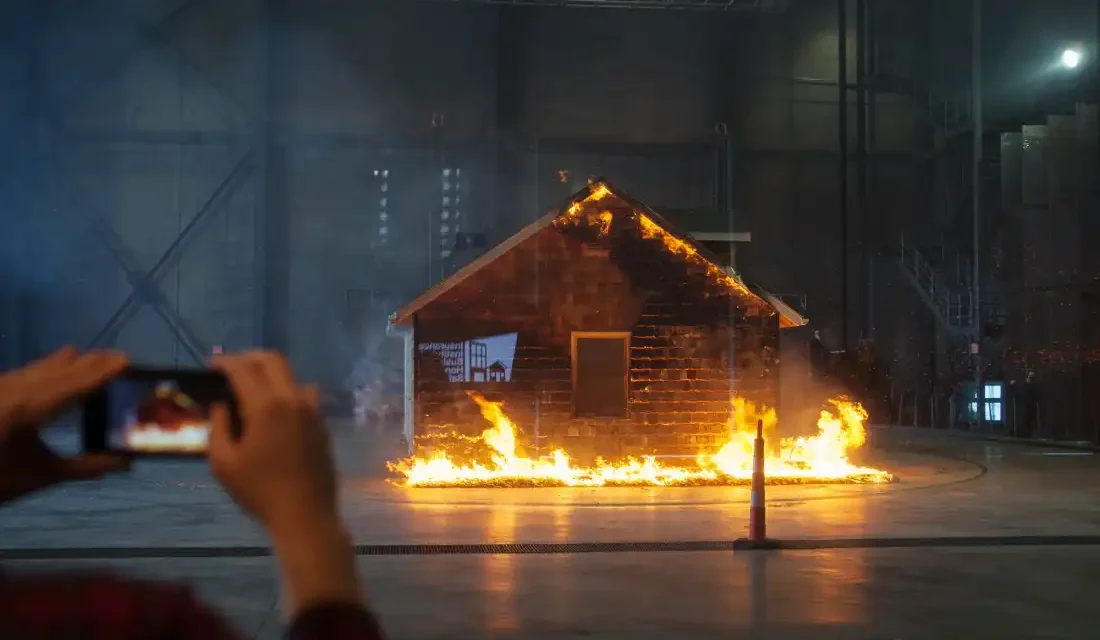
Many homeowners in rural Northern California face the dual challenges of increasing wildfire threats and difficulties in securing affordable home insurance. Alexi Horowitz-Ghazi highlights these issues in a two-part series on the Planet Money podcast, sparking discussions on how economics could play a role in enhancing community safety.
The struggle to find affordable and reliable insurance is a significant concern. Insurers are spending heavily to identify methods to protect homes from disasters, yet the effectiveness of homeowner investments in safety often doesn’t translate to lower insurance costs. For example, homeowners in areas like Paradise, California, have made substantial efforts to improve fire safety, yet report receiving minimal insurance discounts.
Testing Home Resilience
Alexi explores efforts to determine how homes can better withstand climate hazards. This includes a South Carolina destruction lab where researchers test building resilience against fires, hail, and hurricane-force winds. The funding for this comes from major insurance firms eager to understand risks and mitigate future payouts.
These experiments echo historical efforts, such as those by Underwriters Laboratories, which tested new technologies to reduce fire and electrical hazards. Similarly, the Insurance Institute for Highway Safety uses crash tests to improve car safety, a parallel approach in different industries.
The Issue of Moral Hazard
Insurance can unintentionally reduce the motivation for homeowners to invest in disaster risk reduction, a concept known as moral hazard. For those living in fire-prone areas, this might discourage investments in protective upgrades like metal roofs or ember-resistant vents, even though these measures could lower the risk of their homes catching fire.
One potential solution is for insurers to offer significant discounts for safety improvements, thereby providing incentives for upgrades. However, as highlighted in Horowitz-Ghazi’s reporting, these discounts are often insufficient, even in communities actively improving their safety measures.
Regulatory and Market Dynamics
California’s insurance landscape is fraught with challenges, partly due to Proposition 103, which restricts insurers from raising rates without state approval. This regulation forces insurers to base rates on historical, rather than future, risks, creating a disconnect in pricing strategies amid rising wildfire threats.
Economist Nancy Wallace argues that this regulatory framework has hindered the market, keeping premiums artificially low and leading insurers to withdraw from the market. This has resulted in many families relying on California’s last-resort FAIR Plan, which may not offer comprehensive coverage.
Despite the attractive notion of better pricing freedom, higher premiums could push coverage out of reach for many homeowners. As UC San Diego economist Judson Boomhower highlights, insuring fire-prone areas might still be possible but at considerable cost, reflecting market adjustments.
Navigating the Insurance Market
Some homeowners, like the author, have turned to the non-admitted market for better insurance coverage. Although this offers greater pricing flexibility, it lacks state-backed protection in case of insurer insolvency. Meanwhile, recent regulatory changes in 2024 offer a glimmer of hope, aiming to improve market conditions by allowing insurers to consider forward-looking models for wildfire risk.
As Californians await market improvements, the approaching winter and potential precipitation from El Niño present a temporary respite from wildfire worries. In this period, understanding the home insurance crisis remains critical as efforts to stabilize the insurance market unfold.
 California Faces Historic Seawater Flooding
 California’s Rising Utility Rates and Their Impact
 Discovery of the Most Distant Quasar: Insights into the Early Universe
 New York’s Nuclear Energy Challenge
 Frailejons: Guardians of Colombia’s High-Altitude Wetlands
 Preventing Air Pollution While Cooking Thanksgiving Dinner