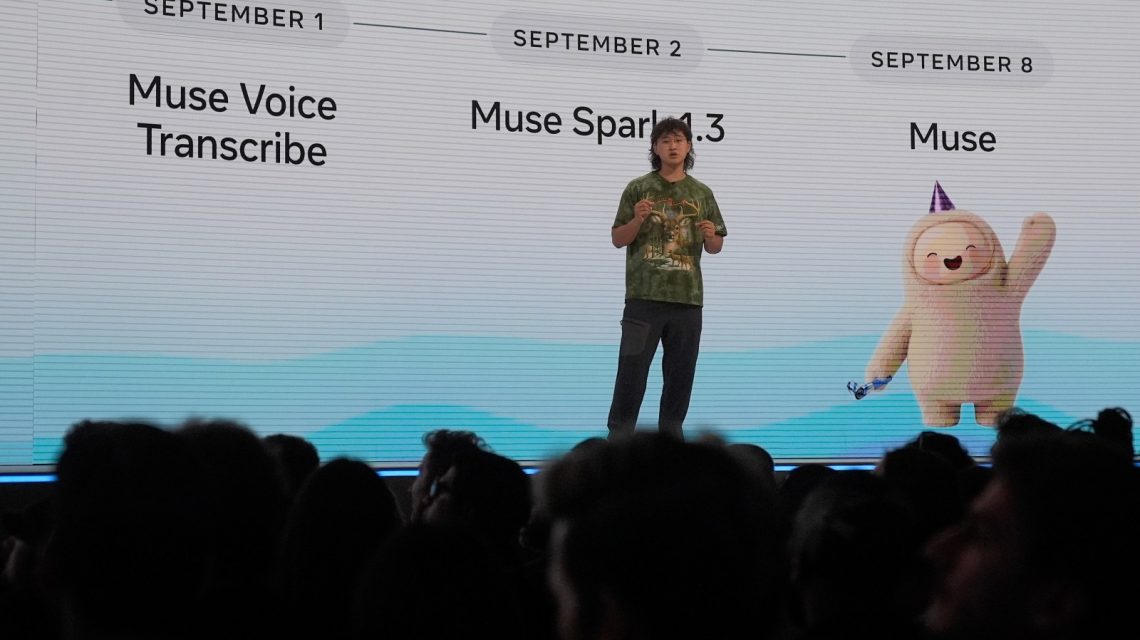
Meta’s Chief AI Officer issued a warning about the potential dangers of superintelligence. Alexandr Wang expressed concern that AI might soon surpass human intelligence. He asserted that humanity’s response to this development in the coming year could have profound implications for our future.
This cautionary note came after an Anthropic employee claimed an accomplishment that drew significant attention. The employee used Claude, an AI tool, to tackle the Riemann Hypothesis, one of the toughest unsolved problems in mathematics. Although not yet verified, the claim points to AI’s growing capabilities.
Alpege shared on his website, “In a time of transformation in mathematics, I hope the argument provides a glimpse toward the wonders ahead. It shows us the joy and discovery we will find in simple things.”
If verified, Wang believes this achievement could mark the beginning of an era for AI that humanity might not be ready for. He highlighted the difficulty in imagining a future where control over recursive self-improving AI remains with humans.
Wang also criticized the idea that superintelligence is inevitable. He urged the AI industry to take different actions to ensure a positive outcome. “We should not accept transferring control of society to AI,” he stated. Instead, efforts should focus on empowering humanity with technology.
Responses to Wang’s Concerns
Engineer and influential figures reacted to Wang’s warning. Elon Musk, for instance, highlighted SpaceX’s advancements with superintelligence. Entrepreneur Andrew Yang noted AI’s potential to dominate various sectors. Meanwhile, Congresswoman Yassamin Ansari asked for stricter regulations on AI development.
She advocated for slowing down advanced AI projects and backed legislative measures such as the Ban Artificial Superintelligence Act of 2026. This act aims to curb the development of superintelligence. Political commentators like Megyn Kelly and journalists such as Jemele Hill echoed the sentiment for urgent attention to AI threats.
Referring to science fiction-like scenarios, Hill remarked that the warnings from AI leaders mimic warnings in disaster movies that often go unheeded.
Meta’s Approach to AI Safety
Wang emphasized Meta’s ongoing efforts to prioritize safety in AI development. He mentioned that he and Meta CEO Mark Zuckerberg are investing more in safety. They aim to focus computing resources on serving people rather than recursive self-improvement.
In an essay, Zuckerberg discussed his vision for safely developing and deploying superintelligence. While acknowledging AI’s challenges and opportunities, he criticized the negative discourse around AI. Zuckerberg believes in distributing the power of superintelligence to foster innovation and personal empowerment.
He argued for balancing power as an optimal strategy for a positive AI future. By making superintelligence widely accessible, Zuckerberg hopes to mitigate safety concerns while maximizing benefits.
Other Tech Leaders’ Perspectives
Jacob Coxon, previously with Anthropic, issued warnings about unchecked AI advancements. He voiced concern over AI’s ability to surpass human abilities across fields.
Anthropic CEO Dario Amodei echoed these worries, advocating for responsible AI development. OpenAI CEO Sam Altman expressed agreement, mentioning plans for independent safety evaluations.
Policymakers’ Steps to Address AI Risks
Lawmakers at various levels are introducing legislation to counter AI threats. Representatives Ted Lieu and Nathaniel Moran proposed the AI Kill Switch Act. This legislation mandates AI developers maintain emergency mechanisms to disable rogue systems.
In California, Governor Gavin Newsom outlined a strategy for state oversight of AI, including measures to handle rogue agents. These legislative efforts reflect a growing acknowledgment of AI’s emerging challenges and the need for regulation.
 Jensen Huang Returns to Nvidia as CEO Amidst Employee Support
 AI Enhancing Legal Services in Arizona and Utah
 Jensen Huang Reinstated as Nvidia CEO
 Oregon and Virginia Sue Elon Musk’s SpaceX Over Grok AI Content Allegations
 Lawmakers Demand Clarification on AI Chip Sales to China
 Trump Assures Nvidia Board About CEO Jensen Huang’s Legal Safety