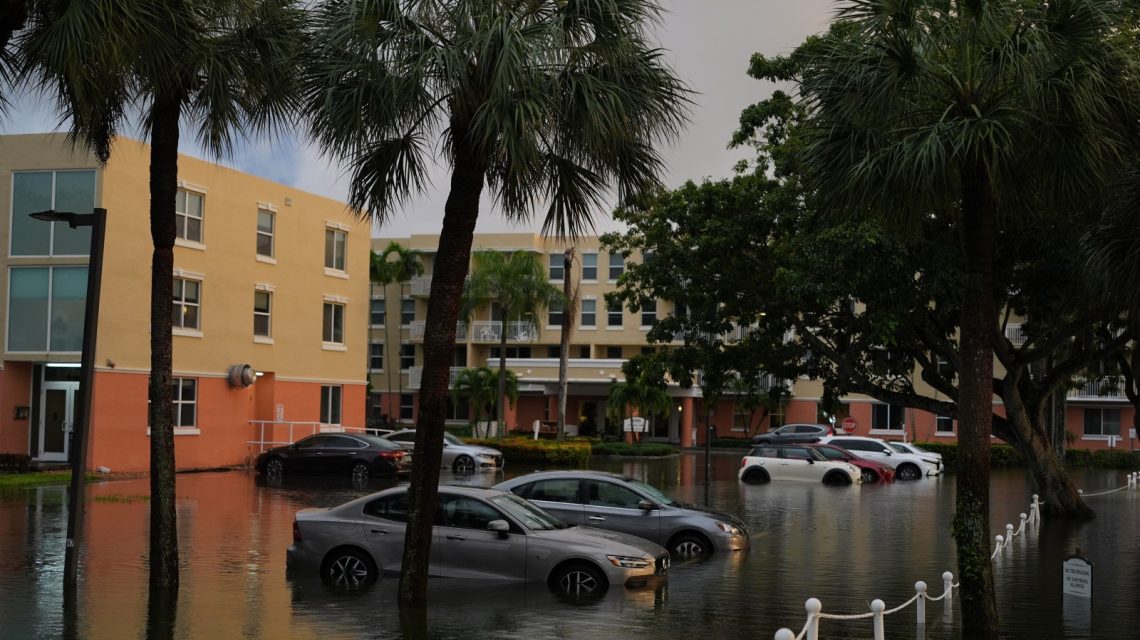
The state of emergency in Florida now affects around 6.5 million additional people across seven counties, due to ongoing severe rainfall and flooding in the region. An executive order issued on Wednesday included Broward, Duval, Flagler, Miami-Dade, Monroe, Putnam, and St. Johns counties. This brings the total number of impacted counties to 21, with Miami identified as a central area.
Governor Ron DeSantis originally declared the state of emergency on November 2 for Brevard, DeSoto, Hardee, Highlands, Indian River, Martin, and St. Lucie counties. It was updated to cover Glades, Hendry, Lake Okeechobee, Palm Beach, Seminole, and Volusia counties. Currently, an estimated 11.24 million residents face potential impact.
The region has responded to flood warnings by closing schools, parks, libraries, and government buildings, as nearly a third of the state faces flooding risks. Governor DeSantis emphasized ongoing response efforts, ensuring resources and collaboration with local partners for protection and support.
“As heavy rainfall impacts communities across Florida, the state is continuing our active response efforts,” DeSantis stated. “Florida will continue deploying resources and working alongside local partners to protect residents and respond to the needs of impacted communities.”
Efforts include deploying hundreds of national guardsmen, state guard members, and emergency personnel. DeSantis stated that the state of emergency will remain until January 1. Preparations include over 6,000 feet of flood control devices, shelters on standby, and readiness of emergency resources such as generators and vacuum trucks.
Submerged State
South Florida is experiencing heavy rains, with some areas reporting over 12 inches in just two days. Further rainfall of 3 to 7 inches is predicted along the east coast, increasing to 10 inches in certain spots. The St. Johns River has already reached a major flood stage, rising from 16ft to 17.2ft, expected to hit a record high of 17.4ft by Saturday.
The flooding poses a significant threat, with meteorologist Alex Sosnowski warning that water could remain high into 2027. Heavy rains and thunderstorms will persist, exacerbating already saturated areas and increasing flash flood risks.
The South Florida Water Management District has issued an emergency order to pump water from affected areas to mitigate flooding risks.
Emergency Powers
Executive Order 26-227 grants state officials extensive authority to expedite response and recovery efforts. Flooding has disrupted critical infrastructure such as interstates, roads, airports, and schools. The Division of Emergency Management head operates as State Coordinating Officer, empowered to invoke aid agreements, seek federal assistance, and command personnel.
The order authorizes the activation of the Florida National Guard and State Guard as needed. It permits the Transportation Department to waive tolls, close roads, and adjust vehicle size and weight restrictions for emergency supplies. Pharmacists can dispense emergency 30-day medication refills, and hospital pharmacies can provide up to 72 hours of medication.
State and local agencies can bypass restrictions on drone usage for damage assessment, search and rescue operations, and threat monitoring. Schools and government buildings may be converted to shelters if necessary. The order, effective immediately, will last 60 days unless extended.
 Rikers Island Closure Faces Legal and Capacity Challenges
 Tragic Arizona Crash Claims Two Lives, Leaves Two Hospitalized
 Transgender Doctor’s Medical Practice Halted After Allegations
 Extreme Coastal Flooding Risks Loom Over California
 Shirley Heinze Land Trust’s New Headquarters: A Hub for Conservation
 Key Developments in U.S. Politics and International Affairs