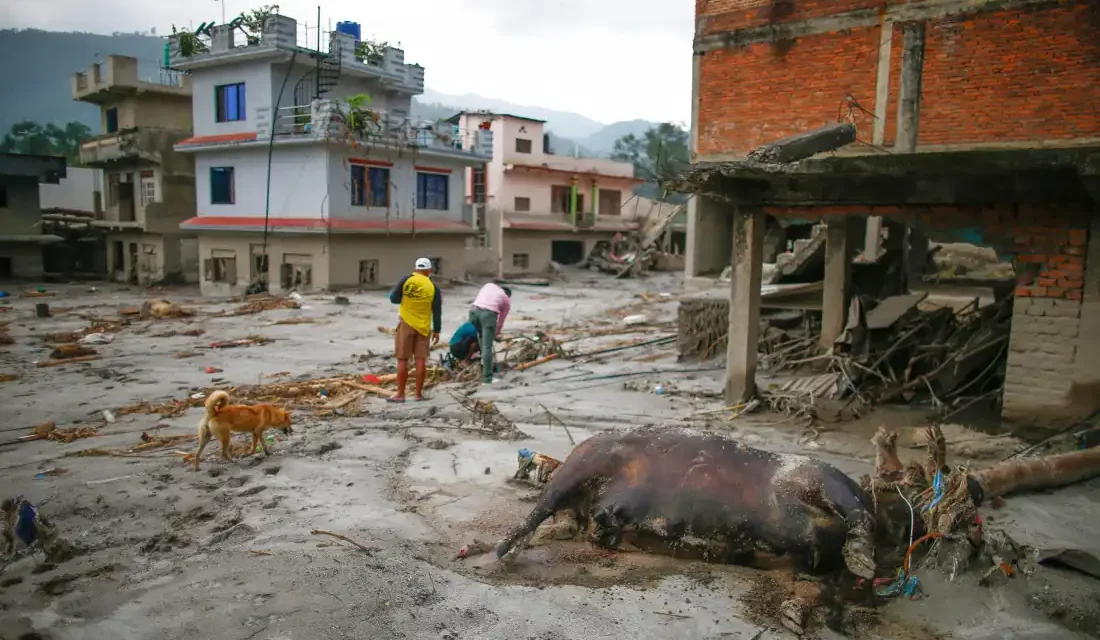
In the Nuwakot district of Nepal, people are gathering their belongings after catastrophic floods and mudslides ravaged Devighat. These events were triggered by a glacial collapse and debris flow along the Trishuli River. The disaster claimed hundreds of lives, and many remain missing.
Januka Dhital recounts her harrowing experience. Just before the flood, she was preparing snacks for her catering service in Uttargaya. A man’s warning about the flood prompted her to flee with her young son. They reached safety on the back of his scooter. At the time, she was unaware of her husband and daughter’s fate.
After a tense wait, the family reunited. Her husband, injured and shaken, had survived. Reflecting on their survival, Dhital says it felt unbelievable but everything they owned was gone. Over 100,000 people have been affected by the disaster, which experts link to climate change. The floods have resulted in at least 1,500 deaths and over 5,000 missing persons. Many remain in temporary shelters as crucial infrastructure is damaged.
The United Nations reports the destruction of health facilities, schools, toilets, and water systems, raising concerns about malnutrition and deteriorating health conditions. Shyam Pathak from UNICEF highlights the immense challenge of rebuilding lives while the world’s attention wanes.
Dhital, now an aid worker with Helen Keller International, finds purpose in assisting her community. Initially overwhelmed, her involvement in recovery efforts helps ease her mental strain.
Pooja Pandey Rana of Hellen Keller reports rising malnutrition, noting food insecurity as gardens and farms are destroyed. Bridge destruction complicates aid delivery, isolating communities in need of assistance. Ayush Joshi from Save the Children emphasizes the difficulty of reaching cut-off areas.
Community aid worker Pushmaya Tamang faces similar obstacles. Her village in Nuwakot is now unrecognizable. She mourns her sister’s loss and helps grieving families, many of whom suffer from significant trauma.
Survivors struggle with mental health, as UNICEF coordinates with aid organizations to provide counseling. Pathak notes that many health workers are also victims, yet they remain dedicated to assisting others.
With winter approaching, conditions worsen for those in makeshift shelters. Joshi notes the harshness of the climate, leading to health vulnerabilities for exposed populations.
Long-term reconstruction remains uncertain, with costs estimated at $5 billion. Contributions from various funds pale in comparison to the need. Immediate aid focuses on shelter, food, and medical care.
Tamang and others involved in relief efforts continue to work tirelessly, driven by the necessity to endure and rebuild in the aftermath of nature’s wrath.
 Jason Kelce and Family’s NFL Journey
 Challenges and Innovations at White Oak Pastures
 Deaf Texas Student-Athlete Secures Multiple College Offers
 Debate Rekindled Over Gray Wolves and Livestock Losses
 Protests Erupt Against Data Centers in Spain
 Exploring Retirement Through Podcasting: NPR’s Senior Podcast Challenge