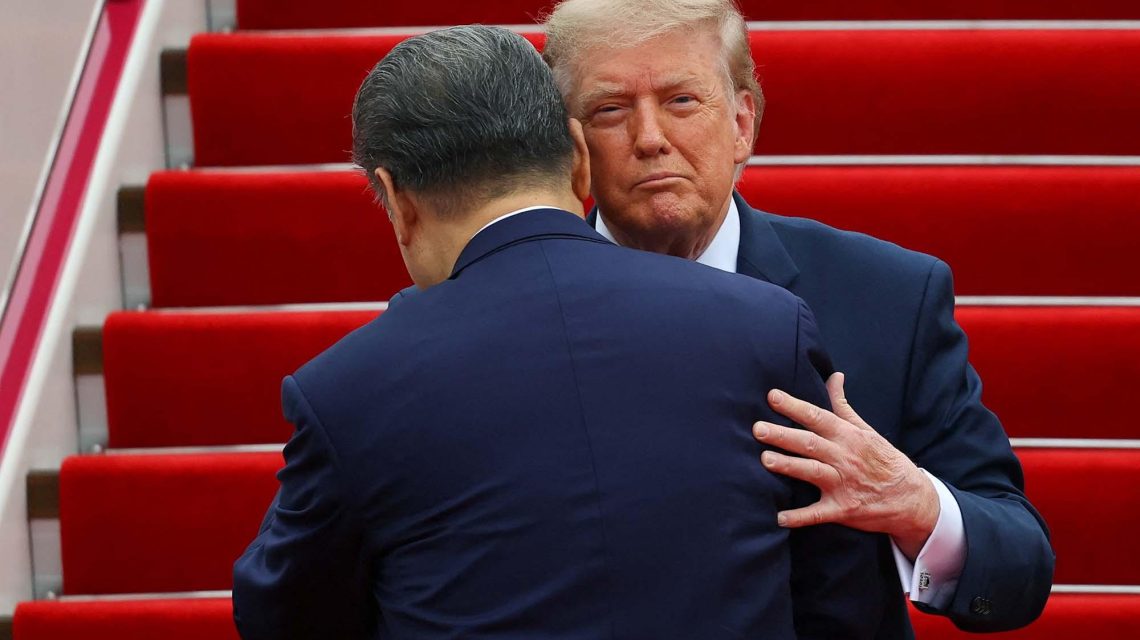
Chinese President Xi Jinping welcomed President Donald Trump at Shenzhen Airport for the Asia-Pacific Economic Cooperation (APEC) Leaders Summit in Shenzhen, China, on November 18, 2026. In a notable gesture, President Xi hugged President Trump, which drew significant attention from the press.
The media expressed concern, suggesting Trump was being too friendly with authoritarian leaders. However, leading up to the China summit, Trump had made several strategic moves in foreign policy.
Trade and Defense Measures
Prior to the summit, President Trump signed a trade agreement with Thailand. This agreement allows American goods to enter Thailand duty-free and aims to prevent China from using Thai ports to bypass tariffs. Additionally, Trump reaffirmed the United States’ commitment to the 1951 Mutual Defense Treaty with the Philippines.
He announced that the Quad, consisting of Australia, Japan, India, and the US, would conduct joint anti-submarine patrols in the South China Sea. This move indicates a focus on monitoring Chinese naval activities in the region.
The US Commerce Department, under Trump’s direction, restricted high-end chip sales to China and Southeast Asia. This action followed the Alice Huang scandal and requires strict compliance to ensure these products do not end up in China.
Challenges and Broken Promises
Despite diplomatic engagements, Trump’s stance on China remains cautious. President Trump has learned that Xi often fails to uphold agreements. For example, China has not fulfilled its commitments regarding rare earth shipments and agricultural purchases following a trade agreement with the US.
Fentanyl precursors continue to flow into cartel labs, and China has made other promises with serious implications, such as cyberattacks on infrastructure and cybertheft from American financial accounts.
Furthermore, China provides covert support to countries like Russia and Iran, potentially extending American involvement in international conflicts.
Trump’s Diplomatic Strategy
Some in the Trump administration, like Secretary of Commerce Howard Lutnik, may still view cooperation with China as feasible. However, Trump displays a different approach by engaging with Xi while recognizing China’s global rivalry.
The strategy of maintaining a working relationship with both allies and adversaries reflects a cautious diplomatic stance. Trump is navigating complex international relations by keeping China’s activities under scrutiny.
Steven W. Mosher, President of the Population Research Institute and author of “The Devil and Communist China: From Mao Down to Xi,” provides insights into these dynamics.
 Amy Klobuchar Takes On Governorship with Promises for Minnesota’s Growth
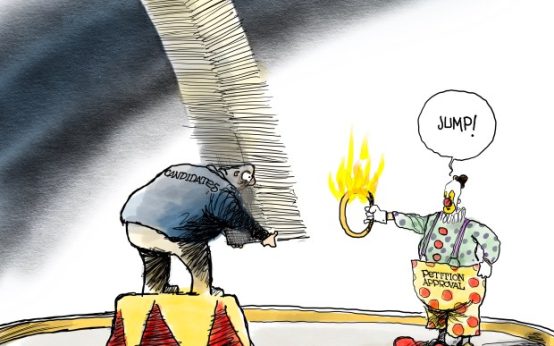 Challenges of Signature Requirements for Political Candidates in Illinois
 Debate Rekindled Over Gray Wolves and Livestock Losses
 Protests Erupt Against Data Centers in Spain
 White House Faces Backlash Over Controversial Video
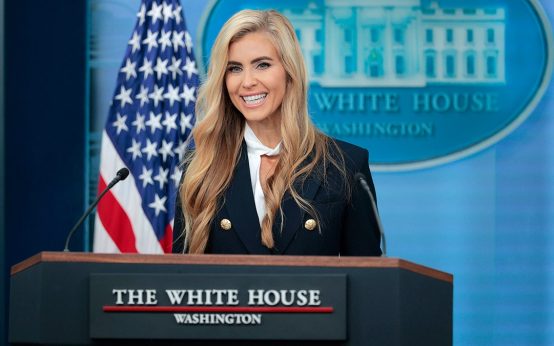 Former Press Secretary Critiques Republican Strategies