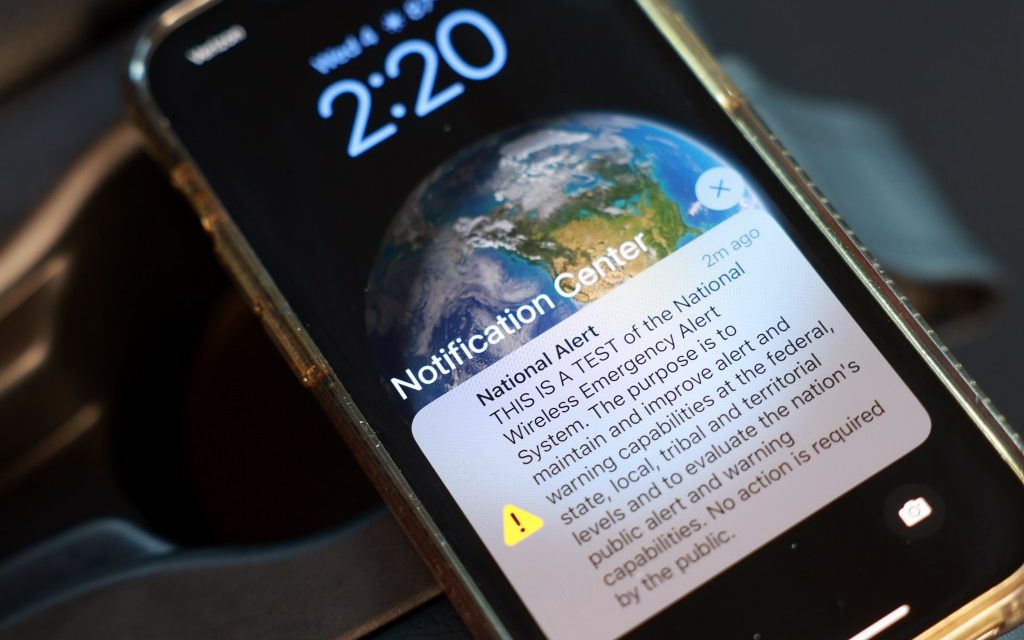
The United States conducted a test of its Emergency Alert System (EAS) on Tuesday at 2:20 p.m. ET. This exercise led to a temporary interruption of regular programming across televisions and radios nationwide. The system serves to deliver crucial information from the president during national emergencies.
The Federal Communications Commission (FCC) had earlier announced this routine test, emphasizing that it is mandated by law and unrelated to recent technological disruptions. Importantly, cellphones did not receive this alert.
Despite the official nature of the test, it coincided with several high-profile technical outages. Major tech disruptions and infrastructure problems were reported, although they were not connected to the EAS test.
The Federal Emergency Management Agency (FEMA) alerted the public, stating, “This is a nationwide test of the Emergency Alert System. No action is required by the public.” Some citizens remained unaware of the test schedule, leading to potential confusion.
Over the past week, noteworthy outages included a major disruption of Microsoft Outlook services across 70 countries, attributed to a network upgrade glitch. Additionally, the Federal Aviation Administration (FAA) issued a nationwide ground stop, a rare event since September 11, 2001. Major banks such as Chase, Bank of America, and Wells Fargo also reported service disruptions.
In response to public concern, Homeland Security Secretary Markwayne Mullin assured Americans of their safety. He stated there is no mass cyber threat and dismissed any conspiracy theories. Mullin emphasized the United States’ superior technological capabilities.
 Nvidia CEO Jensen Huang Reinstatement Sparks Market Movements
 Trump to Present Presidential Medal of Freedom to Rudy Giuliani
 Concerns Arise Over AI-Powered Toys and Child Safety
 Analysis of Jensen Huang’s Return as Nvidia CEO
 Rep. Julia Letlow Announces Marriage and Recent Political Journey
 Impact of President Kennedy’s Assassination and Media Response