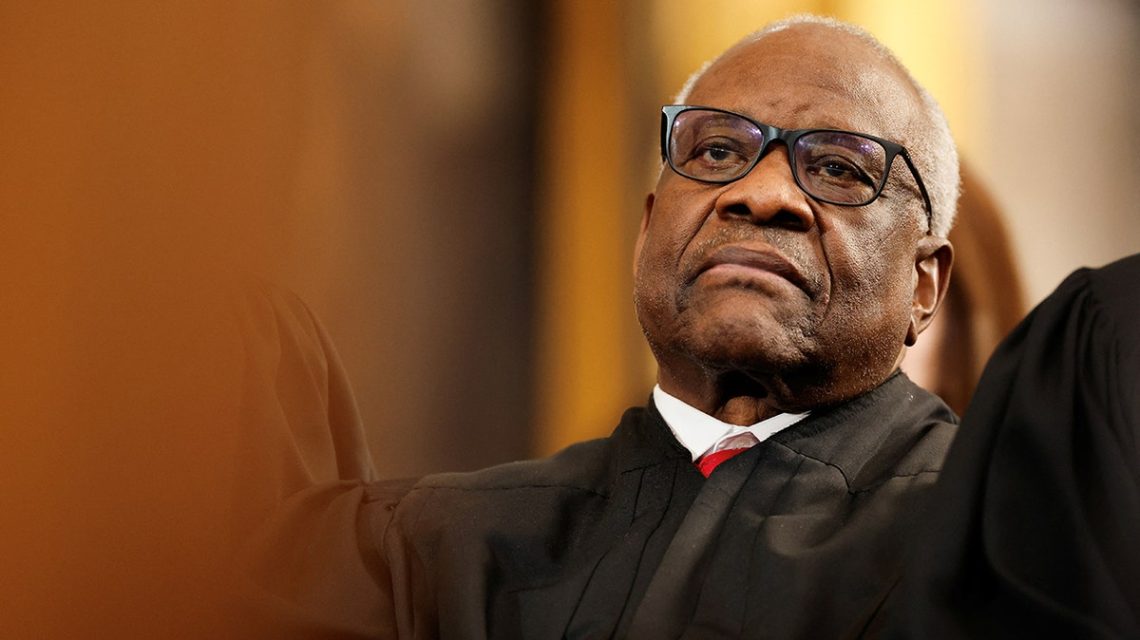
Justice Clarence Thomas expressed concern on Monday over the Supreme Court’s decision not to hear a case challenging a California law. He warned that the ruling might allow states to force citizens to express views they do not agree with. The case involved a California physician required to teach state-mandated content during medical courses.
California mandates licensed physicians to complete 50 hours of continuing education every two years. These courses must now include instruction on implicit bias, outlining its impact on healthcare or strategies to address it. Thomas, joined by Justice Samuel Alito, disagreed with the court’s refusal to review the case, arguing that it could set a precedent extending beyond the medical community.
“When, as here, the government does not issue its own messages but instead requires private speakers to communicate the government’s viewpoint, the First Amendment applies,” Thomas stated. “We should not permit the government-speech doctrine to be wielded as ‘a cover for censorship’ or a cloak for compelled speech.”
Dr. Azadeh Khatibi opposed the required inclusion of implicit bias in her courses, arguing it was irrelevant to her topics and detracted from other important discussions. California contended that instructors must discuss implicit bias but need not personally endorse it, allowing verbal disagreement with the theory.
The Ninth Circuit previously ruled that these education courses constitute government speech due to state regulation, exempting them from First Amendment scrutiny. Thomas challenged this view, suggesting the requirement forces an endorsement of the state’s perspective on healthcare disparities.
He further argued that the law could set a dangerous precedent, questioning, “What of other professions whose members California licenses and regulates?” and raised concerns about it affecting various fields beyond medicine.
Justice Neil Gorsuch also disagreed with the decision not to hear the case, though his specific reasons remain undisclosed. The Supreme Court’s decision upholds the Ninth Circuit’s ruling without resolving the First Amendment question raised by California’s law.
 Teen Killer of Tessa Majors Released Early
 Prosecutors Decide Not to Charge LAPD Officer in Fatal 2024 Shooting
 Murdaugh Defense Challenges Grand Jury Testimony
 College Student Charged with Assaulting Fellow Student
 Texas Execution Raises Concerns Over Protocols
 Massachusetts Supreme Judicial Court to Review Clancy’s Murder Charge Dismissal Bid