
Transportation Secretary Sean Duffy stated that the Federal Aviation Administration (FAA) might need to reconsider the timing of infrastructure upgrades after routine maintenance at a remote facility caused a nationwide ground stop. This incident disrupted air travel around the nation.
During an appearance on CBS News’ Face the Nation, Duffy explained that while maintenance at major facilities is usually done overnight, work at remote locations has been allowed during the day due to perceived low risk. He acknowledged the recent disruption proved this assumption wrong, with maintenance flooding the network and prompting a ground stop.
We’re going to have to reevaluate now when we do this work.
Duffy noted the incident led to about 12,462 flight cancellations, including 9,082 from major airlines. However, not every cancellation was directly linked to the ground stop.
The Incident in Arkansas
The disruption occurred on Friday as FAA telecommunications contractor L3Harris Technologies worked at a remote facility in El Dorado, Arkansas. They were replacing an old copper communications connection with fiber.
Duffy explained the copper connection was obsolete and needed upgrading as required by the telecom provider. He noted that when the FAA brought in routers for the work, the network flooding started.
Investigators are examining why a router at the Arkansas site began broadcasting data across the network. A similar incident had occurred in Amarillo, Texas, weeks earlier when similar work was completed. The FAA and L3Harris are involved in the investigation, with assistance from the FBI. FAA Administrator Bryan Bedford mentioned that there is no indication of malicious activity. As a precaution, the FAA has disabled broadcasting capability on 69 routers in the national airspace system.
When questioned about whether the agency should have foreseen the risk, Duffy defended their procedures. He mentioned that risk assessments are conducted on all projects, and similar work had been performed thousands of times without issue.
We’re looking at that right now, and when we know what the root cause of this issue was, was it the install from L3Harris? Was it the router? I’m going to tell you and the American people what we find.
Scrutiny Over Modernization Pace
This ground stop has renewed scrutiny on a Government Accountability Office (GAO) report from September warning that FAA’s modernization initiative was advancing at “unprecedented speed,” risking air traffic disruptions.
The GAO noted the FAA lacked a comprehensive lifecycle cost estimate and an integrated master schedule for its modernization program. With 11,389 individual project schedules not integrated, installations might be scheduled concurrently at the same facilities, affecting air traffic control operations.
Scale of Upgrades and Funding
The El Dorado upgrade is part of a broader FAA initiative to modernize its telecommunications, radar, radio, and weather infrastructure. Duffy pointed out that 70% of the FAA’s copper connections have now been converted to fiber, as reported by the GAO in May 2026.
Congress appropriated $12.5 billion in July 2025 for phase one of the Brand New Air Traffic Control System modernization program, which runs through December 2028. Phase two, focusing on advanced automation, is expected to require about $10.2 billion, though no timeline is set.
Duffy confirmed he is seeking $50 billion for the full modernization effort, emphasizing the need for time and investment in acquiring new equipment.
For decades, this work in the FAA has not been done. It hasn’t been done because it’s hard.
 Amazon Enlists NYC Customers Against City Council Bill
 Noteworthy Events in Chicago’s History on November 22
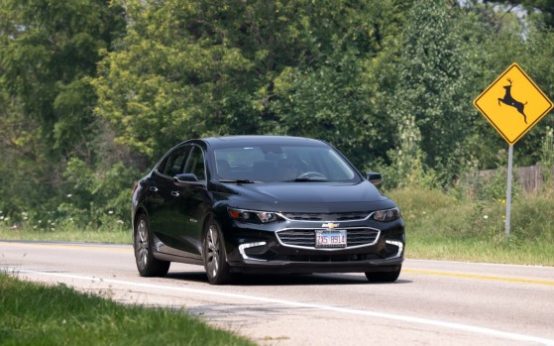 Increased Deer Collision Risks in Suburban Areas
 Schefter Criticizes Florio’s Holocaust Joke Remarks
 Grandmother Wins $1 Million Lotto Max Prize, Plans Exciting Purchases and Trips
 A Widow’s Thanksgiving with Her Daughter, Honoring a Fallen Detective