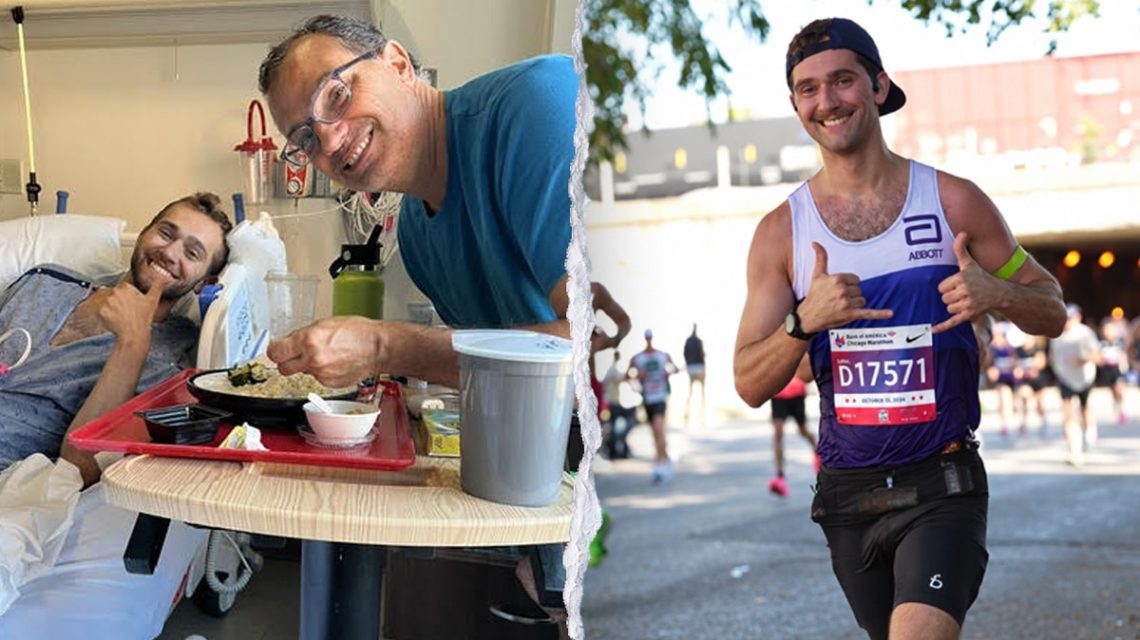
As stroke rates rise among young adults, Patrick Mascoli, a Boston engineer and fitness enthusiast, recounts a life-threatening stroke at the age of 27. Mascoli, who regularly ran 40 miles a week, had no obvious symptoms beyond a history of migraines.
On a Sunday in July 2024, after a 10-mile run and a gym session, Mascoli felt something was wrong while in the locker room.
“It just felt like a bomb went off my head,” he told Fox News Digital. “The right side of my brain felt like a severe burning sensation.”
Initially, Mascoli assumed it related to fainting episodes from his past, but his vision blurred and pain increased. When he tried to stand, his body did not respond as expected.
Despite text messaging his sister for help, Mascoli collapsed again. When she arrived at the gym, she found him on the floor, struggling with his legs and vision.
Emergency responders first suspected dehydration. Despite IV fluids, symptoms persisted. At Boston Medical Center, a CT scan and MRI confirmed a stroke.
By the next day, Mascoli’s head pain reduced, but he faced significant movement issues. The diagnosis was frightening.
Investigating the Cause
Mascoli’s care team explored potential causes without definitive answers. A heart ultrasound revealed a patent foramen ovale (PFO), a small opening between the heart’s chambers.
“In rare cases, a blood clot passes through this opening, travels to the brain, and causes a stroke,” Dr. Dheeraj Khurana explained.
Mascoli underwent a procedure to close the opening in his heart. Though mobility improved with therapy, he still struggles with fine motor skills.
Motivation and Recovery
Running again after the stroke was challenging. Concerned about stranding, he tracked distances carefully. Encouraged by his girlfriend, he completed the Chicago Marathon in October 2026.
Anyone experiencing sudden balance loss, vision changes, face drooping, arm weakness, or speaking difficulties should call 911 immediately, the American Stroke Association advises.
Risks and Prevention
Dr. Khurana outlined risk factors for strokes in young adults: high blood pressure, smoking, unhealthy cholesterol, clotting disorders, certain heart conditions, and artery tears.
Symptoms include dizziness, mental status changes, vomiting, headaches, visual issues, and speech problems.
Dr. Sean Levchuck recommends young adults exercise, replace fluids after intense activity, and avoid smoking. Prompt medical attention for symptoms is crucial.
 Challenges Posed by Antibiotic-Resistant Bacteria
 28-Year-Old’s Painful Struggle with Sertraline-Induced Nerve Disorder
 Nutritionists Share Their Thoughts on Kids Eating at McDonald’s
 Enhancing Senior Fitness: Breaking Exercise Barriers
 Contagious Bird Flu Outbreak in Wisconsin Backyard Flock