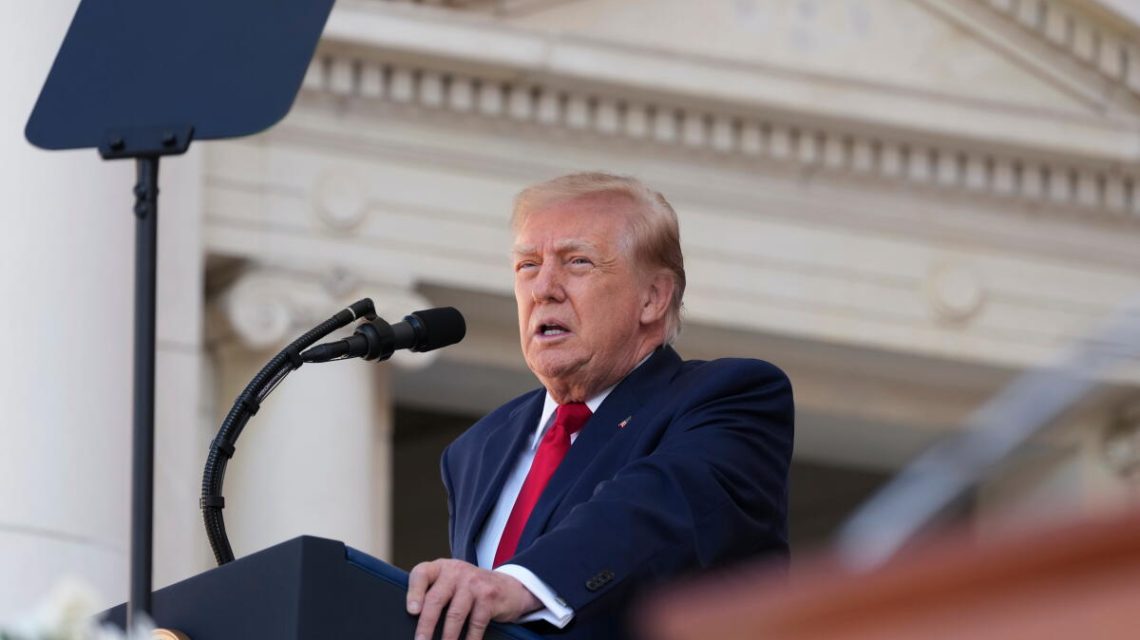
President Trump announced on Thursday a shift in U.S. foreign policy, redirecting Vice President JD Vance away from negotiations with Iran. Trump suggested that any need for an Iranian deal is obsolete. Instead, he instructed Vance to concentrate on alleged corruption in Democrat-led states. This move came after recent midterm elections.
“We don’t need a deal with Iran,” Trump stated on Truth Social, adding that the U.S. retains control over key financial and strategic assets, including the Strait of Hormuz. In the same message, Trump urged Vance to focus entirely on what he termed “Massive Corruption and Crime” in Democratic regions like California, Minnesota, and Illinois. He labeled these areas as “corrupt disasters.”
Vance had played a pivotal role in Tehran discussions but expressed frustration over the Iran conflict, linking it to Republican losses in the recent midterms. Vance, visibly disillusioned, attributed the GOP’s loss primarily to ongoing hostilities. “If you wish to argue it was worth losing the Senate, do so,” Vance wrote on social media, offering a direct critique of party strategy.
Despite Vance’s comments, Trump maintained their relationship is intact. Speaking to reporters, Trump acknowledged some criticism but dismissed it as a threat to their rapport. White House officials reinforced U.S. strength in the negotiation space, citing robust naval strategies in the key Strait of Hormuz.
The president unleashed a barrage of social media posts early Thursday, signaling his intent to adhere to his current strategy despite electoral setbacks. Trump again described Democrats unfavorably, claimed without evidence of electoral malpractices, and suggested imposing tariffs on Mexico due to perceived immigration threats.
This commitment to conservative themes followed a brief period post-midterms where Trump offered congratulations to Democrats, recognizing their electoral accomplishments. However, soon after, he repositioned, defending his administration’s achievements and policies.
Democrats gained significant ground in the midterms, capturing a majority in the Senate with at least 55 seats and projecting control of at least 255 seats in the House. This shift occurred as some long-standing Republican territories, like Kansas and Mississippi, flipped.
As Democrats prepare to assume majority control, Trump’s administration is responding aggressively. The White House legal team has already cautioned against Democratic probes into Trump’s dealings. Trump’s pointed remarks against Democratic leaders, particularly Sen. Chuck Schumer, emphasized his readiness to address corruption in states like California, Minnesota, and Illinois.
In a tweet, Trump stated, “Hopefully Schumer’s words on corruption will ring true! It will be an honor to work on resolving this.” This rhetoric underscores Trump’s commitment to refocusing on domestic governance amidst a changing political landscape.
 Controversy Surrounds Governor Newsom’s Death Sentence Commutation Plan
 Jewish Activist Criticizes Event Cancellation at CUNY School
 Debate on School Choice in Texas Elections
 Amy Klobuchar Takes On Governorship with Promises for Minnesota’s Growth
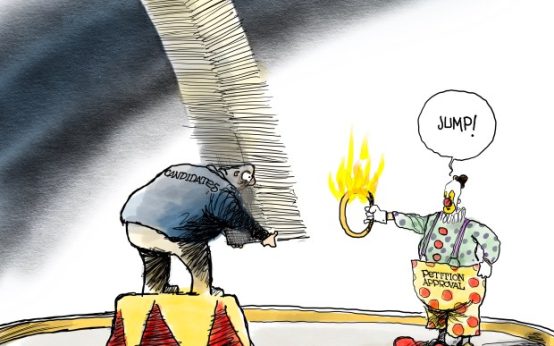 Challenges of Signature Requirements for Political Candidates in Illinois
 Debate Rekindled Over Gray Wolves and Livestock Losses