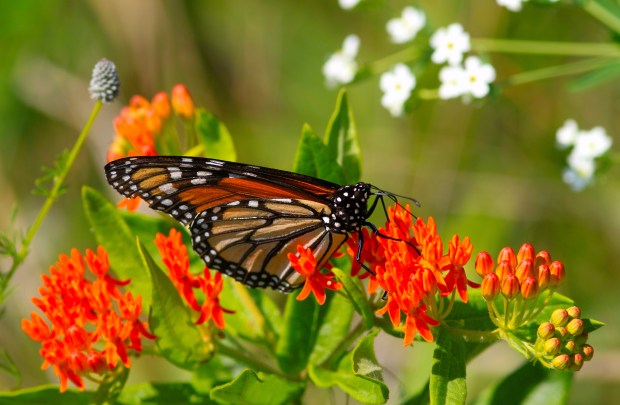
In November, the vibrant orange flowers of butterfly milkweed have faded, leaving behind wispy, white structures attached to drying seed pods. Nestled in these parachutes are tiny, brown seeds waiting for spring. These seeds are lightweight, with 4,000 weighing less than an ounce. When conditions are right, they sprout and transform into blossoms that attract monarchs and native bee pollinators.
Throughout summer and into fall, microscopic changes occur in the flowers. Pollination happens when pollen grains move from the male to female parts, resulting in seed formation. Many seeds develop protective coatings and are housed within pods or similar structures. Now is the time for seed dispersal.
Goldfinches have begun spreading gray-headed coneflower seeds by perching on flower heads, eating seeds, and inadvertently distributing them through droppings or by accidentally dropping them into the soil. Recently, after gathering coneflower seeds by hand, I scattered them in sunny areas of my yard, hoping some would survive the winter and germinate. The seed head emits a gentle minty aroma, more pleasing than manufactured perfumes.
Butterfly milkweed blooms attract monarchs in summer. Various agents like humans, wind, water, and animals aid in seed dispersal. Jewelweed seeds, for instance, burst into the air when touched, propelled by a built-up tension within their maturing pods. This explosive release spreads seeds several feet away. Jewelweeds are native relatives of impatiens often used in gardens.
Among my favorites are milkweed seeds. Over summer, the butterfly milkweed bears long, narrow, pale green seed pods containing future flowers. When pods mature and brown, they split apart, releasing many seeds attached to silky white hairs. These hairs act as parachutes, aiding in wind dispersal. I enjoy releasing these parachutes, allowing the seeds to find new homes.
After landing, seeds remain dormant through winter. The cycle of freezing and thawing weakens their coats, preparing them to grow. Spring rains trigger seed swelling, peeling away protective layers, and nourishing stored food aids cell growth. This leads to radical emergence, where a tiny root breaks through and eventually sprouts above ground.
This entire lifecycle happens silently beneath us, unnoticed until new growth emerges. In the chill of winter, knowing this transformation unfolds beneath our feet offers a sense of wonder.
Sheryl DeVore has a background in journalism, working with the Chicago Tribune and related publications. She has authored books on nature and is preparing to release “Birds of the Midwest” in April 2027, co-authored with Steven D. Bailey. She welcomes ideas and feedback at [email protected].
 Newly Discovered Mini-Moon 2026 QQ8 Orbiting Earth Until 2027
 Meteor Lights Up Skies Over North Carolina and Tennessee
 Can AI Possess Consciousness and Emotion?
 NASA Opens Applications for Aspiring Astronauts
 Scrutiny and Leadership in Focus
 NASA Seeks Next Generation of Astronauts for Moon and Mars Missions