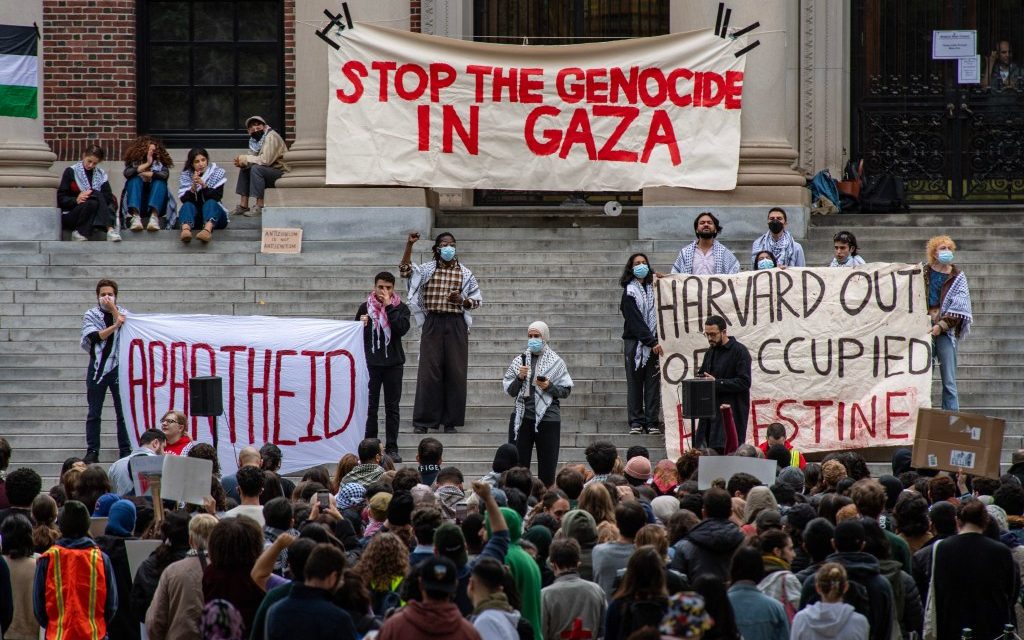
Since October 7, 2023, Harvard University faced significant challenges. Pro-Palestine protests disrupted campus life. President Claudine Gay was accused of plagiarism. The Supreme Court struck down affirmative action policies. The university was labeled the worst for free expression, and grade inflation was rampant. The Trump administration’s criticism of its federal funding compounded the situation. Trust eroded among students, faculty, donors, and the public.
Harvard has since implemented policies to restore confidence. Efforts focus on academic freedom, reducing grade inflation, encouraging dialogue, and resisting AI’s educational impact. These changes seem effective. Harvard psychology professor Steven Pinker observed a shift in attitudes, noting the administration’s realization of past mistakes.
President Alan Garber, leading since January 2024, plays a key role. Unlike predecessors who prioritized avoiding scandals, Garber initiated reforms addressing core academic values. The Open Inquiry and Constructive Dialogue Working Group exemplifies these efforts. New policies clarified protest guidelines, barring demonstrations in libraries and dining halls. The university ceased making institutional statements on unrelated controversial issues.
The Arts and Sciences faculty adopted rules for viewpoint-neutral teaching. This ensures student politics don’t affect grades and professors’ public opinions don’t impact teaching. Course evaluations now assess encouragement of diverse viewpoints, holding professors accountable.
Professor Santiago Romero-Brufau noted improved openness in discussions. Chatham House rules in classrooms have reduced self-censorship. Philosophy professor Ned Hall recognized these changes as long-sought progress. Previously, students felt stifled in debates, frustrating efforts to foster open inquiry.
Harvard’s national free speech ranking rose significantly, now among the top 25 for political tolerance. FIRE’s Director of Policy Reform, Laura Beltz, highlighted the impact of comprehensive reforms. However, sustaining these improvements poses a challenge. New initiatives aim to cultivate a culture of free speech among incoming classes. The Class of 2029’s application involved an essay on disagreement experiences, fostering critical thinking.
Further, orientation includes a required module on constructive disagreement. Hall believes it’s a notable change, emphasizing respectful engagement across differing opinions. Addressing grade inflation, Dean Amanda Claybaugh’s committee proposed capping A grades at 20%, effective fall 2027. Pinker praised this step, along with new attendance norms in large lectures.
The university also addresses AI-related challenges. The Derek Bok Center launched a “Teaching and AI” initiative to redesign assignments. Strategies include in-person and oral exams to prevent AI misuse. Pinker sees these adjustments as sparking academic renewal, emphasizing education over extracurriculars like networking or sports.
 Melania Trump’s Support for LSU’s New Scholarship Endowment
 DOJ Sues UCLA for Alleged Discrimination Against Jewish and Israeli Students
 Student-Loan Borrowers Face Increased Oversight
 The Role of Public Schooling in Equalizing Social Conditions
 Understanding Information in Modern Classrooms
 The Ongoing Debate on Public Schooling as the Great Equalizer