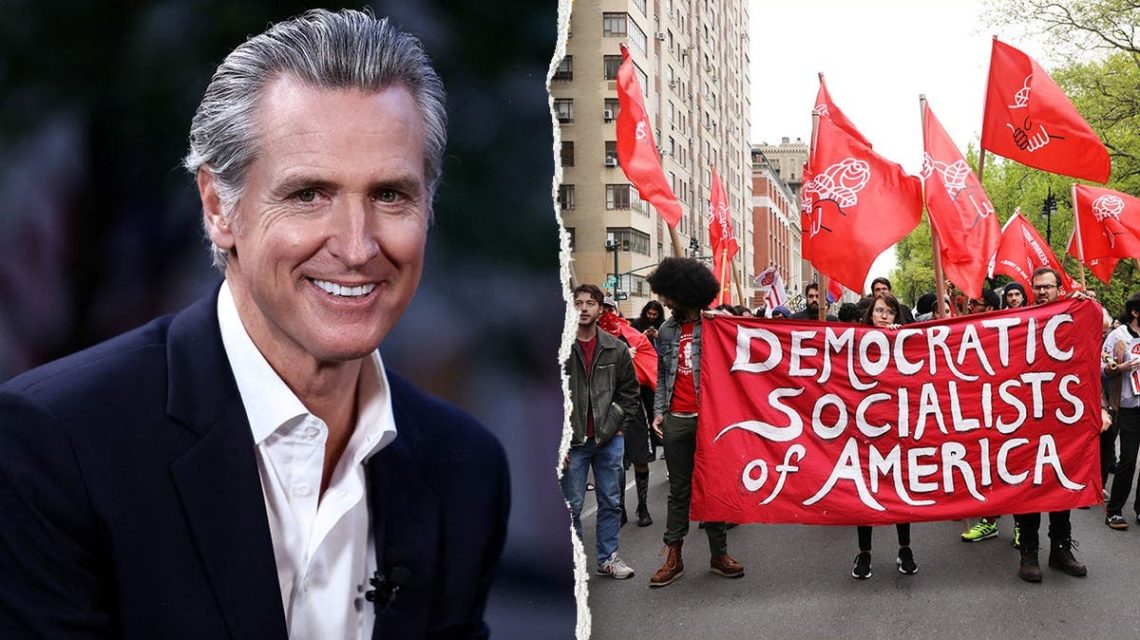
The Democratic Socialists of America (DSA) have shown support for California’s Proposition 40 ahead of the November midterm elections. This measure aims to introduce a one-time 5% tax on billionaires residing in the state. Although current results indicate the proposition is likely to be defeated, it has fueled discussions about the broader goals of socialism and concerns about potential capital flight.
Richard Stern, an economics scholar with Advancing American Freedom (AAF), commented on the DSA’s intentions. “In their mind, every tax they impose is an effort to redirect wealth from individuals who create it to the state,” Stern observed in an interview with Fox News Digital. The support for Proposition 40 aligns the DSA against other Democratic figures, including California Gov. Gavin Newsom, who opposes this measure.
California Gov. Gavin Newsom, left, and DSA supporters holding a banner. (Charly Triballeau/AFP via Getty Images; Spencer Platt/Getty Images)
Proposition 40 proposed taxing assets such as businesses, securities, art, collectibles, and intellectual property. Certain pensions, real estate, and retirement accounts would be exempt. To prevent billionaires from relocating out of state to avoid this tax, it was designed to be applied retroactively to anyone resident in California as of January 1, 2026.
The DSA’s California chapter provided supporters with a PowerPoint to argue for the proposition. The presentation emphasized that wealth redistribution could fund quality schools and healthcare. They suggested redirecting money from billionaires to critical state services through taxation.
The DSA proposed that this policy would address a projected $100 billion federal funding shortfall for California’s Medi-Cal program. Medi-Cal provides health insurance to low-income individuals, seniors, and people with disabilities. The proposition specified that 90% of the revenue would support healthcare, while the rest would go to education, food assistance, and tax administration.
This initiative framed itself as an extension of existing progressive taxes. The DSA highlighted that a temporary 5% wealth tax would affect only 250 of the wealthiest Californians, collectively owning $2 trillion. Their materials asserted, “Let’s be clear: if the Billionaire Tax passes, none of the billionaires will actually lose money.” They noted that billionaires typically see annual wealth growths of 7-8%, implying that a 5% tax would only slow this growth.
Stern criticized the measure, arguing it shows a fundamental misunderstanding of wealth. He pointed out, “The left assumes billionaires sit on $10 billion, $100 billion in cash. In reality, their wealth includes company assets, like factories and machinery.”
Gov. Newsom’s opposition to the measure is due to concerns it would diminish California’s competitive edge. He highlighted widespread opposition and argued against state-level implementation. Newsom warned that the measure’s impact is already felt, with people leaving the state.
Instead, Newsom supported Proposition 42, designed to prevent new state taxes on personal property and restrict retroactive taxes. He maintained that his opinion on a 5% tax could shift if applied federally.
Stern noted that national implementation would come with broader challenges. “You can more easily leave California, but American citizenship can be renounced to move abroad,” Stern explained, referring to international implications.
In discussing the differences between Proposition 40 and a simple tax increase, Stern emphasized the potential redistribution of business control. He accused the proposal of removing control from business founders and handing it to politicians.
Leo Briceno, a politics reporter for Fox News Digital, provided coverage on this topic. He previously reported for World Magazine.
 Trump Dismisses Third Impeachment Prospects
 Custody Dispute Involving Rep. Max Miller Delayed
 Attorney General Addresses Post-Midterm Democratic Threats
 Senator Elizabeth Warren and the Future of Crypto Regulation
 Bipartisan Opportunities in Foreign Policy
 Political Shifts and Concerns Post-Midterms