In Redmond, Washington, emotions ran high for Frances Staudt, a student at Tumwater High, as she celebrated a significant achievement. Staudt has been a vocal advocate for the separation of boys and girls in sports. Her efforts culminated in Initiative 638, which proposed that K-12 athletes participate in teams aligned with their biological sex. As of Tuesday night, the initiative held a significant lead according to unofficial election returns.
At a watch party organized by Let’s Go Washington, which led the initiative, Staudt expressed her joy. “We did it!” she exclaimed, acknowledging the challenges she faced since declining to play in a basketball game against a biological male. “It’s not been an easy fight, and I’m so proud of us. And I’m so happy to be here with a victory. Washington people have had enough.” Staudt’s resolve was shared by others who faced similar experiences, highlighting the contentious nature of the debate over inclusion in sports.
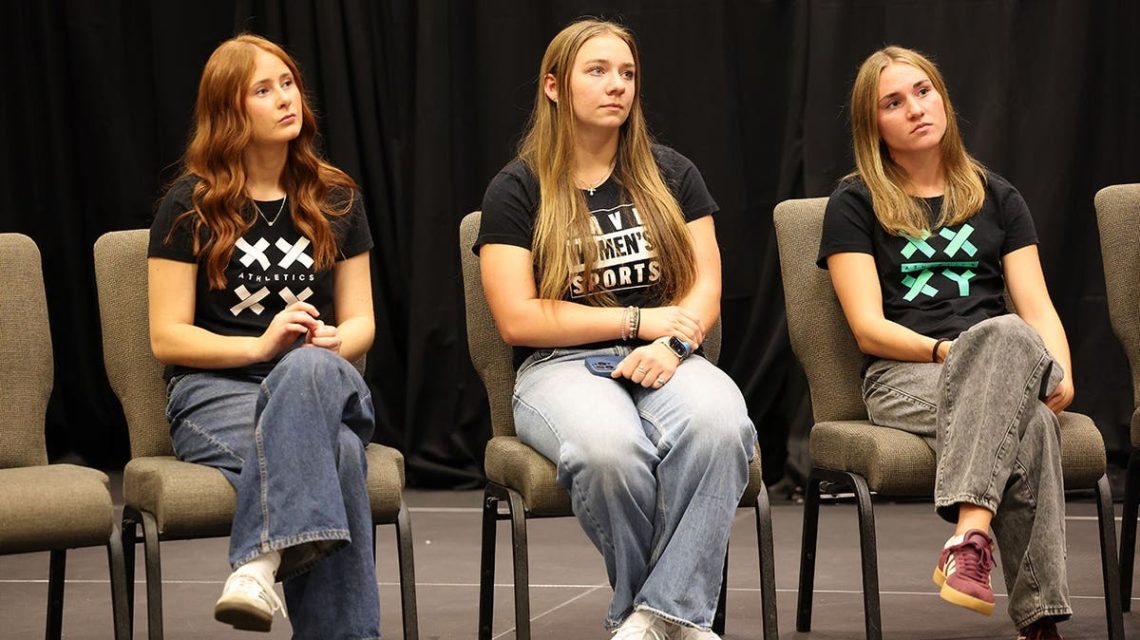
L-R: Female athletes Frances Staudt, Bailey Andersen, and Sadie Sullivan share their stories about competing and sharing locker rooms with biological males at a Fairness in Girls’ Sports rally in Vancouver, Washington. (Derek Shook for OutKick)
With 60 percent of the ballots counted, the “yes” vote on I-638 led by 13.6 percent. Prediction market Kalshi gave the measure a 91 percent chance of passing. If passed, it would become the first law of its kind enacted in a blue state, and the first such law to be approved directly by voters. This sets Washington apart from 27 other states where similar laws were enacted through legislatures, primarily in states won by Donald Trump in 2024.
Supporters like Brian Heywood, founder of Let’s Go Washington, are hopeful that I-638 will inspire similar actions nationwide. “This was citizens who are voting very blue still in a lot of ways saying, hey, it’s not a Republican/Democrat issue, it’s a parental issue, it’s a fairness in girls sports issue. And I think that carries a huge amount of weight.” If passed, the law could take effect within 30 days.
Girls at Tumwater High School protested against trans athlete Veronica Garcia’s state track title. (XX-XY Athletics)
A former cross-country controversy at Camas High School highlighted issues with the current system. A transgender athlete transitioned mid-season and competed in girls’ races, leading to debates about fairness. Critics argued this affected female athletes’ opportunities. The situation escalated when several female athletes protested during a meet, becoming a pivotal moment for those supporting I-638.
Amy Sousa, an advocate for women’s sports, has long campaigned for similar restrictions. She hailed the early lead of I-638 as a victory for Title IX. “I’m so happy, I’m so pleased, I’m so proud, and I just feel like this is right. It feels right. It is right,” she said.
Meanwhile, Colorado faces a similar decision with Proposition 134, which aims to extend restrictions to collegiate athletics. Although the “yes” vote had a narrower lead, the outcome was still undecided. Jennifer Sey, leading the Proposition 134 campaign, commented on the bipartisan nature of the issue. “This was never a partisan issue. It’s a common-sense issue. Basic truth and biological reality don’t have a party.”
Elsewhere, Arizona and Nebraska voters considered additional measures to uphold existing restrictions. Nebraska’s Initiative 442 aimed to cement restrictions in the state’s constitution, while Arizona’s Proposition 318 sought to expand restrictions to private institutions.
The developments in Washington and Colorado are significant for future legislation across the nation. Staudt and others like her have raised their voices, and officials are finally taking action.
Student athletes Ahnaleigh Wilson and Frances Staudt embrace after the potential passage of Initiative-638 in Washington State. (Matt Calkins/Outkick)
Matt Calkins, formerly of the Seattle Times, reports on sports and culture for Outkick. Follow him on social media for more insights.
 Mississippi State Auditor Shad White Announces Gubernatorial Bid
 Trump Dismisses Third Impeachment Prospects
 Custody Dispute Involving Rep. Max Miller Delayed
 Attorney General Addresses Post-Midterm Democratic Threats
 Senator Elizabeth Warren and the Future of Crypto Regulation
 Bipartisan Opportunities in Foreign Policy