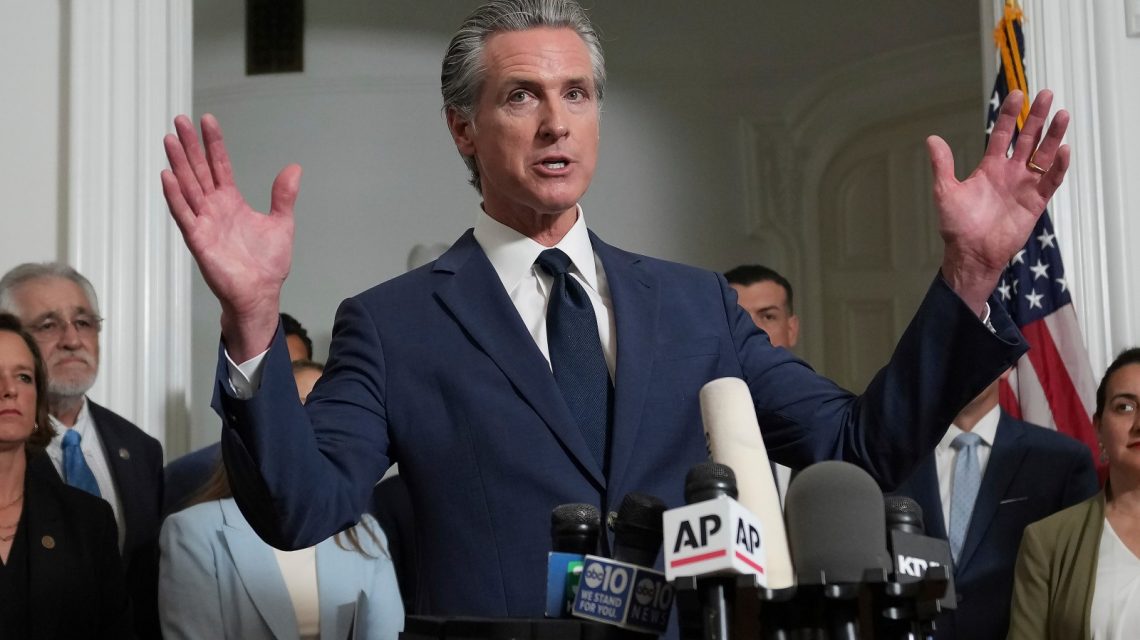
The Republican Party had high hopes for their mid-decade redistricting as a safeguard against a potential Democratic wave. Despite their efforts, the party experienced losses in many of the districts they had anticipated securing before the midterm elections.
Redistricting and Its Expected Outcomes
The “redistricting war” was thought to produce significant Republican gains in states like Texas and Florida. The goals included gaining additional seats in other states too. California responded by adjusting its districts to bolster Democratic seats.
On election night, outcomes revealed that Republican strategies were not yielding the desired results. The Cook Political Report had suggested that among the districts redrawn in favor of Republicans, several were predicted to favor Democrats. By early Wednesday, Democrats led in all nine of these races.
Analysis of Gerrymandering Impact
Kosuke Imai, a Harvard professor, noted that despite potential losses due to unpopularity, gerrymandering reduced electoral competition. He argued that without these redistricting efforts, Republican losses might have been even greater.
State-by-State Redistricting Efforts
Multiple states revised congressional maps, notably Alabama, California, Florida, Louisiana, North Carolina, Ohio, Tennessee, Texas, and Utah. While Ohio’s redraws were a constitutional necessity, Utah’s changes stemmed from legal challenges.
“Gerrymandering reduces electoral competition,” said Imai. “Republicans may lose seats due to popularity issues.”
Florida
With redistricting by the Republican governor and legislature, voting dynamics changed in key areas. Despite aggressive redistricting favoring the GOP, the outcomes in Florida’s contested districts leaned towards Democrats.
- FL-14: Incumbent Kathy Castor (D) defeated Mike Beltran (R).
- FL-22: Democrat Pia Dandiya won against Casey Askar (R).
- FL-25: Jared Moskowitz (D) prevailed over Scott Singer (R).
North Carolina
The state legislature altered the 1st congressional district, focusing on more Republican-friendly regions. Still, Democrat Don Davis retained his seat against Laurie Buckhout (R).
Ohio
The bipartisan approach led to subtle changes, altering the political landscape in favor of Republicans in some areas. Nonetheless, Democratic incumbents secured their positions.
Texas
Targeting districts with strong Democrat coalitions, Republicans aimed to reshape political dynamics. Despite these efforts, Democratic incumbents largely retained control.
- TX-28: Henry Cuellar (D) beat Tano Tijerina (R).
- TX-34: Vicente Gonzalez (D) defeated Eric Flores (R).
Expectations vs. Reality
Republicans anticipated that redistricting would secure them more seats, particularly in Texas. The party hoped for net gains of 15 seats nationwide. However, Democratic initiatives in states like California tempered these expectations.
“Large-scale gains were not fully realized,” reflected Nicholas Stephanopolous, an election scholar, citing competition dampening.
Challenges and Implications
Legal and procedural challenges stalled some Republican-led redistricting efforts in Missouri and South Carolina. Meanwhile, New York, Virginia, and Wisconsin saw Democrat-led plans halted in favor of previous maps.
Jonathan Cervas, a political scientist, emphasized the difficulty in measuring the impact of these efforts. The broader implications include diluted voter influence, particularly in targeted regions like Tennessee, Alabama, and Louisiana.
Imai concluded that such strategies make the electoral system less responsive and more polarized, causing candidates to focus on primaries rather than broader voter bases.
 Chuck Schumer Faces Potential Leadership Challenge from Chris Van Hollen
 Mississippi State Auditor Shad White Announces Gubernatorial Bid
 Trump Dismisses Third Impeachment Prospects
 Custody Dispute Involving Rep. Max Miller Delayed
 Attorney General Addresses Post-Midterm Democratic Threats
 Senator Elizabeth Warren and the Future of Crypto Regulation