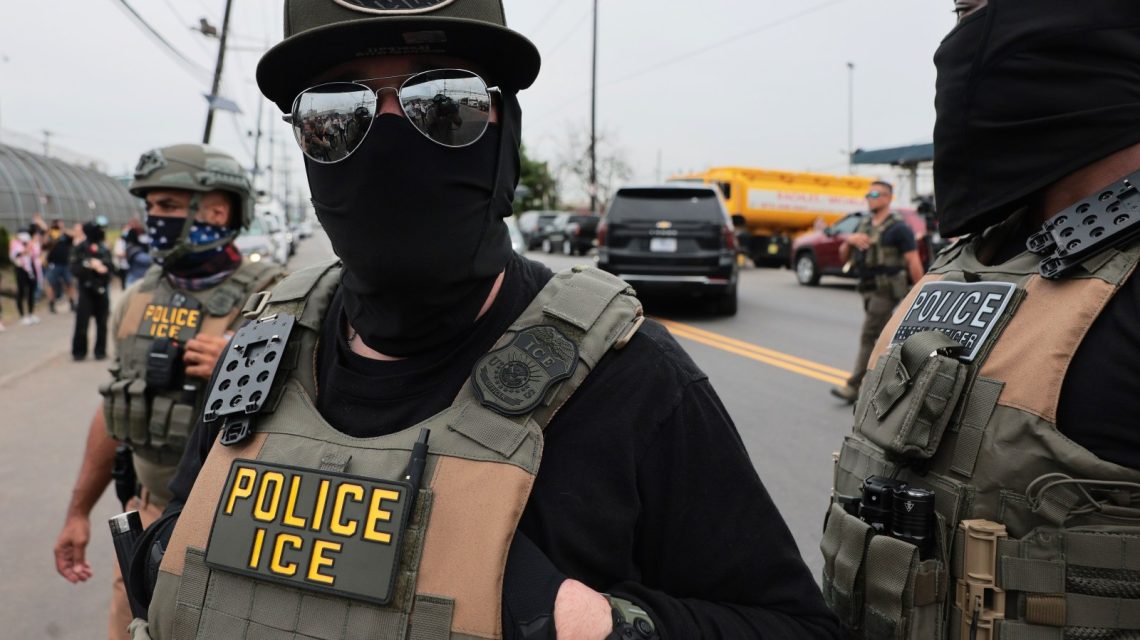
A federal judge in Oregon has called for more Immigration and Customs Enforcement (ICE) agents to testify in court after discovering an officer’s dishonesty in an official arrest record. U.S. District Judge Mustafa T. Kasubhai highlighted the importance of live testimony for uncovering the truth.
Judge Kasubhai, appointed by President Biden, emphasized the need for direct court hearings with government officials when their statements are disputed. He argued that written declarations are not sufficient when witnesses might lie. In his words, “Evaluating live testimony is a time-tested method for truth finding. Written declarations are convenient, but insufficient on their own when witnesses are willing to lie.”
The judge’s remarks came in the context of an order related to a previous injunction against the Department of Homeland Security (DHS) and ICE. This order concerned warrantless immigration arrests in Oregon. Judge Kasubhai’s earlier injunction mandated that ICE officers must first evaluate if a person is likely to escape before making a warrantless civil immigration arrest.
Recent evidentiary hearings revealed that federal authorities had not fully complied with this order. The credibility of ICE’s reporting on warrantless arrests was questioned. An arrest report from ICE officer J.G. was especially noteworthy. It falsely claimed identification and a warrant issuance before an arrest, admitted by J.G. during testimony under oath.
Judge Kasubhai found J.G.’s explanation insufficient. He described the officer’s actions as “intentional, coordinated falsification” to give the impression of a lawful, warrant-based arrest. The case highlighted the need for courtroom testimony to uncover such discrepancies.
In response, Kasubhai stated he would no longer assume ICE acted properly by default. He noted similar issues in other courts, referencing a Massachusetts federal judge’s decision regarding “repeated misrepresentations by ICE officers.”
Further scrutiny of ICE’s arrest reporting revealed more problems. Although ICE reported 13 warrantless arrests over six months, Kasubhai found this number misleading. Between February 5 and July 31, ICE conducted 574 arrests in Oregon, with 504 classified as noncustodial. Errors and repeated language in ICE’s I-213 arrest records undermined their reliability.
Kasubhai stressed the falsification in reports as a concern, undermining trust in all I-213 forms completed by ICE in Oregon. He did not find all encounters unlawful; in one instance, officers had reasonable suspicion to detain a misidentified individual briefly.
Efforts to reach DHS and ICE for comments outside office hours remain ongoing.
 Washington State Deputies Killed in Hostage Rescue Attempt
 Former NYPD Officer Charged in Brooklyn Jogger’s Murder
 Supreme Court Weighs Religious School Exemption in Colorado Preschool Program
 Escaped Inmate Jacob Morley Recaptured in Missouri
 ICE Officer Faces Charges for Alleged Assault
 Michigan Tests New Prisoner Classification System