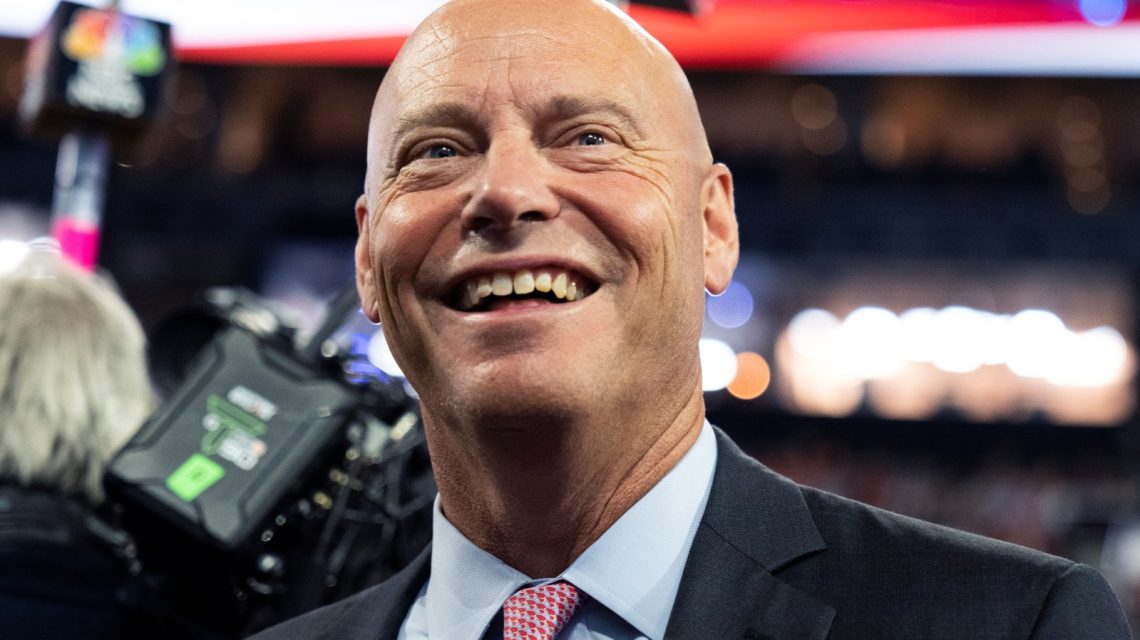
Marc Short, a former Trump administration official, has issued a warning that Republicans are currently experiencing a ‘triage’ situation as they approach next week’s midterm elections. With numerous challenges confronting their congressional majorities, the party finds itself in a precarious position.
During a CNN interview, Short—previously the White House director of legislative affairs under President Trump and later chief of staff to former Vice President Mike Pence—described the challenging political landscape. Inflation and affordability concerns, combined with allegations of White House corruption, are impacting GOP voter enthusiasm.
These concerns echo sentiments shared by senior Republicans. Earlier this month, House Majority Whip Tom Emmer noted the party’s reassessment of their electoral goals in response to intensified efforts to maintain their majority. Emmer explained to Axios, “It’s really a business. You look at the balance sheet and put money where it yields the biggest return. We expanded the map when we should have kept it narrow and conservative.”
Republican groups have begun to shift from offensive to defensive strategies, pulling out of competitive races while redirecting significant funds to protect seats in traditionally Republican states like Kansas. Here, incumbent Senator Roger Marshall is challenged by Democrat Adam Hamilton.
Short critiques the economic record of the Trump administration and potential conflicts of interest, factors that complicate efforts to energize Republican voters. He noted Republicans are ‘essentially in triage’ leading up to Tuesday’s midterms. “White House policies haven’t resolved inflation,” Short stated on NewsNation, highlighting voter concerns over stagnant wages and rising prices. He also mentioned a spate of corruption stories hampering Republican morale.
Republicans Aim to Safeguard Formerly Secure Seats
Short’s insights reveal Republican adjustments to campaign strategy, focusing more on defending previously secure positions. For example, GOP funding has been reduced in North Carolina’s Senate race against Democrat Roy Cooper but has increased in South Carolina to support Republican Senator Darline Graham against Democrat Annie Andrews.
In Kansas, Republicans are pouring substantial resources into holding a seat typically within their grasp. Despite Trump’s past 16-point victory there, a CNN/SSRS poll shows Hamilton leading Marshall 49% to 45%. An influx of spending includes a $10 million boost from the Senate Leadership Fund and $1.6 million in advertising commitments from an affiliate of the Club for Growth.
This defensive approach also affects the House races. Nebraska’s 2nd Congressional District saw a $1.1 million cut in planned advertisements for Republican Brinker Harding. This significant withdrawal contrasts with attempts to protect other seats in Kentucky, Ohio, and Texas.
Democrats require a net gain of four Senate seats for Senate control, with the House majority also up for grabs.
Republicans Target Progressive Democrats
Republican strategists are shifting focus by targeting progressive Democrats like Congresswoman Alexandria Ocasio-Cortez and Michigan Senate hopeful Abdul El-Sayed. Short suggested on NewsNation that rallying against progressive figures could energize lukewarm Republican voters dissatisfied with their current candidates or the broader political scene.
Short noted, “If Republicans aren’t keen on Ken Paxton’s campaign, they might rally against figures like AOC. Opposition to Senate radicals may have greater impact beyond Michigan than expected.”
 Democrats See Favorable Shifts in Key Senate Races
 Pentagon Updates War Casualty Figures with New Nonhostile Deaths
 Israel’s Political Deadlock and its Implications
 An Unexpected Fall at the Capitol
 Colorado Preschool Program Faces Religious Discrimination Claims
 New York Officials Respond to Allegations of Charge Downgrading for Noncitizens