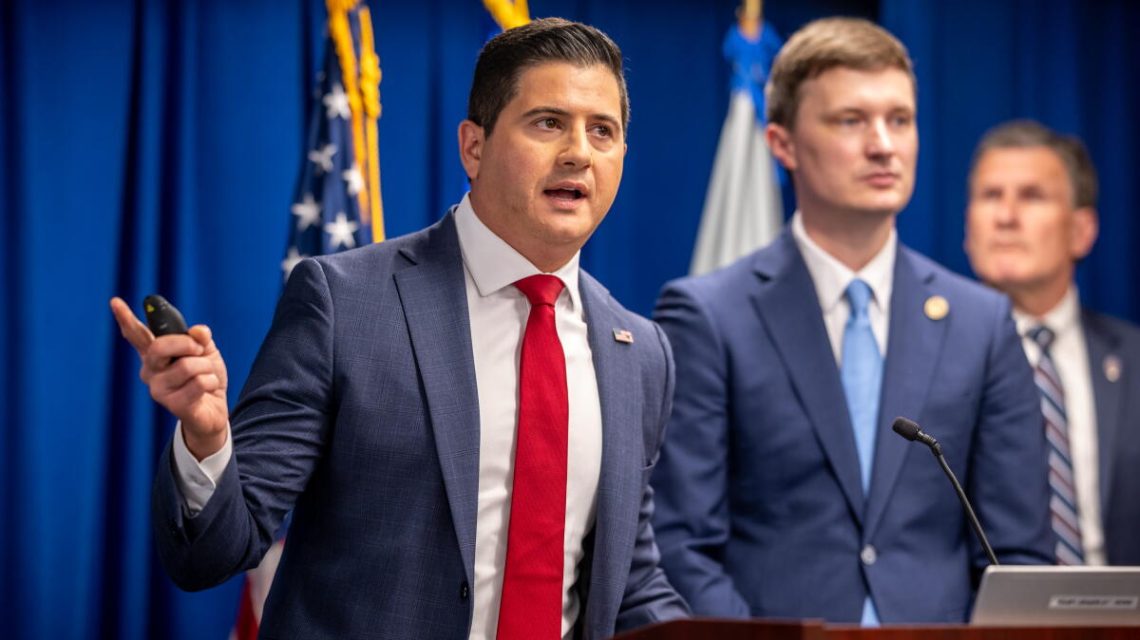
The U.S. Department of Justice announced a surprising revelation about voter fraud in California. Despite the extensive scrutiny under the Trump administration, they identified only 28 potential illegal voters in a state with about 23 million registered voters. This number equates to roughly 1 in 820,000, a rare occurrence similar to being struck by lightning.
Rob Bonta, California’s Attorney General, emphasized the lack of evidence for widespread voter fraud, countering claims of a large-scale conspiracy. None of those charged were found to have colluded with Democratic entities. Investigations utilized significant government resources, yet revealed few offenders.
Across the U.S., since the start of the administration, 169 individuals have faced federal charges for illegal registration or voting. This amounts to approximately 1 in 1.25 million registered voters, highlighting the rarity of such infractions.
There. Is. No. Election. Stealing.
Despite low numbers, the federal government has pursued actions against California, alleging the potential for illegal voting. They’ve criticized the state for not adhering to federal demands, which included acting on a disputed list of 20,000 registered voters.
The list in question likely stems from the Systematic Alien Verification for Entitlements (SAVE) program, designed to consolidate data across incompatible government databases. Data experts criticize its reliability, with claims it inaccurately merges records, leading to potential errors.
These federal actions have provoked lawsuits from groups like UCLA Voting Rights Project and the Coalition for Humane Immigrant Rights. They’re challenging the targeting of naturalized citizens for alleged voter fraud, arguing it amounts to intimidation, especially in states with significant immigrant populations.
In swing states, naturalized citizens constitute an essential voting bloc, sometimes critical for election outcomes. The ongoing prosecutions and legal challenges risk suppressing these voters, potentially influencing electoral results.
Matt Barreto of the Voting Rights Project argues that these efforts intimidate eligible voters, creating fear and deterring participation. This situation can fuel further claims of electoral conspiracy, perpetuating the narrative of election fraud.
 Economic Disparities in the Lead-up to Midterm Elections
 Economic Challenges and the 2026 Midterm Elections
 Trump’s Critique of Fox Reflects Administrative Strains
 Trump Establishes New Women’s Health Divisions
 Housing Shortage Challenges in Rural Ohio and Beyond
 Elon Musk: The Fifth Musketeer in Modern Geopolitics