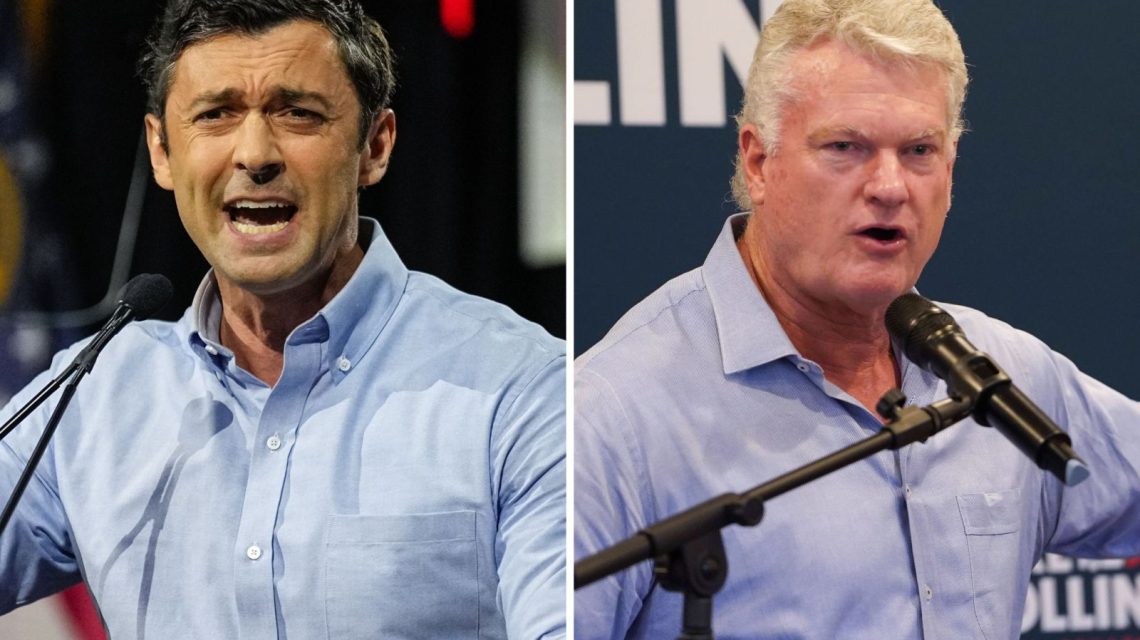
Final Debate Ahead of Election
Democratic Senator Jon Ossoff and Republican Representative Mike Collins will face off in a debate on Tuesday night. It’s their last encounter before the election on November 3. The contest, which leans toward Ossoff, concludes the Atlanta Press Club’s debate series as early voting begins in Georgia.
During their initial debate, Ossoff targeted Collins for alleged connections to white nationalists, an ethics inquiry, and his allegiance to Trump. Collins countered by portraying Ossoff as a disconnected liberal and defended Trump’s tariffs and the actions against Iran.
Candidacy Backgrounds
Ossoff, who claimed his Senate seat in 2020, is running for re-election in a state Trump won two years ago. Collins, representing Georgia’s 10th Congressional District, secured his place as the Republican nominee following a runoff in June.
Republicans hold a 53-47 majority in the Senate. Democrats need to turn over four seats while maintaining their current positions, including Georgia, to achieve a majority.
View the Debate
The debate is scheduled for 8 p.m. ET on Tuesday, October 13. It will be broadcast from Georgia Public Broadcasting’s studios in Atlanta and can be viewed via the Atlanta Press Club live stream.
Poll Insights
Ossoff has consistently led in polls since summer. However, the extent of his lead varies based on the pollsters. The Trafalgar Group, seen as Republican-leaning, places Ossoff at 51% and Collins at 43%, with 5.9% undecided.
Other polls, like Wedgewood, show a broader gap, reporting Ossoff at 55% and Collins at 45%. Big Data Poll reflects a similar margin. Quantus Insights’ survey in mid-September recorded Ossoff at 48.2% against Collins’ 44.4%.
The RealClearPolitics average indicated Ossoff’s lead was around eight points in late September, bolstered by forecast adjustments from the Cook Political Report and Sabato’s Crystal Ball, which moved the state from “Lean Democrat” to “Likely Democrat.” Prediction markets, such as Kalshi and Polymarket, give Ossoff roughly a 95% chance of victory.
Key Voter Concerns
The cost of living is the major worry for Georgia residents, dominating surveys throughout the year. Economic concerns have also tied into anxiety about the conflict with Iran, with many fearing its impact on prices.
Health care matters as well. A University of Georgia poll showed that most voters deem a candidate’s stance on health care critical, with many considering care unaffordable.
Data centers have emerged as a new issue, with bipartisan concern over their development affecting electricity costs, water availability, and noise levels.
Debate Themes
During the first debate, Ossoff criticized Collins for supporting tariffs affecting Georgia’s economy and promised repeal. Collins attributed inflation to the current administration and advocated for energy autonomy.
The Iran war was another point of contention, linked to rising gas prices. Ossoff accused Collins of multiple votes supporting the war, whereas Collins defended it as crucial in preventing nuclear proliferation.
On immigration, Collins accused Ossoff of undermining ICE and border patrol, while Ossoff called for secure borders without unjust raids. Their exchanges also touched on election security, with Collins pressing Ossoff over his stance on the SAVE Act.
Scrutiny of Collins’s Record
Ossoff has targeted Collins for an ethics probe into the misuse of funds. Allegations of antisemitism and racism surrounding Collins’s associates were also highlighted, though Collins rejected such ideologies.
Ossoff’s Controversial Links
Collins aimed to connect Ossoff to figures like left-wing podcaster Hasan Piker and Michigan Democratic Senate nominee Abdul El-Sayed, also noting donations from Reid Hoffman, linked to Jeffrey Epstein.
 Former U.S. Ambassador to Greece Faces Ethics Violations
  Senate Candidate’s AI Proposal Mirrors Historic Luddite Approach
  Challenges Facing Modern Polling
  Supreme Court’s Influence on Democracy Examined in New Book
  9th Circuit Sides with Trump Administration on Federal Law Enforcement ID Rules
  Brit Hume Questions Trump’s Media Ban Effectiveness