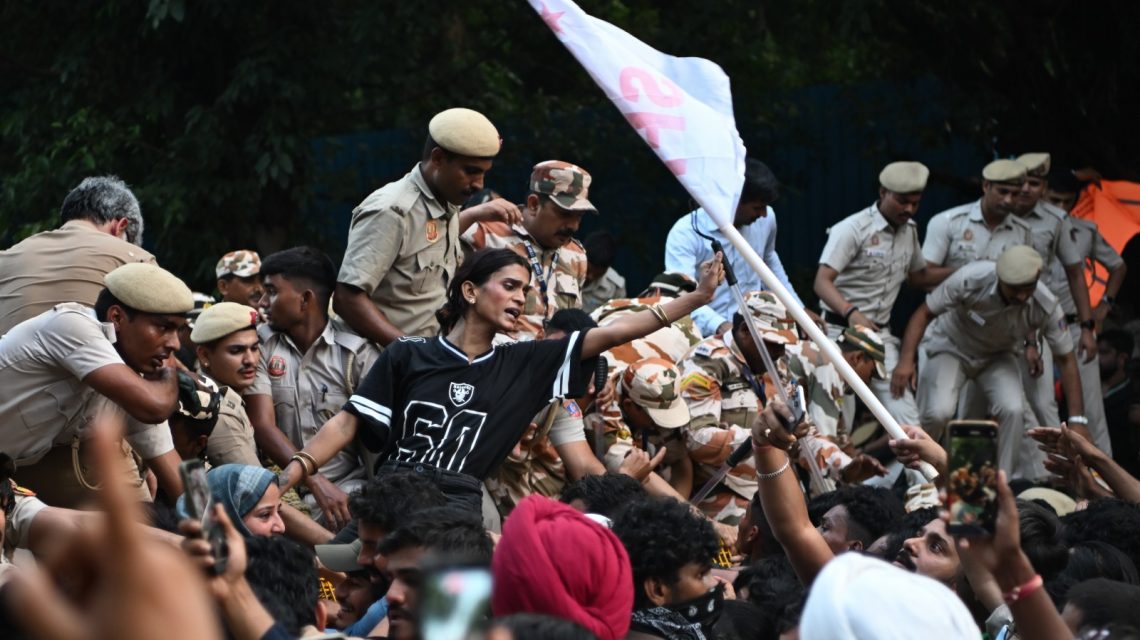
Maya Devi lives in an informal settlement on the outskirts of Delhi. Her life there is uncertain, but it gave her a voice in India’s democracy—until now. She is among more than 130 million people removed from India’s electoral rolls on various grounds, according to the Election Commission.
These removals have sparked anger, accusations of foul play, and protests against Prime Minister Narendra Modi, leader of the Bharatiya Janata Party (BJP). On Tuesday, leaders of the Cockroach Janta Party (CJP), a youth movement, were detained at a protest demanding the resignation of Chief Election Commissioner Gyanesh Kumar. Over the weekend, more than 2,400 protesters were temporarily detained. Opposition leaders have also marched to the Supreme Court for intervention.
Voter rights have become a hot issue, akin to debates in the United States. In India, the removal of names equates to the population of Mexico. Officials claim removals target the deceased, duplicates, or those absent from their homes, untraceable, or permanently moved. Opponents argue these changes may benefit Modi’s party.
Devi expressed her shock to Newsweek: “I have been voting for decades, and now that right is taken from me and my family. There are six or seven of us, and none can read or write. Our names are gone from the list.” Officials suddenly informed them they were off the list.
Kumar faces criticism for overseeing the revision that risks disenfranchising citizens. The Election Commission and BJP deny political manipulation. BJP spokesperson Sudhanshu Trivedi insists that only invalid voters are excluded. The Commission clarifies that the figure of—absent, shifted, deceased, or duplicate named electors—does not reflect final roll deletions.
Hrishika Jain, a legal scholar, argues that the Special Intensive Revision (SIR) should be halted: “There’s no fair way to do it.” The process, she claims, affects those with unstable housing, like migrant workers lacking documents to prove residency. She warns of broader impacts beyond voting, like housing claims.
Election Impact
The revision’s electoral implications are under scrutiny. Neelanjan Sircar, a political analyst, examined voter-roll contraction in West Bengal’s 2026 election, where BJP won a significant victory. His analysis showed a 10% median contraction in voter rolls compared to 2024, suggesting a potential four-point vote swing to BJP at the TMC’s loss. Electoral roll deletions occurred in two phases targeting specific discrepancies, raising questions about fairness and transparency.
Sabar Institute’s audit highlighted that more than 70% of the removed 2.7 million voters were Muslims. The absence of clear rules complicates audit efforts, Sircar noted.
Praveen Rai, another analyst, said there’s no evidence of targeted removal to benefit BJP, pointing instead to other factors such as issues with illegal immigration. Rashmi Singh, a sociologist, pointed out difficulties in reinstating voter rights, especially for minorities without strong local support networks, unlike BJP supporters.
Electoral expert Rai warned against undermining the Election Commission, which could erode public confidence. Jain argued for more fundamental changes to secure the Commission’s independence, such as reforming commissioner appointments.
For Devi, losing voter rights adds to the hardship she faced after her home was demolished. “We were told to go back or rent in Delhi, but we can’t afford it. We want our voting rights back,” she said, expressing uncertainty about regaining her place on the electoral rolls.
 Voters to Address Education Ballot Measures in 10 States
  Policy Changes in SNAP Soda Purchases Save Taxpayer Dollars
  Iowa Republicans Discuss Midterm Election Landscape
  Texas Attorney General’s Campaign Contributions Under Scrutiny
  Michigan Senate Candidate Proposes AI Development Freeze
  Steve Hilton’s Critique and Campaign Strategies