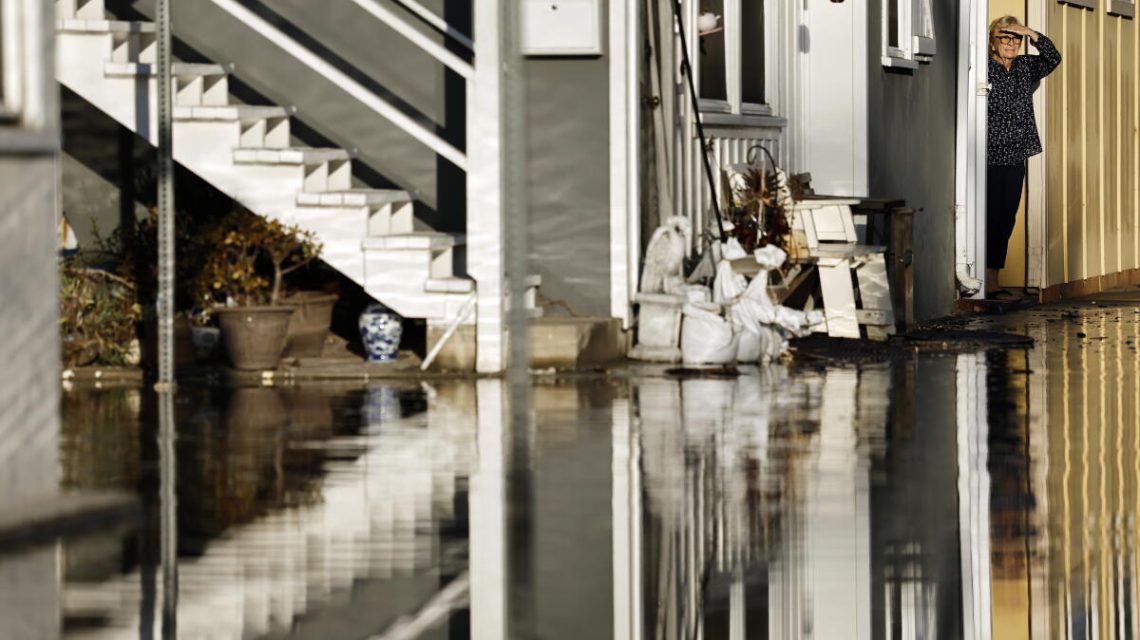
California’s recent coastal flooding has caused significant damage from Newport Beach to Long Beach. This flooding was due to an unusual mix of events, highlighting the challenges facing the state amid forecasts of a ‘super’ El Niño winter.
Scientists observed that the flooding was extraordinary. It demonstrated how Tropical Storm Rachel, combined with high tides, record-hot ocean temperatures, and El Niño-driven waves, could overwhelm coastal regions. Jonathan Warrick, a U.S. Geological Survey research geologist, emphasized the unprecedented nature of these conditions and warned of a prolonged El Niño season featuring potential winter storms and king tides.
The center of Tropical Storm Rachel was expected to affect northern Baja California. The San Diego office predicted high flooding risks for Orange County and San Diego as swells, onshore winds, and high tides coincide. Sunday morning’s high tides were expected at 9:43 a.m. in La Jolla and 9:48 a.m. in Newport Beach.
Experts like Warrick suggest that these events provide a glimpse of what the future may hold. An ongoing increase in sea level may lead to similar events becoming more common in the coming decades. The highest tides occur around the summer and winter solstices, with significant tides expected on Thanksgiving, Christmas Eve, and January 22. Strong winter storms accompanied by these high tides could result in coastal erosion and damage, according to Reinhard Flick, a researcher at the UC San Diego Scripps Institution of Oceanography.
California is nearing the peak of tidal cycles that occur every 18.6 and 4.4 years, noted Mark Merrifield, director of the Scripps Center for Climate Change Impacts and Adaptation. Around Christmastime, the state may experience strong king tides coinciding with high sea levels due to El Niño. This climate pattern involves warmer than usual waters in the equatorial Pacific, typically leading to increased precipitation in Southern California.
In the past 75 years, two of the strongest El Niños have caused extensive damage to Southern California’s coast. Another strong El Niño caused substantial coastal erosion without above-average rainfall. This week’s flooding likely resulted from the combined effects of swells from Tropical Storm Rachel and the arrival of an El Niño-fueled Kelvin wave. This wave, unseen at the surface, can raise sea levels by six to twelve inches, contributing to increased flood risk.
Warrick expressed astonishment at the unprecedented conditions. He mentioned monitoring another Kelvin wave approaching the Mexican coast, which could impact Southern California within weeks. The recent wave has already passed Los Angeles and San Francisco.
According to Dillon Amaya, an assistant professor at North Carolina State University, the storm surge triggered by the hurricane was exacerbated by the Kelvin wave, making flooding more dangerous. City officials scrambled to prepare, creating sand berms and reinforcing vulnerable areas.
The Los Angeles Harbor tide gauge peaked at 7.7 feet, surpassing predicted levels. The National Weather Service indicated that Sunday morning’s high tides might approach or exceed recent record levels for L.A. County.
Historically, only two storms maintained tropical-storm strength near California. The first, known as El Cordonazo (the Lash of St. Francis), impacted Long Beach and San Pedro in September 1939, resulting in significant rainfall and fatalities. In September 1997, Tropical Storm Nora briefly affected the California-Arizona border, causing flooding and property damage during a strong El Niño season.
The National Oceanic and Atmospheric Administration’s Climate Prediction Center announced a nearly 100% chance of a ‘very strong’ El Niño this season, with an 83% probability of it being the strongest on record since 1950.
Contributions were made by Times staff writers Jasmine Mendez, Hannah Fry, and Jaweed Kaleem.
 Supreme Court Case on Climate Lawsuits Threatens Oil Industry
 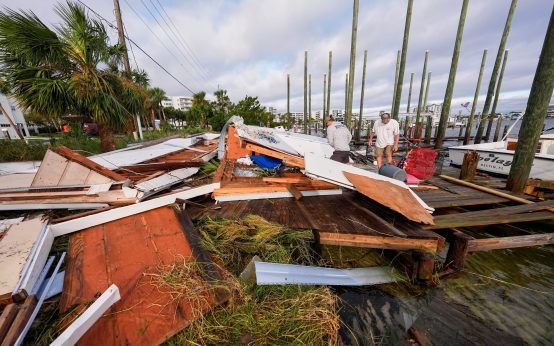 Hurricane Isaias: Impact and Aftermath
  Storm Updates and Impact Reports in the Southeast
  Hurricane Isaias Impact in Southern States
  Hurricane Isaias and Its Impact
  Hurricane Isaias Threatens Gulf Coast