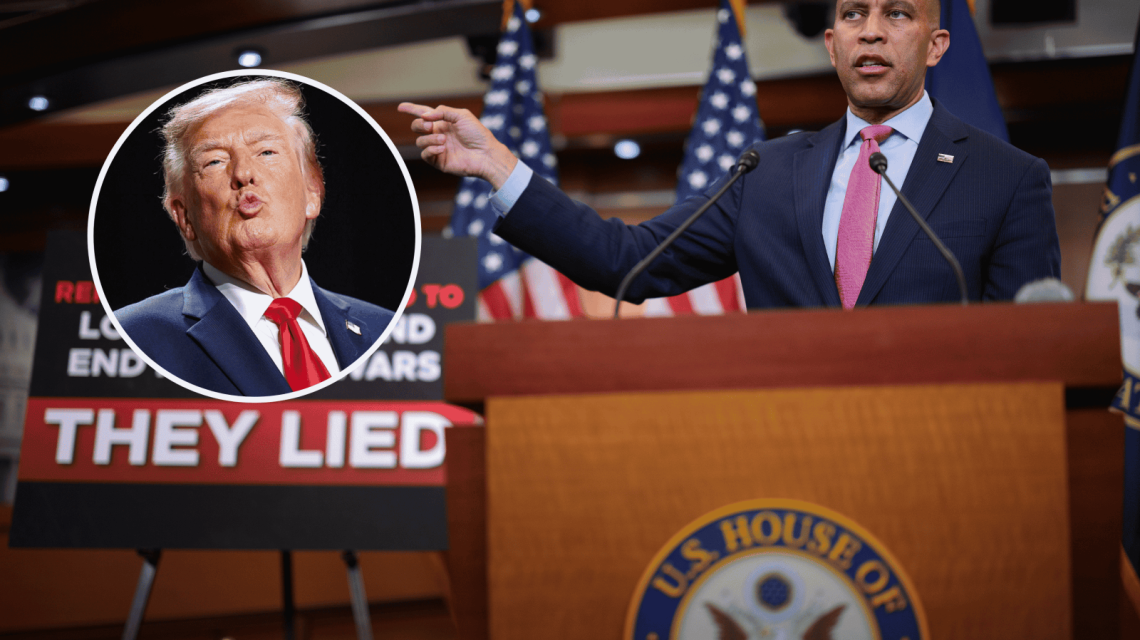
Democrats are optimistic about their chances to regain control of Congress in the upcoming midterm elections. Some Republicans appear resigned to potentially losing control of the House and possibly the Senate. If Democrats succeed in shifting the balance of power, a significant decision they face is whether to impeach President Donald Trump for a third time. This decision involves more than just vote counts.
The impeachment topic divides some Democrats. There are those who feel Trump’s actions require constitutional accountability, while others worry it might divert focus from economic priorities and inadvertently bolster Trump politically, leading to another Senate acquittal. House Minority Leader Hakeem Jeffries from New York has not committed to either stance. He stated in an interview with PBS, “We certainly haven’t ruled anything in and we haven’t ruled anything out.” He emphasized that Democrats would investigate any wrongdoing, “follow the facts, apply the law, be guided by the Constitution” and “let the chips fall where they may.” The question remains whether impeachment would achieve meaningful accountability or distract from other legislative goals.
Impeachment Considerations
If Democrats win the House, they could impeach Trump by a simple majority vote. However, conviction and removal require a two-thirds majority in the Senate, likely needing strong Republican support irrespective of the election results. Former Democratic Representative Joe Cunningham emphasized that Democrats should unite a majority with members facing varied pressures compared to those in safely Democratic areas. He warned against prioritizing partisan actions like impeachment, urging focus on addressing economic issues affecting everyday life.
While Cunningham does not dismiss impeachment in necessary cases, he believes it should not dominate political strategy. Highlighting a need for the Democratic Party to define itself by its goals rather than opposition to its rivals, he suggests prioritizing issues that resonate widely across party lines.
Voices Against Impeachment
Prominent Democrats like former Obama White House chief of staff Rahm Emanuel oppose further impeachments. On NBC News’ Meet the Press, Emanuel advised, “Short answer: No.” He argued it’s unlikely to progress and would create significant distractions. He recommended investigations into corruption followed by comprehensive ethics reforms. Senator Tammy Duckworth also advised focusing on legislative work over impeachment.
Representative Raja Krishnamoorthi shared that few Democrats consider impeachment a priority post-election. Concerns exist that addressing economic dissatisfaction could magnify attention on Trump instead of maintaining the voter focus on current issues.
Historical Impeachment Outcomes
House: for–against impeachment. Senate: guilty–not guilty.
- Andrew Johnson (1868): Acquitted
- Bill Clinton (1998-1999): Acquitted
- Donald Trump (2019-2020 and 2021): Acquitted both times
Johnson’s House tally reflects initial impeachment vote. The process requires a Senate conviction vote requiring two-thirds support.
Reflecting on past impeachments, most measures ended with acquittals. Clinton’s 1998 impeachment illustrated potential public backlash. A Gallup poll during that time found 63% disapproved of the impeachment. For Trump, his first impeachment saw only a slight shift in approval ratings, illustrating a complex public response to such proceedings.
Support for Impeachment Forces
Some argue that refraining from impeachment due to expected Republican obstruction undermines constitutional checks. David Froomkin, a legal scholar, suggested the impeachment mechanism struggles under partisan strains. He highlighted the danger of partisan loyalty overshadowing constitutional oaths. Representative Alexandria Ocasio-Cortez and others see impeachment as essential for preserving constitutional standards.
Representative Jamie Raskin, central to possible proceedings, states Trump engaged in “numerous impeachable offenses.” Nevertheless, he cautions against allowing impeachment to become merely strategic or symbolic.
Some Democrats like Greg Casar take a tactical viewpoint, previously questioning whether symbolic votes meaningfully advance accountability. Proponents like Representative Al Green have been persistent, though recent impeachment resolutions have been dismissed.
Public Opinion and Political Strategy
Polling data over various impeachment proceedings show varied public opinions. Clinton’s approval soared during his impeachment, while the public remained divided over Trump’s trials.
A third Trump impeachment might further entrench impeachment as a partisan battle. Some fear repeated acquittals could render impeachment ineffective, while others argue that deliberate inaction emboldens partisan protection over accountability.
Trump rallies Republican support by framing potential impeachment as a central election issue. Republican leaders like House Majority Leader Steve Scalise have similarly highlighted impeachment to motivate their base. For Democrats, winning the House involves critical strategic choices, balancing constitutional responsibility with practical political considerations.
 EPA Contract Cancellation Sparks Legal Battle
  Press Secretary Criticizes El-Sayed Amid Michigan Senate Race Polls
  DSA Influence on State Legislative Elections and Its Impact on the Democratic Party
  Senator John Fetterman’s Allegiance Raises Speculation
  Ohio Midterms Heat Up: Vance Attacks Democrats as Key Races Tighten
  Trump Criticizes New York Surrogacy Bill at Syracuse Rally