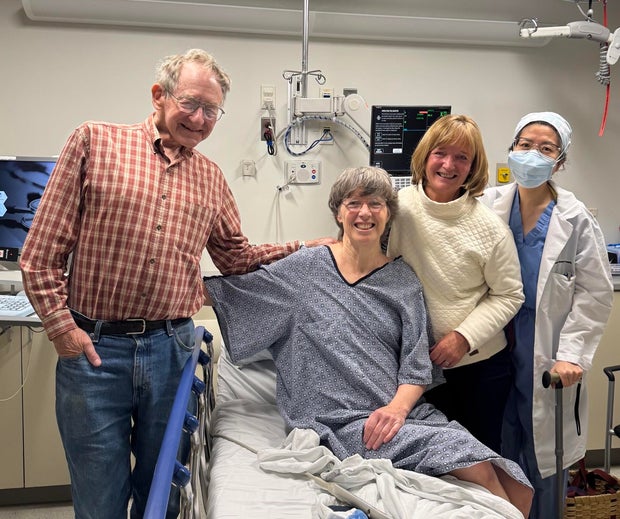
Vicky Titcomb’s Unexpected Diagnosis
Vicky Titcomb, a bookstore owner from Cape Cod, underwent a routine heart scan at Mass General Brigham in March 2025. At 72 and feeling healthy, the scan seemed uneventful, meant to be completed before a planned visit to her son in New York City. However, during her trip, Titcomb received a startling call from her internist. An abnormality was found on her pancreas, suggesting pancreatic cancer, known for its high mortality rate.
Reflecting on the news, Titcomb described a sudden shift in her life, saying, “It was a very weird feeling.” Though no stranger to serious diagnoses, having faced breast cancer in 2012, she chose to maintain a positive outlook and avoid delving into distressing information about pancreatic cancer.
“I saw some terrible, terrible information about it. I shut it out pretty much completely, because it was too much to take in,” said Titcomb.
Developing an Aggressive Treatment Plan
Pancreatic cancer poses a significant threat due to late-stage diagnoses, often after spreading to other organs. The American Association for Cancer Research’s 2026 report highlighted the minimal improvement in survival rates for pancreatic cancer. The five-year survival rate stands at 13%.
Titcomb had additional health concerns: stage 1 breast cancer and an ovarian mass. The benign ovarian mass was removed first, focusing on the remaining cancers. Specialists at Mass General Brigham formulated a plan involving chemotherapy and radiation to shrink the tumors.
Titcomb envisioned her cancer’s reduction, comparing it to “trying to make this cancer a raisin.” Success meant a potentially life-saving Whipple procedure, removing parts of the digestive system affected by the tumor. Only one-fifth of pancreatic cancer cases qualify for this surgery, underscoring the importance of early detection.
“If I had not had that scan when I did, the outcome would have been bad,” Titcomb reflected.
Coping with Multiple Treatments
Beginning chemotherapy in June, Titcomb underwent eight rounds over four months, followed by three weeks of radiation and additional chemotherapy. Surgical oncologist Dr. Thomas Clancy guided her care, noting her strength in handling the treatments, which prepared her for the Whipple procedure.
In November, Titcomb addressed her breast cancer surgically. Shortly after, Dr. Clancy performed the robotic Whipple procedure, benefiting from smaller incisions and a quicker recovery. Scheduled on World Pancreatic Cancer Day, Titcomb confidently joked, “I was sure that Dr. Clancy chose me for that day because he felt positive about the outcome.” The operation succeeded, allowing Titcomb recovery time in the hospital.
Road to Recovery and Advocacy
Following treatment, Clancy confirmed no evidence of cancer in March 2026. Continuing with scans every three months, the focus remains on reducing Titcomb’s worries about cancer.
“I generally tell patients at this point, ‘You’re done with therapy … you go about your days,'” Clancy said.
Returning to her bookstore duties, Titcomb resumed her active life with family, embracing photos, videos, and calls from distant relatives.
Committed to raising pancreatic cancer awareness, Titcomb collaborates with organizations like the American Cancer Society and Pancreatic Cancer Action Network, advocating for advancements in treatment.
“I have benefited from enormous advancements in cancer treatment. People kept telling me that 10 years ago it would have been a different story,” Titcomb acknowledged. “I feel so lucky. The luck trumps all.”
 Parent’s Journey Through Their Child’s Congenital Cataract Diagnosis
  Former Jihadist Shares Radicalization and Deradicalization Journey
  Mike Ditka: A Legacy in Football
  A Necessary Solution for Alzheimer’s Disease
  The Urgency of Treating Ectopic Pregnancies Safely
  Pro Wrestler KJ Orso Showcases Native American Heritage