First Debate Brings Key Issues to Light
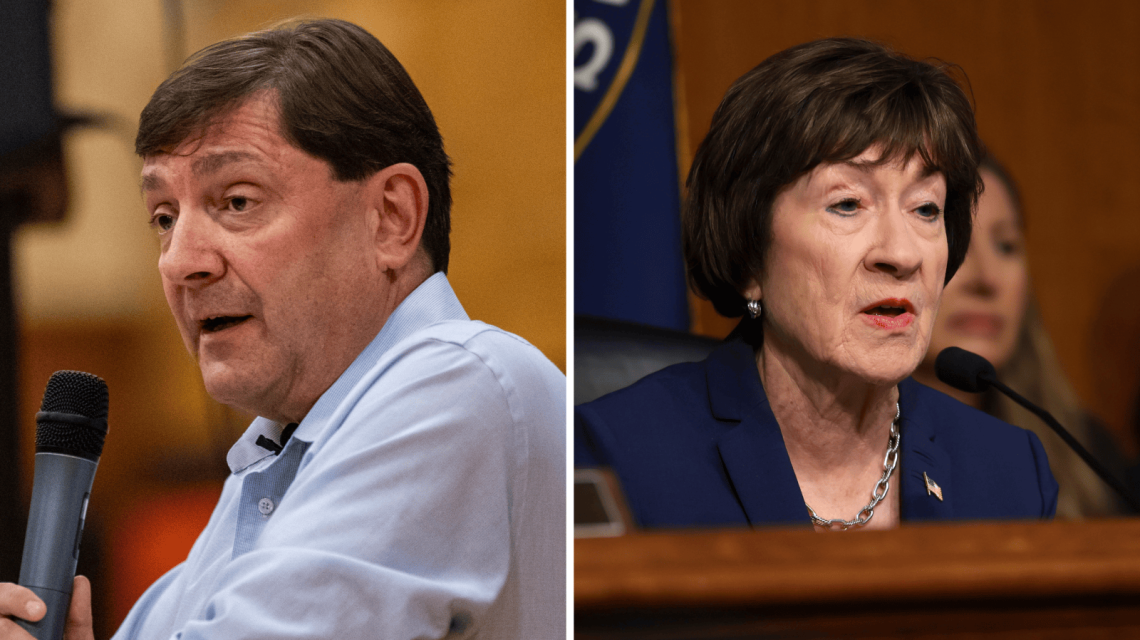
Republican Senator Susan Collins confronted Democratic opponent Troy Jackson in their initial debate, which holds significant implications for Maine’s Senate race. The debate, held in Portland, engaged the candidates on Collins’s voting history and bipartisan claims. Jackson, who joined the race in late July, attempted to link Collins with President Donald Trump while addressing accusations of inexperience.
Initial reactions on social media showed no clear victor. However, each candidate had strong moments, suggesting much remains to be discussed in their upcoming debates, including one planned for Thursday evening at 7 p.m.
Significance of Maine’s Senate Race
The Senate race in Maine is critical as Democrats appear to have an edge in the Senate, though it is narrower than in the House. With Maine’s Senate seat considered a toss-up, it draws attention alongside contests in states like Ohio and Texas.
Maine leans Democratic historically, voting against Trump in the 2016, 2020, and 2024 elections. Despite this, Collins has retained her seat since 1996, known for her moderate Republican stance and focus on Maine’s interests. The national climate is challenging for Republicans in 2026, partly due to Trump’s low approval ratings. Collins has sought to separate herself from Trump, especially on issues like tariffs with Canada.
Debate Highlights
The debate revolved around Collins’s role as a moderate Republican versus Jackson’s portrayal of her as a staunch Trump supporter. Jackson connected Collins’s 2018 vote for Supreme Court Justice Brett Kavanaugh to the overturning of Roe v. Wade. He also criticized her ties to the Iran conflict and Trump’s tariffs, unpopular with many Mainers.
Collins highlighted her resistance to certain Trump policies, including Canadian tariffs. She argued she was “the most outspoken opponent” of these and secured exemptions for essential commodities like road salt. She challenged the 96 percent voting alignment with Trump cited by Jackson, claiming it misleading, with a true figure nearer 70 percent. Collins referred to VoteView data positioning her as one of the most centrist Republican senators.
She further distanced herself from Trump, indicating she is “not exactly his favorite senator,” when asked about potential support from the president.
Debate Outcome
Postdebate feedback lacked a definitive winner, with reactions largely split along party lines. Democrats argued Jackson successfully pressured Collins on her support for Kavanaugh and Trump. A notable quote from Jackson compared Collins to “an arsonist who helped set the fire, then wants credit for a cup of water to put it out.”
However, Collins’s experience and bipartisanship were acknowledged, with some Republicans highlighting her decades of effective legislative work for Maine and her distinct stance from Trump.
After the debate, prediction markets saw a shift, with Jackson’s lead slightly decreasing. Jackson’s performance appeared to modestly improve his standing on platforms like Kalshi.
Phil Harriman, a political commentator, called the debate balanced. He noted Jackson’s attack on Collins’s affiliation with Trump, but credited Collins with demonstrating her loyalty to Maine’s broader populace.
Impact of Debates on the Election
This initial debate carried weight for both candidates as polls indicate a tight race with a significant number of undecided voters. A CBS News poll showed an even split with some voters open to changing their minds before Election Day.
Jackson faces challenges in visibility, having joined the race after Graham Platner’s withdrawal. Data from surveys show variability in name recognition and public opinion about Jackson.
According to Andrew E. Smith from the University of New Hampshire, the debates may not decide the contest unless there is a major misstep by a candidate. Conversely, Harriman suggests that the debates could significantly influence the undecided voters who seek leadership qualities in their representative.
 Labor Unions and Faculty Groups Sue Trump Administration Over Immigration Policies
  Israel Commemorates Third Anniversary of Hamas-Led Attacks
  Understanding the Complexity of Mexican American Identity
  Steve Hilton’s Controversial Campaign Tactics in California
  Kane County Board District 3 Election: Key Issues and Candidate Views
  Trump’s Unexpected Suit Choice Sparks Debate