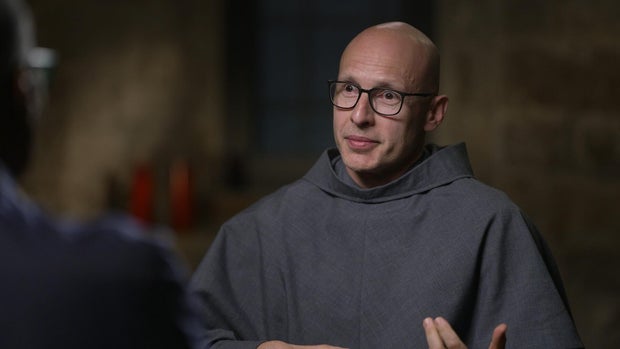
Sergio Fusetti faced a daunting challenge after powerful earthquakes damaged the Basilica of Saint Francis of Assisi. Despite three decades of effort, more than 80,000 fragments from the 13th-century church remain unmatched. Fusetti acknowledges the difficulty, stating, “Only artificial intelligence can help us here.” Today, a collaboration between art historians, software engineers, and Franciscan friars is leveraging AI to aid in restoring this historic site.
Historical Impact of Earthquakes
Located in Umbria, Italy, the Basilica of Saint Francis of Assisi is a revered site. Saint Francis, known for his life of poverty, is celebrated here. Famous artists, including Cimabue and Giotto, contributed their exquisite artworks depicting Francis’s life. Earthquakes have shaken the basilica over the years, with significant tremors occurring in 1997, leading to tragic losses. Fusetti has dedicated decades to restoring the church’s art, traumatized by past quake effects. Friar Guiulio Cesareo recalls the terror of seeing architectural elements tremble, evoking fear of future quakes.
Applying Modern Methods to Age-Old Architecture
Contemporary restoration efforts use advanced technology to preserve the basilica’s art and structural integrity. Haltadefinizione, a tech firm specializing in ultra-high-definition photography, leads the initiative to create a digital twin of the basilica. Giovanni Borelli, CTO, emphasizes the remarkable capacity of their imaging equipment to capture details invisible to the naked eye.
Borelli’s team employs drones, lasers, and specialized cameras to compile hundreds of thousands of images. These will form a high-resolution 3D blueprint of the basilica. This digital replica will provide robust guidance for restorers should future earthquakes occur. Completion is expected next year, with public access planned.
Harnessing Artificial Intelligence
AI promises to streamline the restoration process. Borelli explains AI’s potential to swiftly analyze and address issues like cracks and discoloration in artworks. Manual review would be significantly slower, but AI can expedite the process, providing solutions in minutes.
Borelli’s vision includes broadening access to art. Utilizing technology like virtual reality, experiences of historical sites can extend globally. Scanners have uncovered architectural secrets in other historical constructions, such as a Roman emperor’s thermal bath, offering immersive experiences beyond conventional tours.
Despite the limitations of virtual reality, Borelli notes its utility in simulating historical interactions. Friar Cesareo sees technology as a means to disseminate the unique heritage of “faith and beauty” more widely and efficiently than before.
 The Future of Jobs in the Age of AI: Perspectives and Concerns
  Trump Announces ‘Super Intelligence Force’ for AI Coordination
  Community Opposition to Data Center Expansion Raises Concerns
  Jay Clayton Appointed as White House AI Czar
  The Growing Role of AI in Immigration Law
  Growing Threat of AI-Driven Scams and Deepfakes