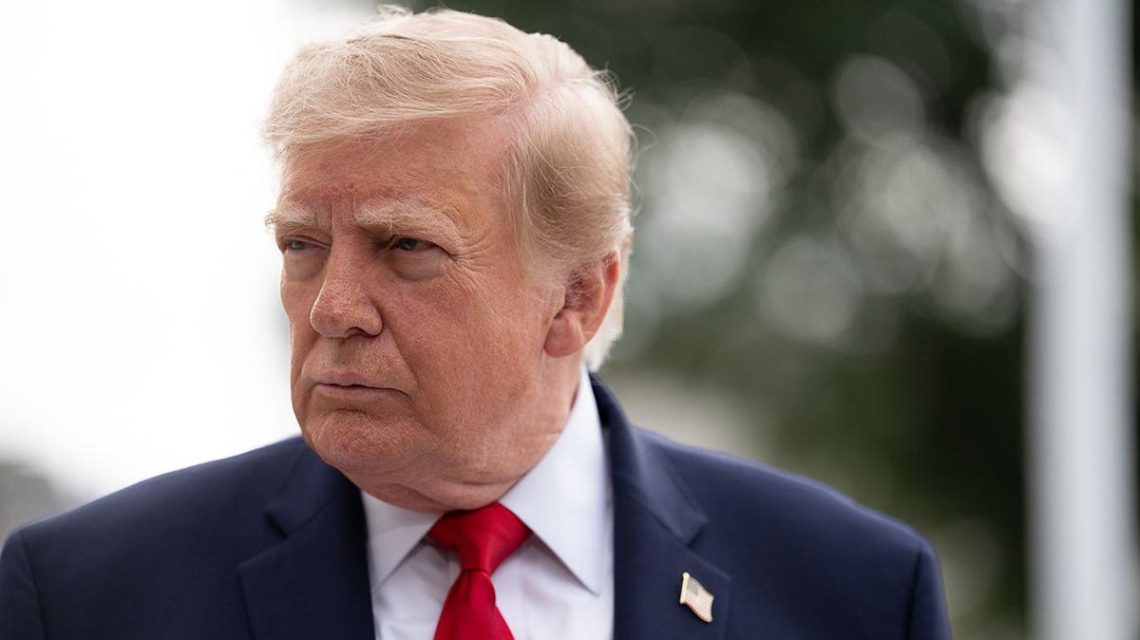
Questions frequently arise regarding why cases involving former President Donald Trump appear to frequently land with judges perceived as opposing him. Notably, U.S. District Court Judge James Boasberg, who previously halted Trump’s effort to deport hundreds of Venezuelan migrants, has been under scrutiny by critics.
In a recent incident, an Obama-appointed judge obstructed Trump’s attempt to remove Roger Rogoff, a court-appointed U.S. Attorney for the Western District of Washington. The judge ordered the Justice Department to reaffirm Rogoff as the officeholder, thereby restoring his authority. White House spokesperson Lauren Bis criticized this as another instance of an activist judge attempting to derail Trump’s agenda, emphasizing that U.S. Attorneys serve at the President’s discretion.
Judge Stanley Bastian, appointed by Obama in 2013, issued an injunction reinstating Rogoff and preventing the administration from treating him as if lawfully dismissed. This situation raises a legal debate over a president’s power to fire a U.S. attorney appointed through federal judge selection.
Historical opinions on this matter vary. A 1979 Justice Department opinion and a 2000 federal appeals court ruling concluded that presidential authority to discharge such officers exists. The DOJ Rapid Response account expressed intention to appeal Bastian’s decision, disagreeing with the ruling.
Many legal experts and conservative attorneys sharply contested the ruling online, arguing it infringes upon presidential constitutional rights within the executive branch. Mike Davis, Article III Project founder, labeled the ruling as lawless and underscored the separation of powers violation, attributing it to partisan biases.
Further criticisms dealt with Judge Bastian’s procedural handling, including a misspelling of his own name in the order. Davis remarked that this underscores the lack of diligence in the legal work. He argued this situation creates an unnecessary constitutional crisis by mandating the removal of the President’s appointee.
Others, like Jeff Clark from the Oversight Project, echoed predictions that higher courts will eventually overrule Bastian. In 1926, Myers v. United States supported the president’s right to dismiss executive officers, including U.S. Attorneys.
This current case adds to a pattern of legal challenges involving Trump’s U.S. Attorney appointments, mirroring conflicts seen in New Jersey, Virginia, and New York. In New Jersey, federal courts overruled the administration’s attempt to retain Alina Habba post her interim term, showcasing similar tensions over appointment controls.
With Rogoff’s case, the argument centers on the president’s legal capacity to dismiss a federally judge-appointed U.S. attorney using the statutory vacancy process. The outcome of this debate will have significant implications for executive authority and judicial limits.
 Trump’s Approval Ratings Lag in Key States Before Midterms
  Texas Senate Nominee Sparks Debate Over Religious Justifications in Politics
  Record Number of Native American Candidates in Elections
  Unexpected Senate Race Dynamics in New Hampshire
  Former Congressman David Rivera Sentenced to 10 Years in Federal Prison
  America First Global Health Strategy and Its Implications