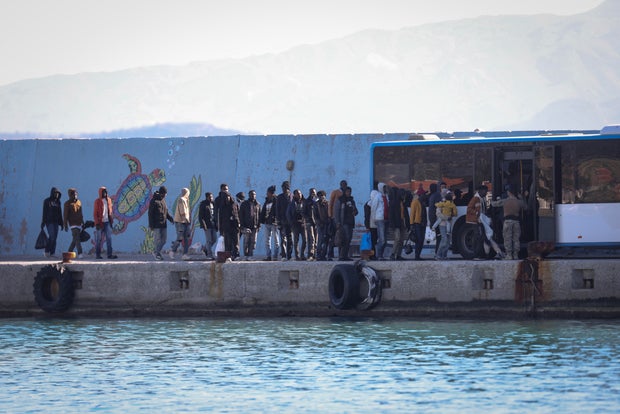
The European Union has taken steps to initiate sending asylum seekers whose applications are unsuccessful to third countries outside the bloc. This move follows the recent approval of new rules that permit such actions.
Plan Overview
Countries including Greece, Germany, Austria, Denmark, and the Netherlands are collaborating to develop a framework for ‘return hubs’ outside the EU. These hubs will serve as destinations for individuals unable to return to their countries of origin after exhausting all legal options. Danish Interior Minister Morten Bødskov highlighted progress in establishing these hubs, suggesting readiness to transfer irregular migrants by 2027.
Greek Migration Minister Thanos Plevris aims to have a pilot project operational by mid-next year. While no specific locations for these hubs have been confirmed, Rwanda is mentioned as a potential partner. The intention is to create hubs in safe third countries, particularly in Africa.
Potential Impacts
The EU presents return hubs as a mechanism to discourage irregular immigration. A document from the European Council suggests the hubs might encourage voluntary returns. Migrants neglecting deportation orders could face transfer to a hub as a consequence. The policy aims to deter those without valid asylum claims from undertaking perilous journeys to Europe.
The newly adopted EU rules provide a legal framework for returns and allow bilateral or unilateral agreements with non-EU countries, provided they adhere to international human rights standards. These standards include the principle of non-refoulement, ensuring individuals aren’t returned to places where they face serious harm.
Comparisons and Challenges
The U.S. and U.K. have previously explored similar practices. Under its administration, the U.S. deported undocumented migrants to eight African countries. Greece’s migration minister commended this approach and anticipated similar implementation in Europe.
The U.K. attempted to process asylum claims in Rwanda but faced legal obstacles. The Supreme Court ruled the scheme unlawful due to potential risks to refugees. The policy was abandoned in 2024, incurring significant costs without enforced relocations.
European governments should expect legal challenges, even with seemingly less contentious countries.
Peter Walsh from the University of Oxford emphasized that externalization of migration issues may relocate difficulties but governments must still address legal, rights, and operational challenges.
Temporary Solutions
These initiatives are part of broader European efforts to tighten immigration policies. Jacob Reynolds from the Freedom and Sovereignty Initiative Europe supports the move but warns against the long-standing practice of outsourcing migration issues to third countries. He advocates for fundamental changes in asylum regimes within the EU to address the root cause of migration challenges.
 Controversy Surrounds Performances at Gillette Stadium
  Tucker Carlson’s Remarks on Britain and WWII Spark Backlash
  Police Divers Uncover Ancient Roman Artifacts in Sardinia Waters
  Conservative Activist Urges AI Safety Measures
  G7 Nations to Release 100 Million Barrels of Oil Amid Fuel Price Surge
  Attempted Hijacking on FlyDubai Flight to Tel Aviv