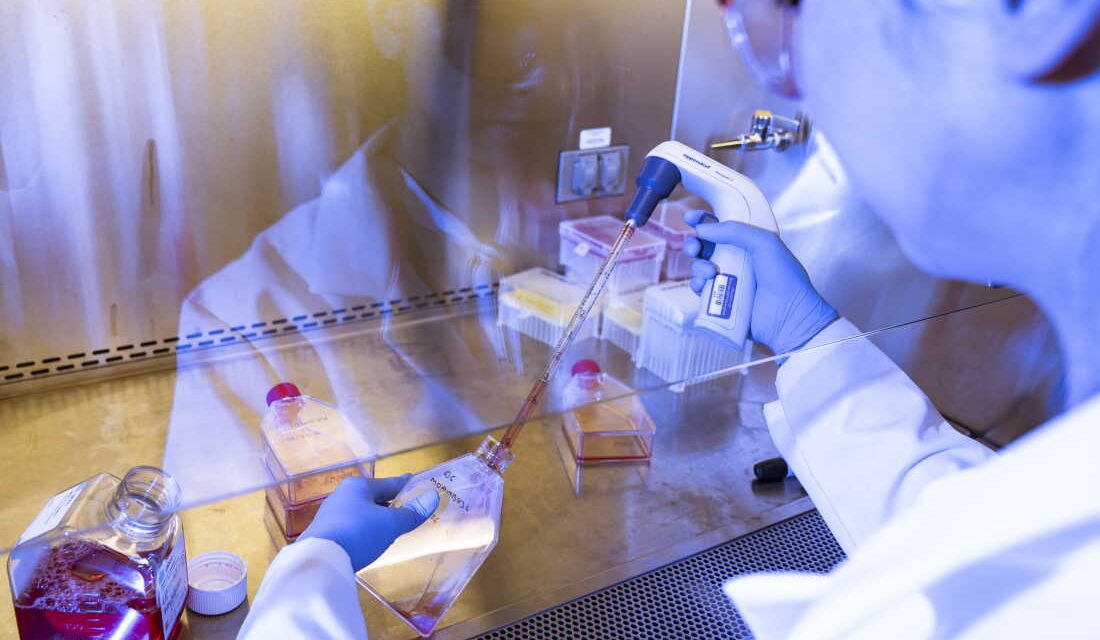
Cathy Tie, the founder and CEO of Origin Genomics, stands at the forefront of genetic innovations within her New York City-based startup. Embarking on a tour with an NPR team, Tie dons a white lab coat, signaling readiness to share her vision and breakthroughs in gene repair technologies.
Lab Operations and Security Concerns
Tie emphasizes the security measures by withholding the lab’s exact location. Inside, a cryogenic storage unit, often a point of intrigue, safeguards embryos with disease-causing mutations. These were donated by families confronting life-threatening genetic disorders. These embryos serve as a foundation for testing Origin’s gene-editing technologies.
Unveiling Experimental Gene Editing
Origin’s work revolves around extracting stem cells from these embryos to test new gene editors. By addressing mutations, the venture aspires to prevent diseases from impacting future generations.
Legal and Ethical Challenges
Gene editing in human embryos remains illegal in the U.S. Tie advocates for a shift in this stance. Citing widespread diseases like Huntington’s and cystic fibrosis, she calls for the application of precise genome editing. Despite legal constraints, her company continues to refine their technology using cells such as induced pluripotent stem cells and fibroblasts.
Testing and Demonstrations
Within Origin, the gene editor’s functions are showcased, revealing how it interacts with cells to correct mutations. Tie explains these steps, focusing on a mutation linked to breast cancer.
Controversy and Historical Context
The field of gene editing remains contentious. Following a previous scandal where a Chinese scientist was jailed for creating genetically modified babies using CRISPR, skepticism endures. Newer methods like prime and base editing promise greater precision. Tie, however, seeks to establish trust and accountability for Origin’s endeavors.
Industry Skepticism and Public Concerns
Experts like Robin Lovell-Badge express concerns over the rapid pace and possibility of errors. Discussions extend to broader implications such as ‘designer babies’ and the ethical ramifications of commercial genetics.
Addressing Misgivings
Tie clarifies Origin’s intent, focusing on health rather than enhancement. Meanwhile, she acknowledges risks like genome-editing tourism, as unregulated sectors might exploit technological advances.
Family Perspectives and Future Hopes
The aspirations of Nicole and Asaf Ezra illustrate personal stakes in gene editing advancements. Confronting hereditary colorectal cancer, their quest underscores the urgent need for safe solutions to prevent transmission of genetic disorders.
The Ezras, having invested in and collaborated with Origin, exemplify the human element of this scientific pursuit. Their narrative points to broader societal changes expected as genetic science progresses.
Conclusion: Ethical Use and Collaboration
Tie envisions a regulatory framework encompassing clinicians, ethicists, and policymakers to ensure responsible application of gene-editing technology. Emphasizing safety, her aim is to demonstrate that the medical benefits outweigh associated risks.
 Supporting Child Mental Health: The Role of Home Environments
  Abdul El-Sayed Aims to Attract ‘Make America Healthy Again’ Supporters in Michigan Senate Campaign
  Infections Linked to Global Cancer Cases
  G. L. Mezzetta Inc. Recalls Peperoncini Due to Pest Concerns
  Leila’s Kidney Transplant Journey: Setbacks and New Beginnings
  The Endangered American Red Wolf: A Conservation Story