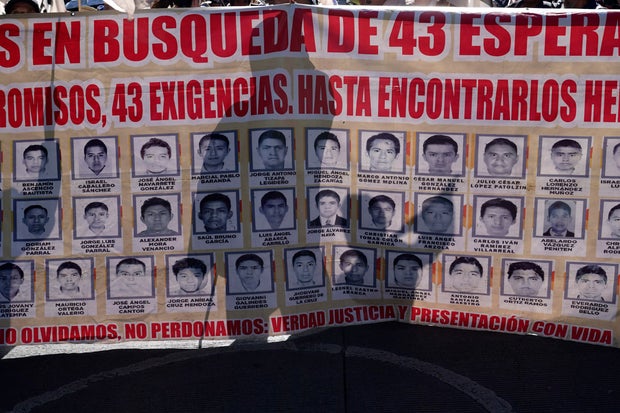
Twelve years after the disappearance of 43 Mexican students, new developments have emerged. The students, from a rural university, allegedly vanished due to the actions of drug traffickers and police. Authorities recently identified 17 new suspects in connection with the case.
The students, who were training to be rural teachers in Ayotzinapa, were last seen traveling from Guerrero to a protest in Mexico City on September 26, 2014. Their journey was interrupted when police in Iguala allegedly handed them over to a local cartel. Despite numerous arrests, no convictions have been made, leaving the case a national trauma for Mexico.
Thousands participated in an annual march in Mexico City, demanding justice for these missing young men. Only three bodies have been recovered over the years.
Investigation and New Arrests
Mauricio Pazaran, the special prosecutor for the case, noted that a new analysis of phone calls on the night of the disappearance led to recent arrests. The calls revealed connections between public officials, police, members of organized crime groups, and civilians.
Investigators discovered a weapon, bone fragments, and teeth at a funeral home linked to these suspects. A public employee and a municipal police officer had reportedly used the cellphones of two students shortly after they disappeared.
Among new witnesses is a former minor, now linked to the Guerreros Unidos cartel, arrested in April. Overall, 168 individuals are being prosecuted, with 130 held in pretrial detention.
Relatives and supporters of the missing students marched with a banner in Mexico City, marking the ninth anniversary of the incident.
Efforts to Conceal Evidence
In August, a former governor faced arrest for allegedly ordering the deletion of security footage in Iguala on the night of the disappearances. Additionally, a former senior judge was arrested for alleged involvement in concealing videos related to the case.
The state’s former attorney general was detained in 2022 for connections to this ongoing investigation.
Efforts to locate the remains of the missing students focus on clandestine burial sites in cartel-controlled rural areas. To date, only a few burned bone fragments have been identified.
Broader Context
Mexico continues to struggle with cartel-related violence, which has resulted in the deaths and disappearances of over half a million individuals, according to government estimates.
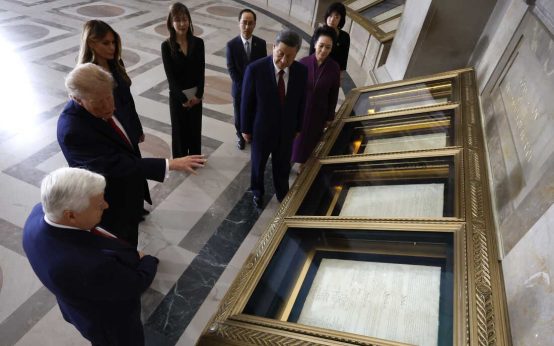 Historical Discrepancies and Diplomatic Sensitivities in U.S.-China Relations
 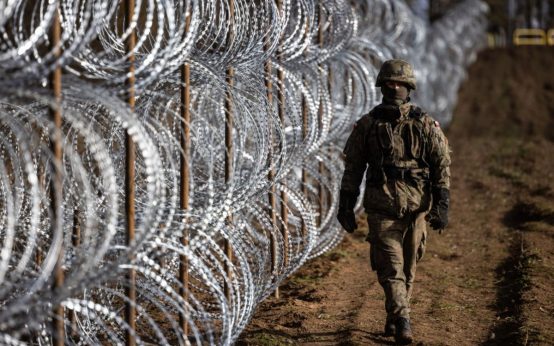 Escalating Tensions: Russia’s Nuclear Threat and the Kaliningrad Conundrum
 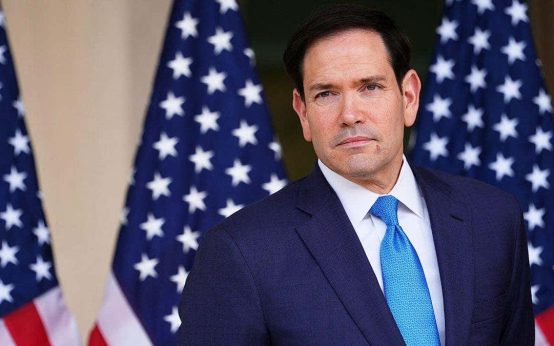 Marco Rubio Discusses Thwarted UK Terror Plot and Global Threats
  Concerns Over U.N. Secretary-General Candidate’s Alignment
  Possible Shipwreck Exposed After Nor’easter in Nantucket
  Turkey’s Ambitions and Regional Dynamics: The Mecca Joint Defense Agreement