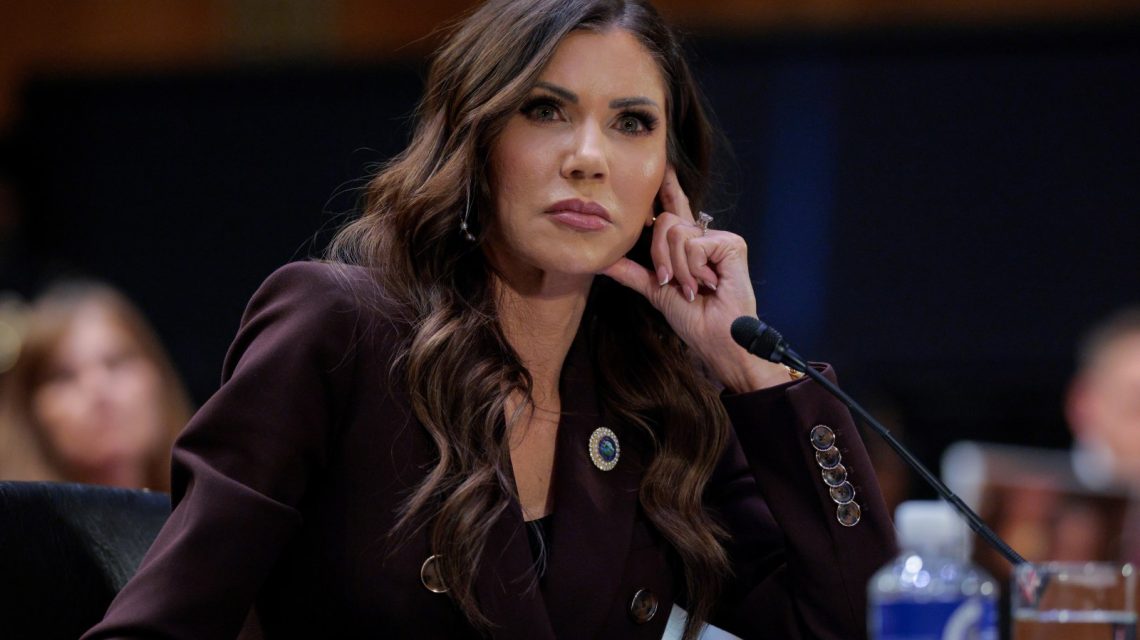
The D.C. Circuit federal appeals court will examine whether a criminal contempt inquiry involving the Trump administration’s deportation of Venezuelan migrants can proceed. At the core of the matter is former Homeland Security Secretary Kristi Noem, who was identified as the official behind the decision to transfer Venezuelan detainees to El Salvador’s CECOT prison in March 2025. This action occurred despite a judge’s order blocking their deportation.
Background of the Dispute
In 2025, the Trump administration aimed to deport Venezuelan migrants, claiming they were part of the Tren de Aragua gang, utilizing the Alien Enemies Act. On March 15, 2025, while two planes with detainees were already airborne, Judge James Boasberg of the U.S. District Court for D.C. issued a temporary restraining order. The order prohibited the deportation for 14 days or until further notice from the court. Nevertheless, the flights continued to El Salvador. Later, the Supreme Court overturned Boasberg’s order, ruling that migrants must file legal challenges in the federal districts where they were detained. However, Boasberg persisted with his contempt inquiry, arguing the prior ruling did not negate the government’s potential breach of his order.
Noem’s Involvement
In April 2025, Boasberg identified probable cause that the government may have intentionally violated his order and considered a criminal contempt inquiry. Later, the government responded to Boasberg’s inquiries by identifying Noem as the responsible official for approving the detainees’ transfer to El Salvador. They stated she made this decision based on legal counsel from government attorneys.
A Legalistic Argument
The government maintained that the verbal order from Boasberg on March 15, delivered after the planes departed, did not constitute a binding directive. They emphasized that the subsequent written order did not explicitly require the return of the already departed migrants. Ultimately, the detainees were placed in Salvadoran custody and kept at CECOT prison.
Continuous Legal Battle
The government argued that Boasberg exceeded his authority with the contempt inquiry. In April 2026, a divided three-judge appeals court panel instructed Boasberg to halt the inquiry. The majority opined that the written order lacked the necessary clarity to justify a criminal contempt charge and that Boasberg overreached by probing Executive Branch discussions involving national security and diplomatic issues.
Upcoming Court Decision
Now, the full D.C. Circuit will reassess the panel’s decision. They will decide if Boasberg can carry on with his criminal contempt inquiry. If allowed, Noem might face criminal contempt charges, contingent on sufficient evidence of her authorization to move the migrants to El Salvador. It’s important to note that Noem hasn’t faced criminal charges, although former President Trump relieved her from her Homeland Security role in March 2026. Last August, 204 past judges urged the appellate court to sustain the inquiry, deeming the district court’s actions apt.
The case has gathered significant attention, with the en banc court scheduled to review it on Tuesday.
 Texas Man Accused of Murder Faces Extradition Challenges
  Federal Judge Orders Return of Deported Teen Asylum Seeker
  Spotlight on Grieving Father in Lindsay Clancy Case
  Veteran Customs Agent Found Guilty of Attacks on Sex Workers
  Juror in Lindsay Clancy Case Retains High-Profile Lawyer
  Florida Plastic Surgeon Faces Trial for Allegedly Murdering Attorney