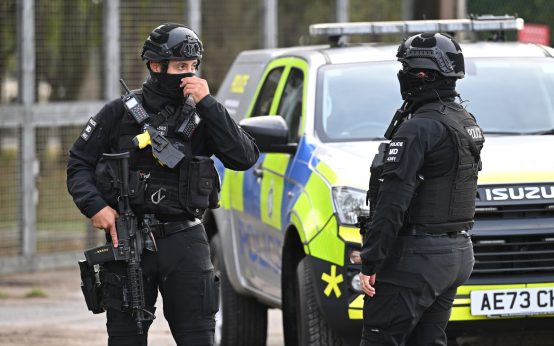
Early Sunday morning, a farmer in Whelford, England, encountered suspicious activity near a significant air base. Three white vans and several masked men were seen heading into fields. She promptly notified the police. Within hours, authorities arrested five individuals suspected of planning a terrorist act, thwarting a potential crisis.
The local community experienced significant disruption. Around 85 households were evacuated while Army bomb-disposal teams inspected the vans positioned near the RAF Fairford runway, known for hosting American bombers during strikes against Iran. This incident provided an unexpected advantage to President Donald Trump, who had been grappling with NATO allies on security matters.
The Response at Fairford
In March, Trump’s dissatisfaction with NATO allies grew when they refused his request to reopen the Strait of Hormuz. He criticized the alliance and framed the situation as a test of their commitment. Fairford now serves as a more direct test of NATO’s role in defending allied soil.
Thankfully, there were no injuries reported, and security measures were effective. Politically, the event highlighted the ongoing threat to allies hosting American forces. If investigations confirm Iranian involvement, Trump is likely to question those allies that had previously declined to support his military actions.
Details of the Threat
Initial assessments revealed the presence of improvised explosive devices in the vans. Authorities have not disclosed the suspects’ nationality, motivation, or intended target. However, sources suggest an Iranian link is under examination, alongside possibilities of Russian involvement or an Islamist plot.
Trump commented on the situation, indicating the suspects were under surveillance by both British and American authorities. The Revolutionary Guards of Iran had previously warned that bases used against them were valid targets, specifically naming Fairford.
NATO Implications
The geographic location of the incident at Fairford is within NATO’s treaty bounds, unlike Hormuz. While American allies have been wary of Trump’s Iran policy, the attack in Fairford might shift perspectives.
The NATO treaty protects allied territories in Europe. Should an internationally directed attack occur, Article 5 could be invoked, suggesting collective defense. However, determining who orchestrated this attempted attack remains essential for guiding NATO’s response.
Article 4 and 5 Considerations
Article 5 has only been invoked once, post-9/11. NATO members are not mandated to engage militarily but can choose their method of assistance.
Alternatively, Article 4 allows for consultations on security matters. This tool was recently used in cases of suspected Russian aggression. In previous incidents, such as a missile launch by Iran aimed at Turkey, NATO opted for defense consultations rather than military actions under Article 5.
Europe’s Initial Reaction
European leaders have claimed Trump’s demands align with a conflict they neither initiated nor were consulted on. The 2015 nuclear deal with Iran remains a preferred solution over military actions for many European nations.
Nevertheless, Britain’s collaboration at Fairford challenges Trump’s claim of NATO being a one-sided relationship. The U.K. supported defensive measures, providing strategic advantages for U.S. operations.
NATO’s ongoing alignment with American strategies could evolve should the Fairford incident reveal an organized plot, underlining the mutual obligations of alliance members.
 Trump Administration Targets H-1B Visa Use to Protect American Workers
  Controversy Over Proposed MLB Stadium in Grand Teton National Park
  The GOP’s Shift Toward Big Government
  Russia Continues Aggression on Ukraine, Amidst Diplomatic Efforts
  Heightened Risks at U.S. Military Bases in U.K. Amid Iran Conflict
  Ukraine’s Strategic Challenges in Air Defense