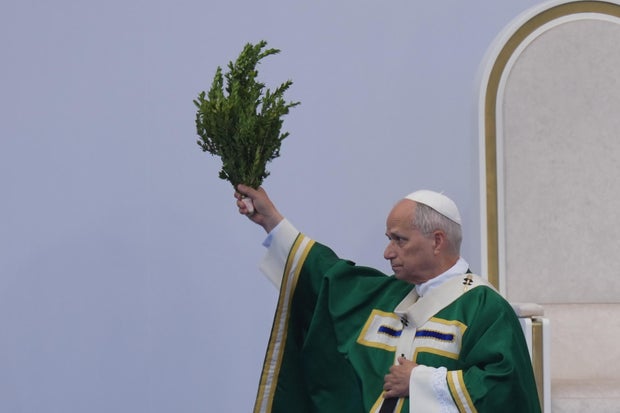
Pope Leo XIV strongly condemned the legalization of medically assisted dying during his visit to Lourdes, France, on Sunday. He described it as immoral and an instance of ‘false compassion.’ Lourdes is known for its association with miraculous healing. Leo emphasized the importance of protecting human dignity and cautioned against using the guise of compassion to justify causing death.
‘What is legal is not necessarily moral,’
he asserted, receiving applause from the crowd.
Leo’s remarks came on his third day in France, where he engaged in debates about end-of-life issues. These discussions have stirred French politics for years, leading to legislation allowing adults with incurable illnesses to access lethal medication.
The pope’s visit, marked by mass gatherings, attracted 800,000 people for his Mass at Paris’ Place de la Concorde. Leo’s stance against abortion and assisted dying resonated with many attendees, including wheelchair-users.
During his visit, Leo encouraged those in pain, assuring them of their inherent dignity beyond laws or calculations. He celebrated Mass at the Sanctuary of Our Lady of Lourdes and visited a care center for the sick.
Lourdes became a prominent pilgrimage site after the Catholic Church recognized visions of the Virgin Mary here in 1858. The location draws millions annually, with hopes of healing from its spring water. The church has documented 72 authentic miraculous cures here.
Leo continually stressed respecting life at all stages, in line with Catholic teachings opposing abortion, euthanasia, and medically assisted dying.
Recently, Lourdes has also served as a refuge for survivors of clergy sexual abuse. Leo planned to meet with seven survivors, highlighting the abuse crisis confronting the church. France’s church addressed its abuse legacy through an independent report revealing 330,000 child abuso cases over 70 years.
Despite critiques of the report’s conclusions, French bishops have implemented compensation systems. Leo commended their responses to the victims while acknowledging the scandal’s impact on priestly vocations.
Reflecting the scandal, victims wrote an open letter during Leo’s visit, urging church accountability. They called for the church to separate its role as judge and party.
Leo’s selective meeting of survivors was intended for intimate conversations while Monsignor Pierre-Antoine Bozo explained the focus on effective listening and action.
Leo also confronted an inherited case involving Rev. Marko Rupnik, who is on trial for abusing women during the creation of his artworks. These accusations were concealed for three decades, leading to criticism of Vatican’s handling.
Five women, abused by Rupnik, expressed their concerns in a letter to Leo, criticizing the prolonged silence they’ve endured from the Vatican.
Religion has significantly impacted Leo’s visit to France, focusing on end-of-life issues, the dignity of human life, and confronting the church’s abuse crisis.
 Trump Administration Shuts Down Refugee Program for Iranian Minorities Amid Rising Antisemitism Concerns
  Giant Pandas Arrive at Zoo Atlanta from China
 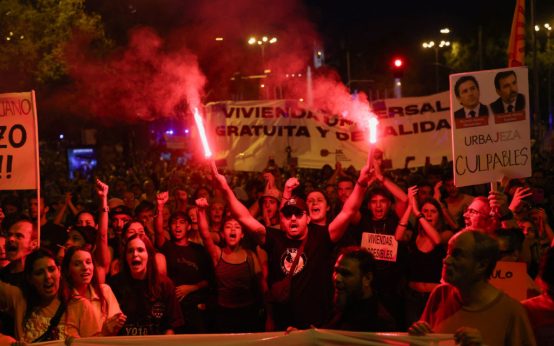 Protests Erupt in Madrid Over Housing Crisis
  Discovery of Underwater Village Remnants off Norfolk Coast
  Homes Evacuated Near RAF Fairford in Explosives Investigation
  Hungary’s New Government: Policy Shifts and International Relations