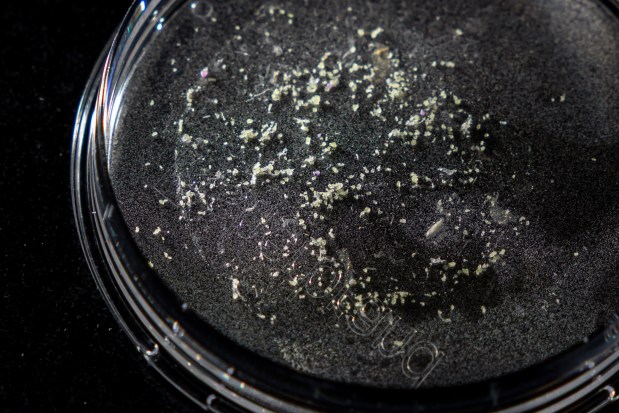
Documenting Plastic Waste’s Toll
Spending years investigating plastic waste in the Great Lakes affected Melissa Duhaime deeply. Discovering distressing levels of pollution, she faced few solutions for these entrenched problems. Scientists like Duhaime confront powerful corporations that plan to drastically increase the production of fossil fuel-based plastics. Duhaime, a biologist at the University of Michigan, found comfort in researching a plastic-free alternative from ancient Mesopotamia. Her new focus is on flax, a plant that can be spun into linen for clothing, offering a replacement for synthetic fabrics that shed plastic fibers.
Exploring Flax as a Versatile Solution
Flax stems are mostly grown in America for seeds, yet they can also replace petroleum-based carbon fibers in cars and construction. “Our farmers are interested, some big companies are interested,” Duhaime revealed. She sees potential for a new flax-based manufacturing sector covering fiber growing, processing, spinning, and weaving. Duhaime’s efforts are part of a broader movement to combat the overwhelming plastic presence in modern life. Innovators push for sustainable alternatives, while volunteers work on cleanups to counteract throwaway culture.
Microplastics: A Growing Concern
Already, more than 8 billion tons of plastic waste fill the planet, with 22 million pounds entering the Great Lakes annually. Researchers remain concerned about microplastics, tiny particles linked to diseases and chemical toxicity. Duhaime collaborated with other scientists to discover how microplastics harm fish growth and reproduction. Her personal dissatisfaction with synthetic clothing since childhood further fueled her desire for change.
Reviving Old Methods
Duhaime connected with Rebecca Burgess, an advocate for sustainable textiles, during the COVID-19 pandemic. Together, they aim to revive ancestral techniques for creating flax-based fabrics. Historically, flax was spun at home by colonial Americans as a cotton alternative. Automakers BMW and Volvo currently use flax in car panels, aligning with EU pollution limits and sustainability goals. Duhaime pitches similar flax-based innovations to U.S. automakers.
Building Economic Bridges
Advocates believe flax-based production could bridge rural-urban divides, enhancing economic and personal connections. Regional fibershed initiatives aim to localize fiber production, featuring five active groups in Great Lakes states and Canada.
Challenging Plastics Producers
Plastics manufacturers often escape responsibility for the waste generated by their products. Extended producer responsibility (EPR) laws in several states aim to make manufacturers accountable for lifecycle costs. Backers hope to enforce shifts toward sustainable goods.
Collaborating for Environmental Progress
Plastic waste pollutes daily on Great Lakes beaches, but cleanup volunteers raise awareness and track litter origins. While finding solutions, researchers have trialed microplastics filters on washing machines in Canada. Despite challenges, progress is evident in collaborative efforts to reduce plastics.
Local Initiatives and Business Opportunities
Volunteers like Al Swigonski push for reduced plastics use in local dining establishments. Brewery owner Brent Schwoerer opts for sustainable packaging and advocates for polystyrene bans. Duhaime, alongside other researchers, explores creating a flax-processing mill to integrate flax into Michigan’s economy. Similar aspirations drive Leslie Schroeder in Wisconsin, where flax aligns with sustainability goals.
 Studying Black Bears’ Hibernation at Virginia Tech
  Impact of El Niño on Global Food Prices and Agricultural Commodities
  Pacific Hurricanes Pose Flood Risk to Southern California
  Potential Agreement on Permitting Reform
  Hurricane Season: Divergent Trends in the Atlantic and Pacific Oceans
  Understanding the Impact of a ‘Super’ El Niño