In June, a Schaumburg police officer responded to a 911 call from a federal immigration agent who reported being pursued. The officer then turned off his body camera at the agent’s request. Similarly, in July, a Forest Park parking enforcement employee relocated a federal agent’s vehicle while police leaders allowed the agent to exit through the back of the police station to avoid being captured on an activist’s camera. And in October, an Evanston police commander defended his officers’ actions during a violent incident involving immigration agents and residents. These events reflect ongoing confusion and accountability issues following President Donald Trump’s Operation Midway Blitz.
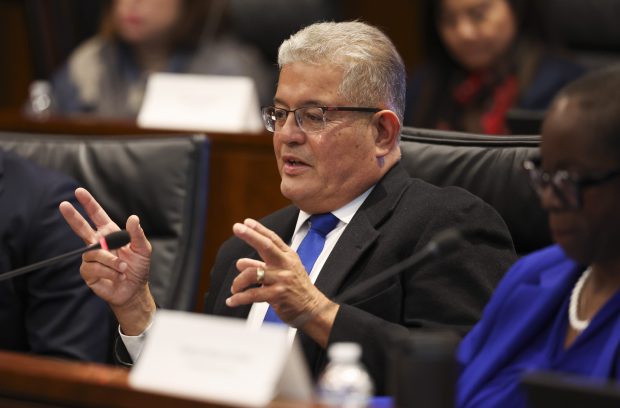
One year after the crackdown, local officials remain divided over how to address the situation, according to interviews and public records reviewed by the Tribune. The operation has tested Illinois’ policies on how local enforcement interacts with federal immigration agents. Rubén Castillo, Illinois Accountability Commission Chair, highlighted the unpreparedness of local authorities for the aggressive federal law enforcement action during the operation.
Despite claims from Trump and Department of Homeland Security that agents acted properly, the operation underscored the limits of local legislation. Few cases against federal agents have been pursued, revealing intraparty tensions within Illinois politicians. Cook County State’s Attorney Eileen O’Neill Burke has been criticized for her office’s limited response to allegations against federal agents.
With the Nov. 3 midterm elections approaching, Illinois Democrats hope to gain accountability through congressional control. Meanwhile, local police response during raids has garnered scrutiny for allegedly aiding federal agents.
Maintaining Public Safety vs. Immigration Enforcement
Chuck Wexler from the Police Executive Research Forum noted the complex balancing act police face between non-involvement in immigration enforcement and maintaining public safety.
Former Chicago police Superintendent Eddie Johnson expressed empathy for officers caught in political disputes: “They are there to serve and protect.”
The TRUST Act’s Challenges
Illinois’ TRUST Act restricts local police from civil immigration enforcement but allows criminal law enforcement and protection of public safety. Confrontations during the blitz revealed discrepancies between law and real-world scenarios.
Instances in Schaumburg and Forest Park illustrated the challenges of adhering to legal standards under confusing conditions. Schaumburg officer’s actions drew public backlash prompting a village investigation. In Forest Park, repercussions were swift, leading to internal disputes and personnel changes.
Legal Responsibility and Federal Agents
Concerns over federal agents facing insufficient accountability are widespread. Criticism targeted O’Neill Burke’s office for limited criminal charges against federal agents. Burke, however, advocates for protocol assisting law enforcement in pursuing cases against agents.
While federal courts have issued orders curbing some aggressive immigration tactics, state-level legislative measures have experienced varied success.
New Legislation and Challenges
The Illinois General Assembly passed measures aiming to restrict certain federal agent activities near courthouses and enhance protection against civil immigration arrests.
Although new laws seek to curb federal actions, ICE agent presence in courthouses persists, revealing limitations of state legislation.
State and Local Efforts
Illinois lawmakers, amid public pressure, strive to address the impacts of federal immigration tactics. Though new regulations have been enacted, continuous challenges remain as ICE operations continue.
As state officials criticize the Trump administration’s approach, they also recognize the broader challenge of federal-level accountability.
 Confronting the Challenges of Far-Right Fame
  Challenges Facing Prince Harry and Meghan Markle’s Return to the U.K.
  Trump’s Declining Approval in the Midwest and Its Impact on Senate Races
  Supreme Court Blocks Missouri Congressional Map Favoring Republicans
  Heidi Overton Defends Vaccine and Abortion Pill Safety
  White House State Dinner to Honor Chinese President Xi Jinping