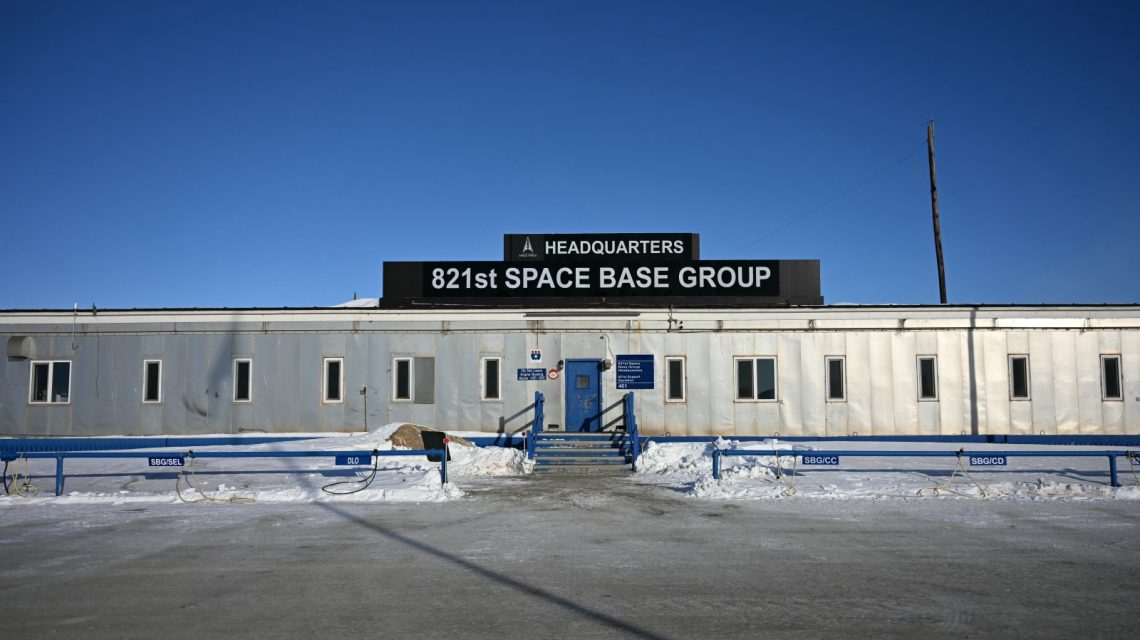
A Newsweek map reveals the planned locations for two new U.S. military bases in Greenland. President Donald Trump recently announced a security agreement concerning this semi-autonomous Arctic territory within the kingdom of Denmark. This announcement followed tensions, with Trump previously threatening to take control of the island, causing a NATO diplomatic crisis. Denmark, Greenland, and the United States are expected to finalize the agreement at the United Nations General Assembly.
According to Reuters, the expansion includes two sites as part of a broader military buildup on the island. One involves reinstating a Cold War-era base. Newsweek sought comments from both the White House and the Danish foreign ministry.
Locations for the New Bases
Trump has emphasized Greenland’s strategic importance, aligning with NATO’s increased focus on Arctic defense in light of Russian activity in the region. During the Cold War, 17 U.S. military sites operated with 10,000 personnel, now reduced to Pituffik Space Base, staffed by about 650 personnel, including 200 active-duty U.S. military members. Under the new deal, two additional bases will be established.
The first is planned for Narsarsuaq on the island’s southern edge, previously home to the Bluie West One base from 1942 to 1958. At its peak, this base supported 4,000 personnel and facilitated 10,000 aircraft departures to Europe and North Africa during WWII. With advancements in refueling and Thule Air Base’s creation, its use declined. The second location is Mestersvig, an eastern Greenland outpost currently used by Denmark’s Sirius Dog Sled Patrol special forces.
Trump’s Greenland Agreement
Denmark cautiously welcomed the agreement, highlighting that NATO, not just the U.S. and Denmark, oversees Arctic security. The U.S. State Department described the accord as “unprecedented,” ensuring U.S. security interests in the Arctic without financial cost to American taxpayers.
The deal secures U.S. security control over Greenland and integrates it into North America’s strategic defense. Previously, any nation could potentially establish a military presence in Greenland. Now, adversaries like China and Russia are barred from such actions. The agreement is indefinite, remaining effective if Greenland achieves full independence.
Jeppe Kofod from the Atlantic Council Global Energy Center remarked that the agreement strengthens U.S. security in Greenland while maintaining Danish sovereignty and the Greenlanders’ rights to self-determination.
 U.S. Air Force Relocates Aircraft from RAF Mildenhall Due to Threat
 Prince Harry and Meghan Attend Event Amid Family Controversy
 Military Court in Congo Sentences 66 Soldiers to Death
 U.S. Walkout from U.N. Human Rights Review Sparks Concerns
 Philadelphia DSA Criticizes Backlash Against Boycott Ride
 Negotiating Peace Amid Ongoing Tensions in Ukraine