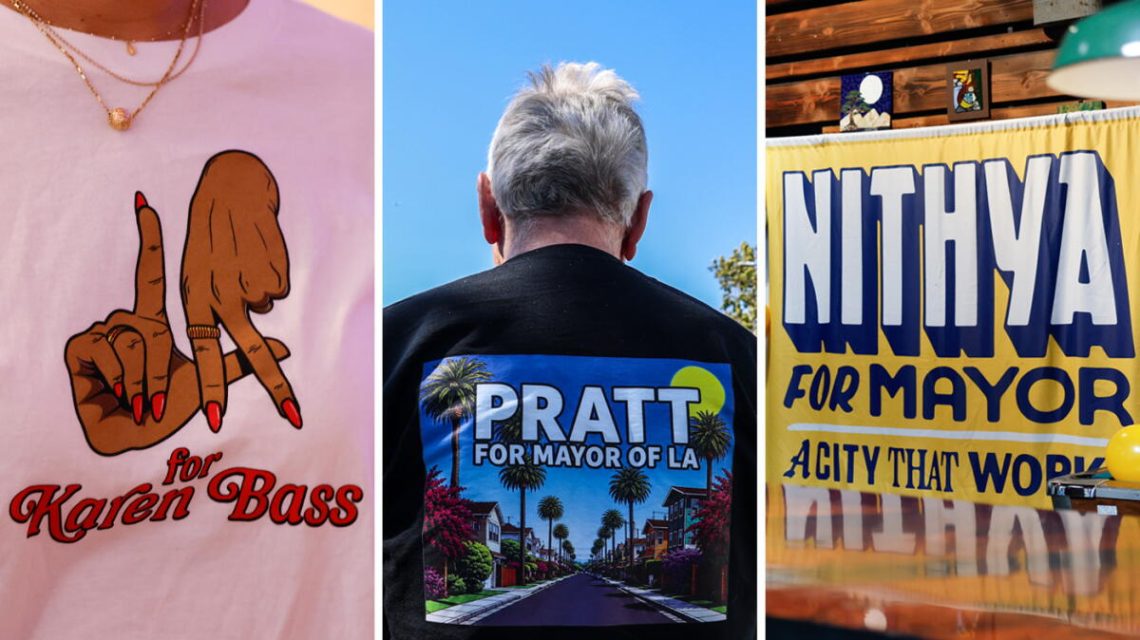
In the upcoming Los Angeles mayoral runoff set for November 3, 300,000 voters from the primary election, who originally supported losing candidates, now find themselves at a crossroads. A critical segment within this group comprises nearly 218,000 voters who previously backed Spencer Pratt, a Republican candidate prominent in conservative neighborhoods like Pacific Palisades. His supporters’ choices could significantly shape the future leadership of the city.
Dan Schnur, a former Republican political consultant and a political communications professor, underscores the significance of the Pratt vote. While Pratt did not secure a place in the runoff, his supporters’ influence could be pivotal in a close election.
Karen Bass and Nithya Raman, both Democrats, face the challenge of appealing to Pratt’s base while maintaining support from their liberal and progressive constituents. As Fernando Guerra, a professor of political science at Loyola Marymount University, warns, effort must be made to avoid alienating core voters.
Bass’s campaign plans to utilize the Los Angeles Police Protective League to reach out to more moderate Pratt voters. The union, representing LAPD officers, has already surveyed areas where Pratt was popular. They are set to spend millions on ads highlighting Raman’s association with the Democratic Socialists of America (DSA), an organization that has called for defunding the police.
For Bass, conservative surrogates, including councilmembers Traci Park and John Lee, promote her achievements while attacking Raman. Rick Caruso, a former mayoral candidate, has also expressed positive remarks about Bass.
Raman, considered more progressive, has fewer conservative allies to rely on. Instead, she positions herself as the anti-establishment choice, capitalizing on negative sentiments towards Bass among Pratt voters. Despite her DSA connection, Raman’s campaign focuses on practical issues, such as infrastructure improvements.
Raman acknowledges the frustrations Pratt supporters might feel. Her campaign slogan emphasizes creating “A City That Works” and she actively engages with voters, especially in Pratt’s former stronghold.
Despite attempts to appeal across ideological divides, Ana Dahan of Thrive LA, suggests Bass’s policies are more likely to connect with Pratt’s base. Bass supports a controversial anti-encampment law and an expanded police force, drawing contrasts with Raman’s sometimes opposing stances.
Some Pratt supporters express concern over Raman’s affiliation with the DSA. Lisa Becker from El Sereno, a Pratt voter, plans to vote for Bass, viewing her as the lesser of two undesirable choices. Conversely, Jay Handal from the Sawtelle Neighborhood Council criticizes Bass and prefers the potential of Raman’s leadership over known outcomes.
Pratt himself remains critical of both candidates, unwilling to endorse either. According to Matt Klink, a Republican consultant, any endorsement might lead to perceptions of bias or betrayal among Pratt’s supporters.
Guerra from LMU highlights a potential divide among Pratt voters. Some may opt out of voting altogether, with others possibly splitting, resulting in varying impacts on each candidate. Focusing efforts on broader voter groups, like Latinos or previously non-participating voters, may prove more beneficial than solely courting Pratt’s base.
Nonetheless, Mike Murphy, another Republican consultant, argues that even slight advantages among Pratt’s voters could sway the election outcome. This underscores the multifaceted strategy needed to secure victory in the mayoral race.
 A Mother’s Tragic Journey Under Abortion Ban
  U.S. Strategic Goals Remain Unmet Amid Prolonged Conflict
  The Impact of Arts and Closure on Democracy
  U.S. Ambassador Comments on Iran War Duration Amid Political Concerns
  US-China Relations Under Scrutiny: Expert Warns of Escalating Tensions
  No Timeline for End of Iran Conflict