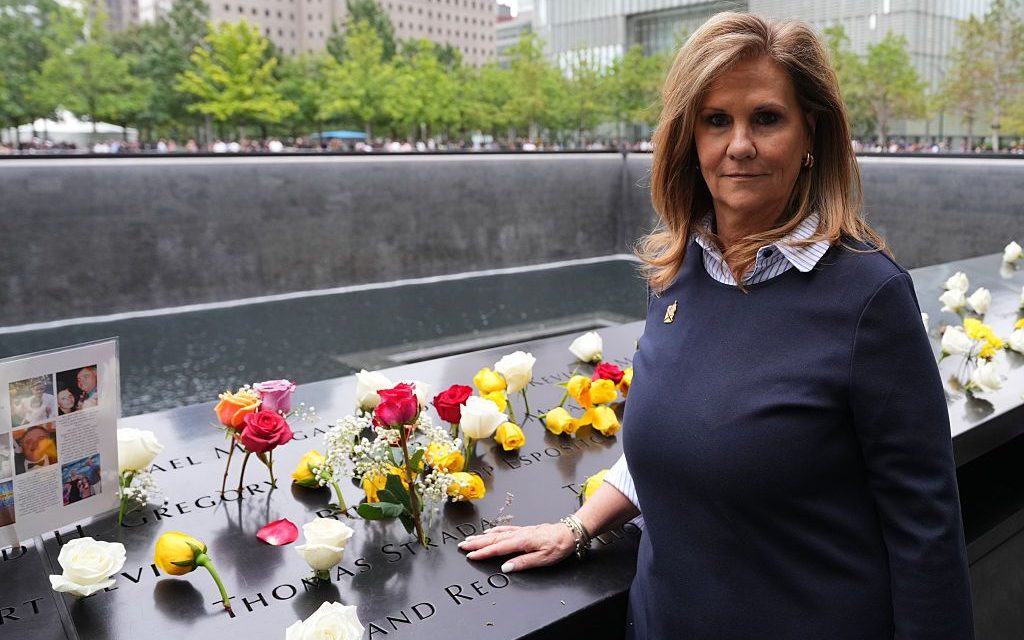
A widow of a 9/11 victim confronted Saudi Arabia and living U.S. presidents during a memorial for the 25th anniversary of the attack. She demanded transparency and answers regarding alleged Saudi links to the attacks.
This confrontation renewed debates over transparency and unresolved questions about Saudi nationals connected to the hijackers. It also increased pressure on the Trump administration, Congress, and federal agencies to declassify documents, ensure accountability, and make progress on a civil lawsuit against Saudi Arabia.
Terry Strada, whose husband Tom died in the attacks, accused several administrations of protecting Saudi interests rather than supporting the families of victims. Her comments highlighted long-standing frustrations over access to crucial FBI records, particularly those about Omar al-Bayoumi, a Saudi national who aided two hijackers.
Saudi Nationals’ Involvement
One enduring question about Saudi Arabia remains: Who were the hijackers? Out of 19 attackers, 15 were Saudi nationals. Families have long called for deeper scrutiny of Saudi networks in the U.S. Official reports, like the 9/11 Commission Report, stated that the Saudi government didn’t fund the attack. However, they acknowledged that some Saudi individuals in California helped two hijackers, Nawaf al-Hazmi and Khalid al-Mihdhar, after arriving in the U.S.
This differentiation between government responsibility and individual assistance has driven decades of debate. Families continue seeking clarity on how two hijackers with limited resources integrated so quickly into American society.
Omar al-Bayoumi’s Role
A recent investigation into Omar al-Bayoumi raised questions about the FBI’s handling of Saudi suspects. Living in San Diego, Bayoumi helped Hazmi and Mihdhar with housing and other needs. Previously deemed an innocent bystander, new documents show Bayoumi was actually linked to Saudi intelligence.
In 2001, British police seized items from Bayoumi’s home, including a diagram estimating airplane trajectories and a video of the U.S. Capitol. Much of this evidence wasn’t shared with field agents, leading families to question the FBI’s analysis and transparency regarding Bayoumi’s role.
Operation Encore’s Findings
Operation Encore, an investigation into Saudi connections, uncovered significant federal findings about those linked to Hazmi and Mihdhar. Witnesses reported seeing hijackers visit mosques and interact with Fahad al-Thumairy, a Saudi diplomat and imam.
Bayoumi’s interactions with Islamist figures tied to al-Qaida were also noted. Despite these findings, the FBI resisted the notion of a support network. The Encore investigation concluded in 2016 without full resolution, reinforcing skepticism about Bayoumi’s alleged assistance.
Seeking Answers
Efforts to gain answers from Saudi authorities have been hamstrung by perceived inaction from federal agencies. Families argue that political and financial interests interfere with uncovering the full truth.
The release of presidential briefs provided new historical context but omitted crucial records, including Bayoumi’s phone logs, needed for the lawsuit against Saudi Arabia.
Progress in the Lawsuit
The JASTA law enabled a significant lawsuit against Saudi Arabia, allowing families to pursue their claims in court. A 2025 ruling affirmed the families’ evidence was substantial enough to continue legal proceedings.
Michael Barasch, a 9/11 legal advocate, stated this development was substantial, moving beyond symbolic gestures to tangible actions like sworn testimony and document release.
Barasch highlighted the urgency, as many clients suffer health consequences related to 9/11.
Health Impact
The ongoing health crisis among the 9/11 community underscores the importance of the lawsuit. Barasch connected the need for transparency with the alarming rates of cancer in survivors, which have surged in recent years due to 9/11 exposure.
Barasch advocates for transparent financial and logistical disclosures to honor victims and support public interest.
 Influencer Brothers Logan and Jake Paul Visit the Pentagon
  Florida Reports First Dengue Fever Death as Outbreak Expands
  American Public Opinion on Press Freedom
  St. Laurence High School’s Transformative Journey
  Significant Events in Chicago History on September 21
  Presley Gerber Passes Away at 27 in Rehab Facility