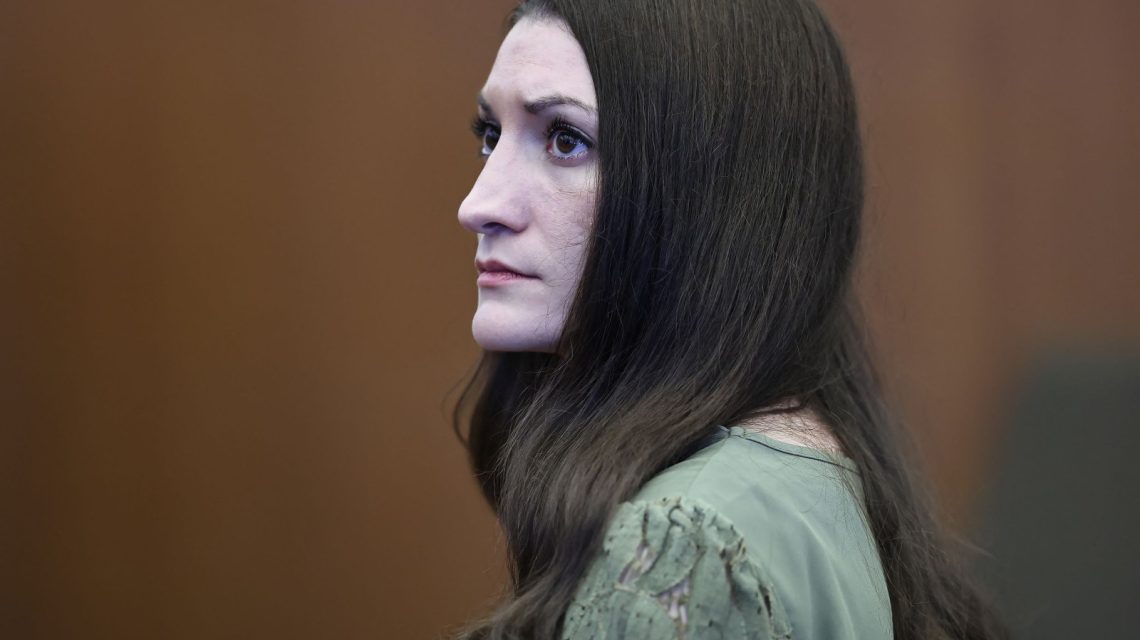
Legislation aims to tighten the rules around pleading not guilty by reason of insanity in federal cases. The initiative follows the recent mistrial in the Massachusetts murder trial of Lindsay Clancy, announced by Georgia Republican Representative Clay Fuller.
Fuller explained that the proposed bill would curb the use of insanity defense in federal criminal cases. He emphasized that mental illness should not allow defendants to avoid accountability, stating, “I’m introducing federal legislation to limit the insanity defense in federal crimes.” Fuller cited the Clancy trial, a five-week event that gained national attention, as a catalyst for this move.
Despite extensive testimonies and hundreds of exhibits, the Clancy trial ended in a mistrial. Jurors failed to reach a unanimous verdict after seven days of deliberations. Clancy faced charges of first-degree murder for the deaths of her children: Cora, 5; Dawson, 3; and Callan, 8 months, in January 2023. Her defense claimed severe postpartum psychosis influenced her actions.
Fuller expressed his astonishment at the political implications of the case, specifically around the issue of “don’t kill your kids.” He stressed the need for federal legislation that limits the insanity defense, akin to measures already adopted by several states, to prevent its misuse.
Although Fuller has yet to detail the proposed legislation or its timeline, Newsweek reached out to his office for further comments.
State Restrictions on Insanity Defense
FindLaw.com notes that Idaho, Kansas, Montana, and Utah do not acknowledge the traditional insanity defense. Kay Levine, law professor at Emory University, shared with Newsweek that many scholars view the insanity defense as a due process right. Levine criticized Fuller’s announcement as “grandstanding,” highlighting the difficulty in proving insanity claims.
Comparing Massachusetts and Federal Standards
Massachusetts refers to “lack of criminal responsibility” in defense cases, requiring defendants to demonstrate a mental disease or defect impacting their legal abilities. The commonwealth must prove criminal responsibility beyond a reasonable doubt.
In contrast, the federal standard under 18 U.S.C. § 17 demands clear and convincing evidence of a severe mental disease obstructing the ability to appreciate the nature or wrongfulness of their actions. Fuller’s proposed legislation would not have affected Clancy’s state case.
Future Developments in the Clancy Case
The jury did not disclose their final vote, but trial notes suggested it was 11-1 favoring acquittal. Clancy faced life imprisonment upon murder conviction. Acquittal by reason of insanity could have led to her commitment in a psychiatric facility.
With the trial’s inconclusive ending, prosecutors must decide on retrying, dropping, or negotiating Clancy’s case. A hearing is set for September 29, where Clancy’s attorney aims to dismiss the case on double-jeopardy grounds.
 Juror’s Stand Leads to Mistrial in Lindsay Clancy Case
  Maryland Parents Arrested After Infant’s Death with Severe Injuries
  Jury Deliberations in Lindsay Clancy’s Murder Trial Stir Controversy
  Surrogate Resists Abortion, Appeals to Supreme Court in Legal Dispute
  Inmates File Lawsuit Over Fires and Smoke in D.C. Jail
  Former CIA Chief Subpoenaed in Justice Department Investigation